
Frédéric Chopin
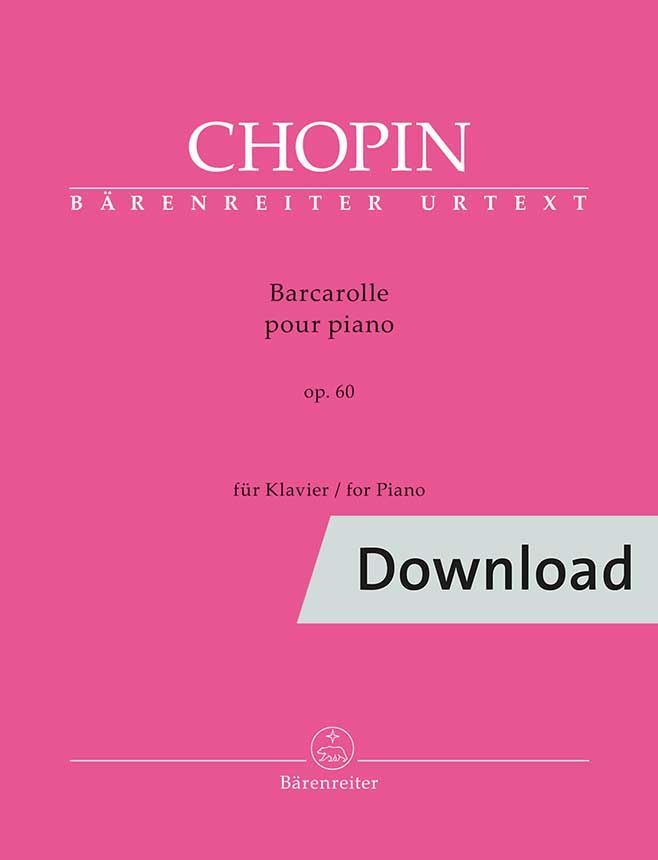
Barcarolle in F sharp major op. 60
for piano

PDF
view
Frédéric Chopin
Barcarolle in F sharp major op. 60
for piano
- Instrumentation Piano
- Composer Frédéric Chopin
- Editor Hardy Rittner
- Series Bärenreiter Urtext
- Editor Wendelin Bitzan
-
Difficulty Level
- Edition Sheet Music Download (Urtext)
- Publisher Bärenreiter Verlag
- Order no. BA11831-DL
 immediately available
Download immediately after ordering
incl. tax,
excl. shipping costs
Not available in all countries. Learn more

Description:
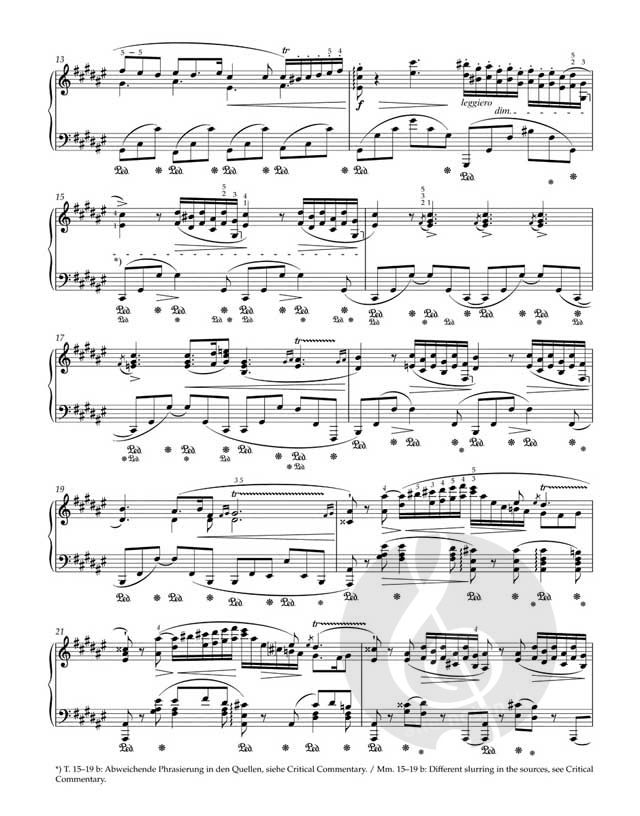
In 1845/46, Chopin composed his bel canto-inspired "Barcarolle" in F sharp major op. 60, which became a model for subsequent generations of composers.
In his evaluation of the divergent and sometimes contradictory sources, due to the different engraver's copies for the first editions published almost simultaneously in Paris, London and Leipzig, the editor comes to new conclusions.
In his evaluation of the divergent and sometimes contradictory sources, caused by the different engraver's models for the first editions published almost simultaneously in Paris, London and Leipzig, the editor arrives at new results and readings of problematic passages in particular.
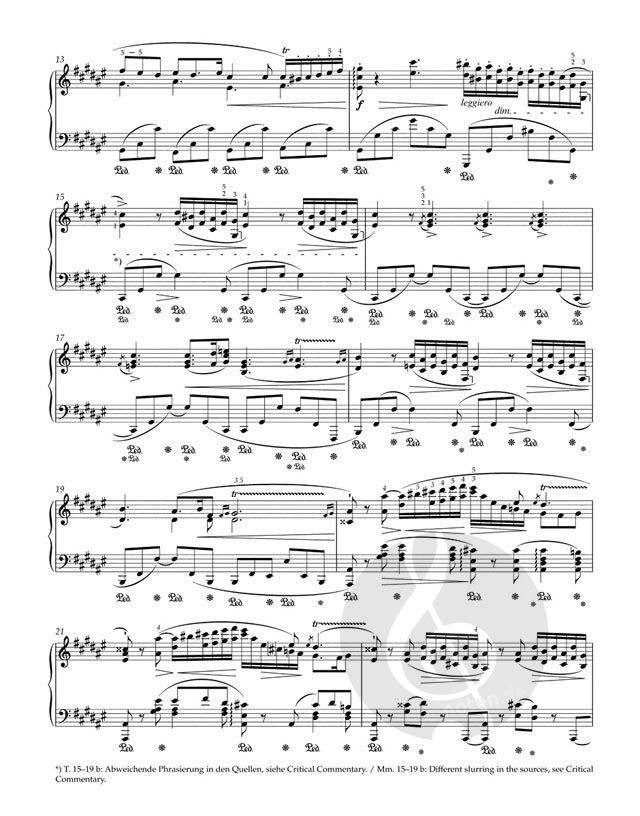
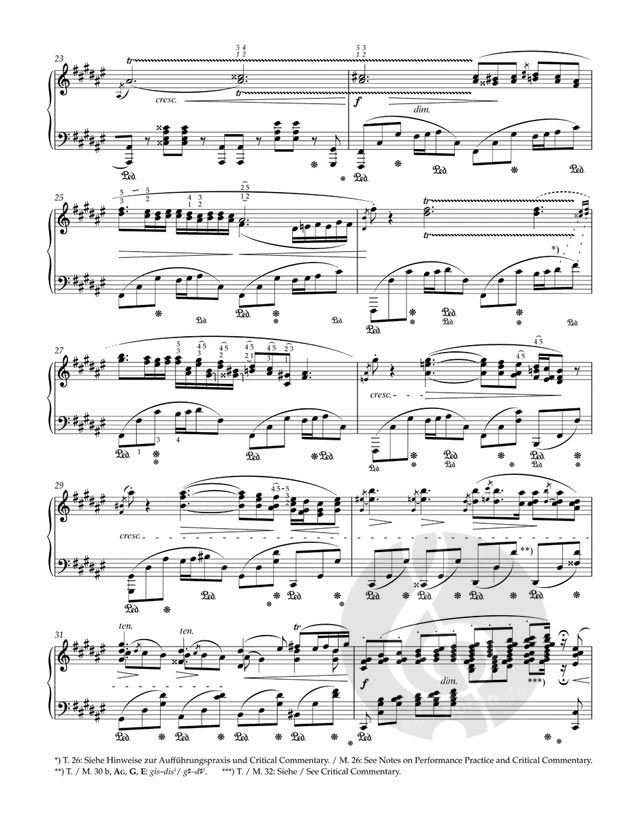
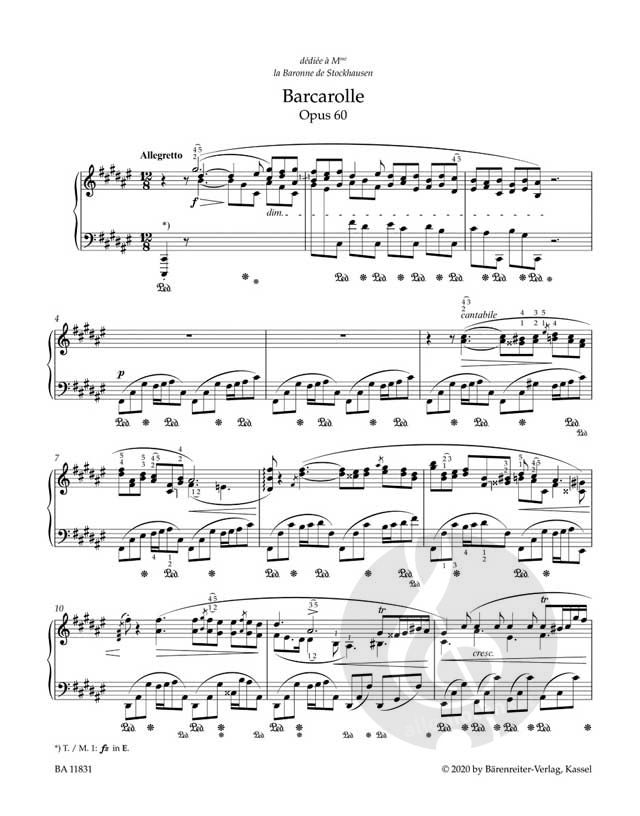
Chopin's pedalings from the other sources, which differ from the main source, are made visible in the small engraving. The Critical Commentary provides information on this as well as on editorial decisions and the numerous variants. An informative preface (German/English) introduces the genesis and Chopin's understanding of the work.
Hardy Rittner supplements Chopin's fingering from a historically informed perspective. He knowledgeably explains central questions of performance practice (including cantilena playing, rubato and pedal use) and discusses different interpretative approaches (German/English).
Practical turnaround passages (with fold-out page) and a reader-friendly score round off this new edition.
Interview with Hardy Rittner about the book "Die vergessene Cantilene. Frédéric Chopin's misunderstood virtuosity"
In his evaluation of the divergent and sometimes contradictory sources, due to the different engraver's copies for the first editions published almost simultaneously in Paris, London and Leipzig, the editor comes to new conclusions.
In his evaluation of the divergent and sometimes contradictory sources, caused by the different engraver's models for the first editions published almost simultaneously in Paris, London and Leipzig, the editor arrives at new results and readings of problematic passages in particular.
Chopin's pedalings from the other sources, which differ from the main source, are made visible in the small engraving. The Critical Commentary provides information on this as well as on editorial decisions and the numerous variants. An informative preface (German/English) introduces the genesis and Chopin's understanding of the work.
Hardy Rittner supplements Chopin's fingering from a historically informed perspective. He knowledgeably explains central questions of performance practice (including cantilena playing, rubato and pedal use) and discusses different interpretative approaches (German/English).
Practical turnaround passages (with fold-out page) and a reader-friendly score round off this new edition.
Interview with Hardy Rittner about the book "Die vergessene Cantilene. Frédéric Chopin's misunderstood virtuosity"
Here is how the download works:
1 Buy download sheet music
Purchase the download score from our online store
2 Order confirmation with download link
Immediately after completing your order, you will receive an order confirmation by email listing all items. You will find the download link next to each item. You can use this link to start the download right away. Please also check your spam folder if necessary.
Customers rated this product:
Manufacturer Information:
Bärenreiter-Verlag Karl Vötterle GmbH & Co. KG
Heinrich-Schütz-Allee 35-37
34131
Kassel
Deutschland
Related products:
- Piano
- Sheet Music (Urtext)
- Hardy Rittner
- Bärenreiter Verlag
-
-
ships within 2-4 working days
- Also available for download!
Other customers also bought:
Claude Debussy
- Piano
- Sheet Music (Urtext)
-
in stock
ships within 1-2 working days
Gabriel Fauré
- Piano
- Sheet Music (Urtext)
-
in stock
ships within 1-2 working days - Also available for download!
- Piano
- Sheet Music
-
ships within 3-6 working days
Johannes Brahms
- Piano
- Sheet Music (Urtext)
- Andreas Boyde
-
in stock
ships within 1-2 working days
Franz Liszt
- Piano
- Sheet Music (Urtext)
-
in stock
ships within 1-2 working days
Johannes Brahms
- Piano
- Sheet Music (Urtext)
-
in stock
ships within 1-2 working days - Also available for download!

Larry Teal
aus dem Amerikanischen ins Deutsche übertragen, kommentiert und mit zwei Beiträgen versehen von Heinrich Baumgartner
- Saxophone
- Sheet Music
- Heinrich Baumgartner
-
in stock
ships within 1-2 working days

Renate Kern, Walter Kern, Doris Kraiger
55 Songs zum Singen, Musizieren, Bewegen und Gestalten
- Elementary Music Pedagogy
- Book
-
in stock
ships within 1-2 working days

- Descant Recorder
- Sheet Music
-
in stock
ships within 1-2 working days

- Flute and Piano
- Piano Score and Part(s) (Urtext)
- Franz Linden
-
in stock
ships within 1-2 working days - Also available for download!

Das Männerchor-Buch für die Westentasche (TTBB)
- Men's Chorus (TTBB)
- Choral Score
-
in stock
ships within 1-2 working days
Anton Bruckner
- Soloists (SATB), Mixed Choir (SATB) and Orchestra
- Piano Reduction
-
in stock
ships within 1-2 working days - Also available for download!

- Descant Recorder
- Sheet Music
-
in stock
ships within 1-2 working days
- Piano
- Sheet Music (Urtext)
-
in stock
ships within 1-2 working days - Also available for download!


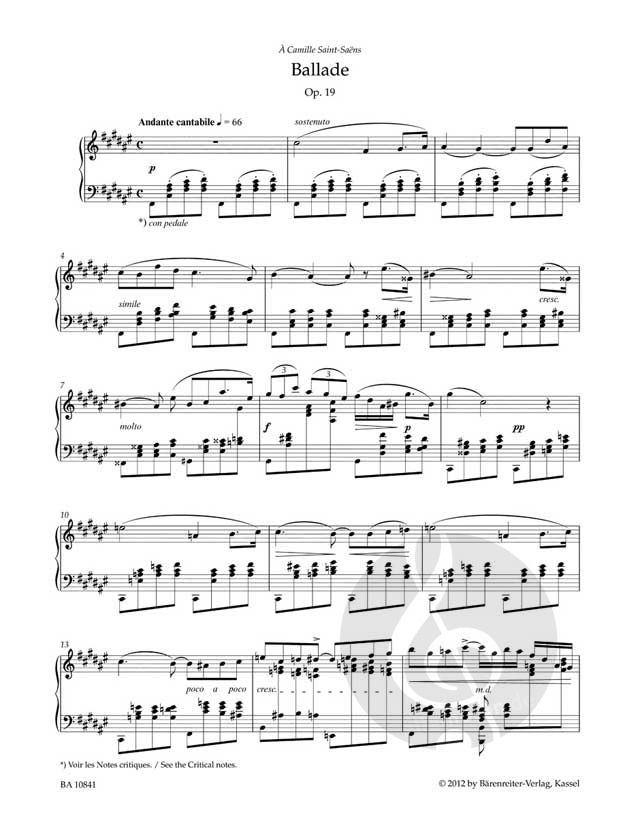
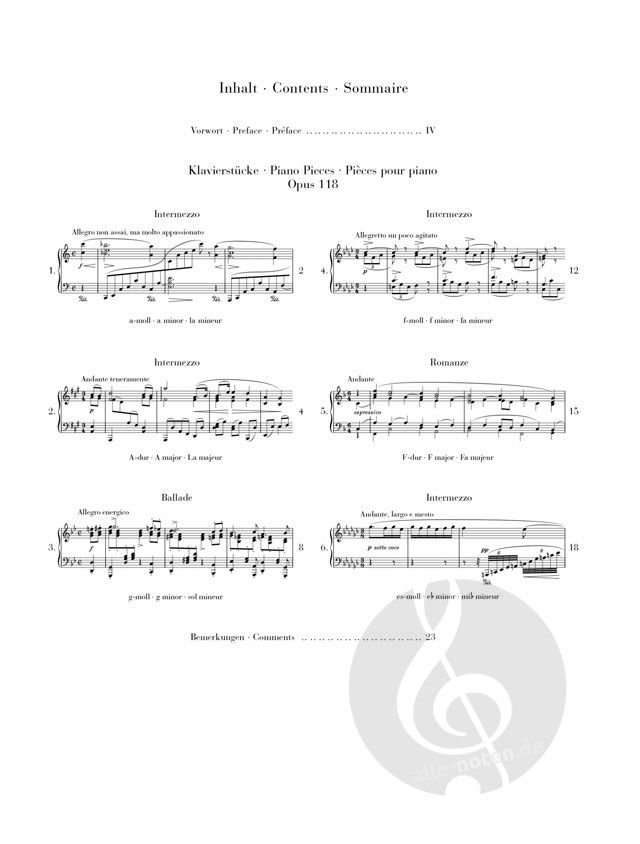




- Piano
- Sheet Music
-
in stock
ships within 1-2 working days - Also available for download!