
Camille Saint-Saëns
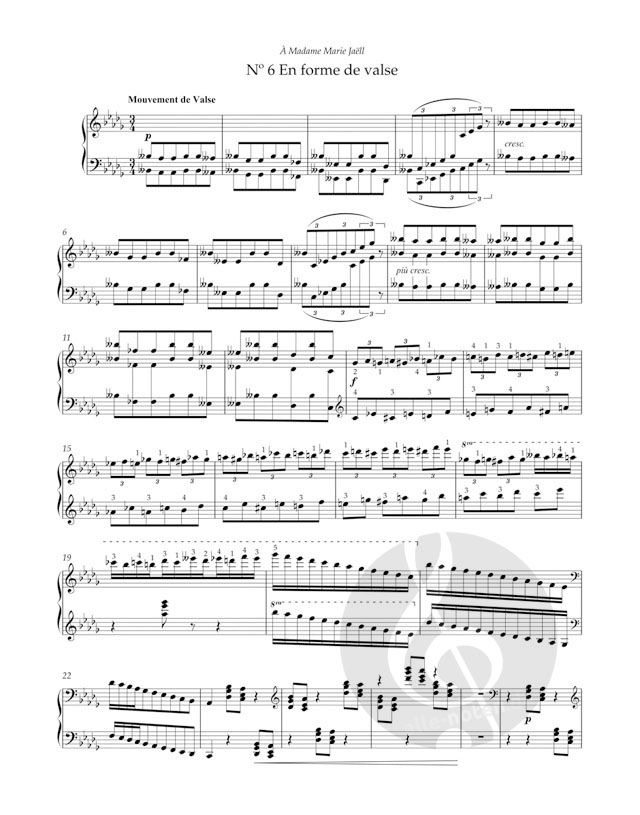
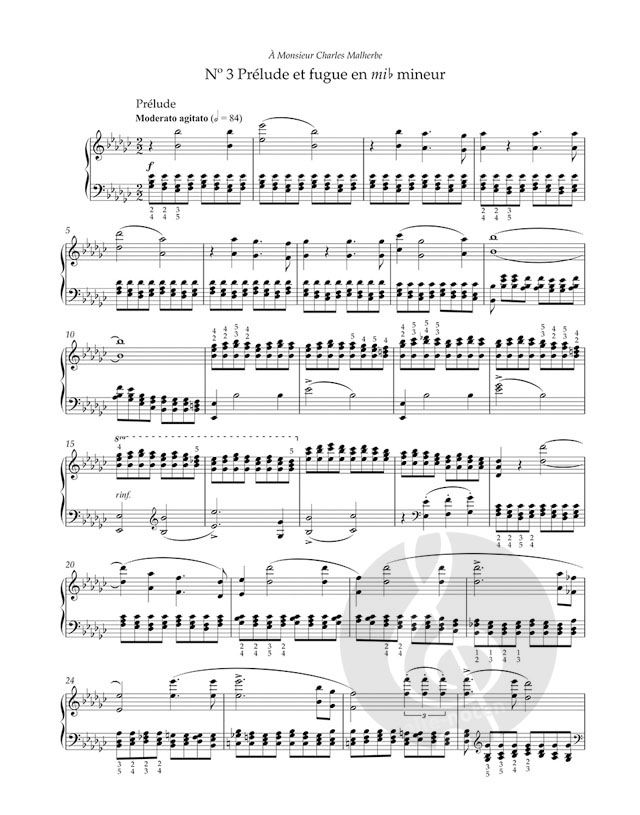
Six Études for piano op. 52
Premier livre

- Instrumentation Piano
- Edition Sheet Music Download
- Composer Camille Saint-Saëns
- Publisher Bärenreiter Verlag
- Series Bärenreiter Urtext
- Editor Catherine Massip
- Order no. BA11854-DL
 immediately available
|
Download immediately after ordering
immediately available
|
Download immediately after ordering

Description:
The new Urtext edition is based on the standard-setting musical text of Camille Saint-Saëns' "Œuvres instrumentales complètes", for which the editor has conscientiously evaluated all known sources. A detailed preface introduces the genesis and significance of the etudes. Readings and variants are precisely documented in the Critical Commentary. Notes on interpretation (French/English/German) and an elegant engraving offer the pianist optimal conditions for studying these virtuoso etudes.
How the download works:
1 Order download article
You order the desired download article in our online shop.
2 Receive order confirmation with download link
Immediately after completing your order, we will send you an order confirmation by email listing all ordered articles. You will find the download link directly next to the article. You can use this to start your download immediately. Please also check your spam folder if necessary.
Heinrich-Schütz-Allee 35-37
34131
Kassel
Deutschland
alle-noten.de: Sheet music shipping since 1969

Since 1969, over 500,000 customers have trusted us. With a huge selection of over 1,000,000 sheet music titles, we are one of the largest providers in Europe. Thanks to our large stock we can often ship sheet music within 24 hours. No matter what sheet music you are looking for: you are in the right place!
Yours, Stefanie Reichert
Head of Customer Service
Related products:

- Piano
- Sheet Music
- Bärenreiter Verlag
-
in stock
|
ships within 1-2 working days
- Also available for download!
Other customers also bought:

- Mixed Choir (SATB) and Orchestra
- Score (Urtext)
-
ships within 2-4 working days

- Piano
- Sheet Music (Urtext)
-
in stock
|
ships within 1-2 working days
- Also available for download!