
Gabriel Fauré
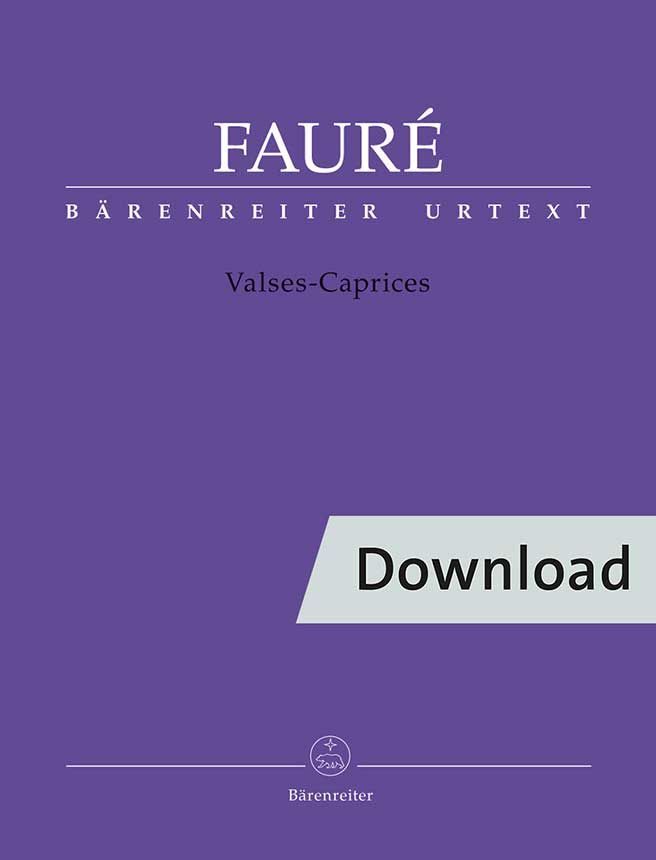
Valses-Caprices

Gabriel Fauré
Valses-Caprices
- Instrumentation Piano
- Composer Gabriel Fauré
- Series Bärenreiter Urtext
- Editor Christophe Grabowski
-
Difficulty Level
- Edition Sheet Music Download
- Publisher Bärenreiter Verlag
- Order no. BA10843-DL
 immediately available
Download immediately after ordering
incl. tax,
excl. shipping costs
Not available in all countries. Learn more

Description:
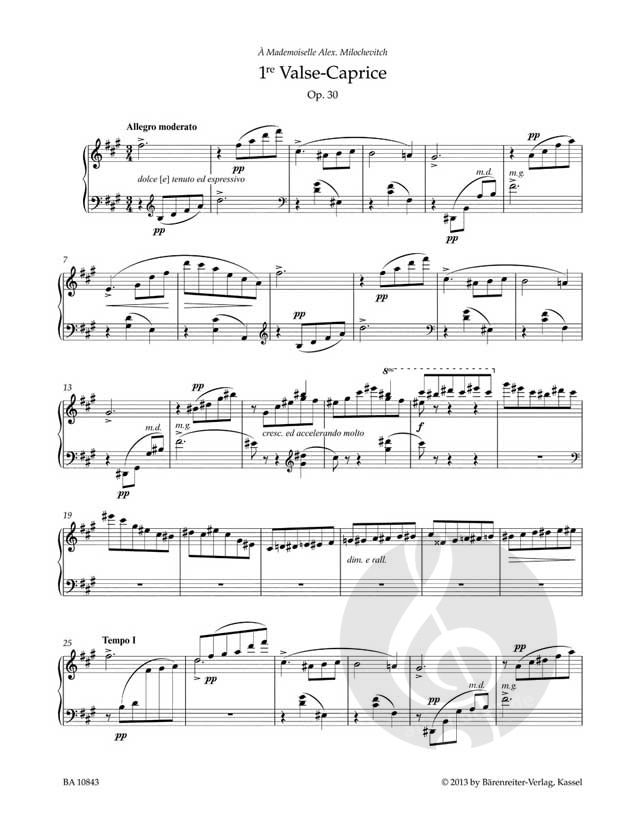
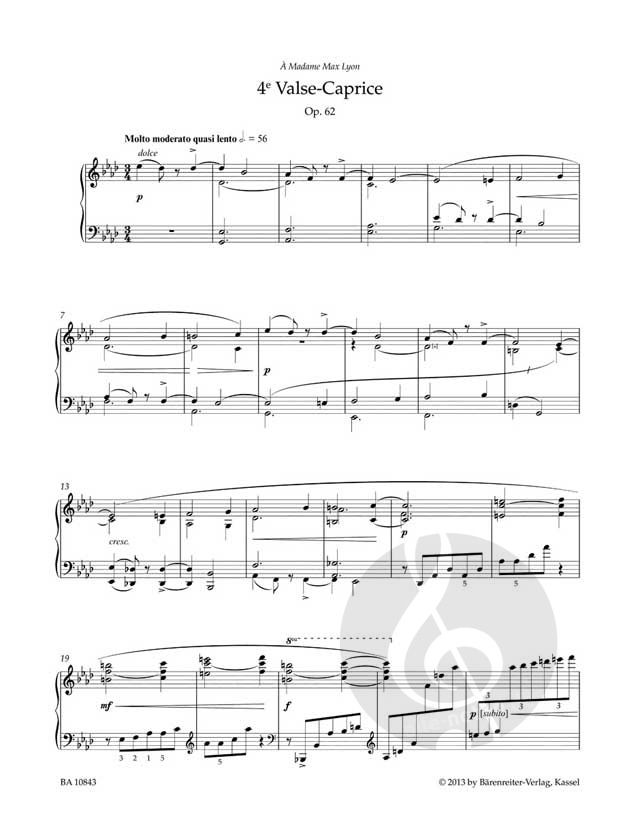
Fauré's four "Valses-Caprices" (1882/83-1894) (BA 10843) reflect various forms of his exploration of the waltz in connection with the free form of the caprice. The composer therefore received inspiration for his "Valses-Caprices" primarily from works such as Liszt's Valse-Impromptu or his "Valse à capriccio" or the famous "Valse-Caprice" by Anton Rubinstein.
Fauré's "13 Barcarolles" (BA 10842), composed over a period of almost four decades (1882-1921), are highly representative of his piano oeuvre and are considered his most characteristic works. They reflect his move away from the Romantic idiom of Chopin and Mendelssohn in particular towards an independent musical language in which he harmoniously reconciled tradition and emerging modernism.
Bärenreiter is now making these two important work complexes available in critical-practical Urtext editions based on the "Œuvres complètes de Gabriel Fauré". They reflect the latest state of research and provide the performer with detailed prefaces on the genesis and significance of the works as well as valuable information on historical interpretation.
In addition to all available manuscript and printed sources, piano rolls with recordings by the composer have also been consulted, which have led to new insights into the "Valses-Caprices" in particular.
Fauré's "13 Barcarolles" (BA 10842), composed over a period of almost four decades (1882-1921), are highly representative of his piano oeuvre and are considered his most characteristic works. They reflect his move away from the Romantic idiom of Chopin and Mendelssohn in particular towards an independent musical language in which he harmoniously reconciled tradition and emerging modernism.
Bärenreiter is now making these two important work complexes available in critical-practical Urtext editions based on the "Œuvres complètes de Gabriel Fauré". They reflect the latest state of research and provide the performer with detailed prefaces on the genesis and significance of the works as well as valuable information on historical interpretation.
In addition to all available manuscript and printed sources, piano rolls with recordings by the composer have also been consulted, which have led to new insights into the "Valses-Caprices" in particular.
-
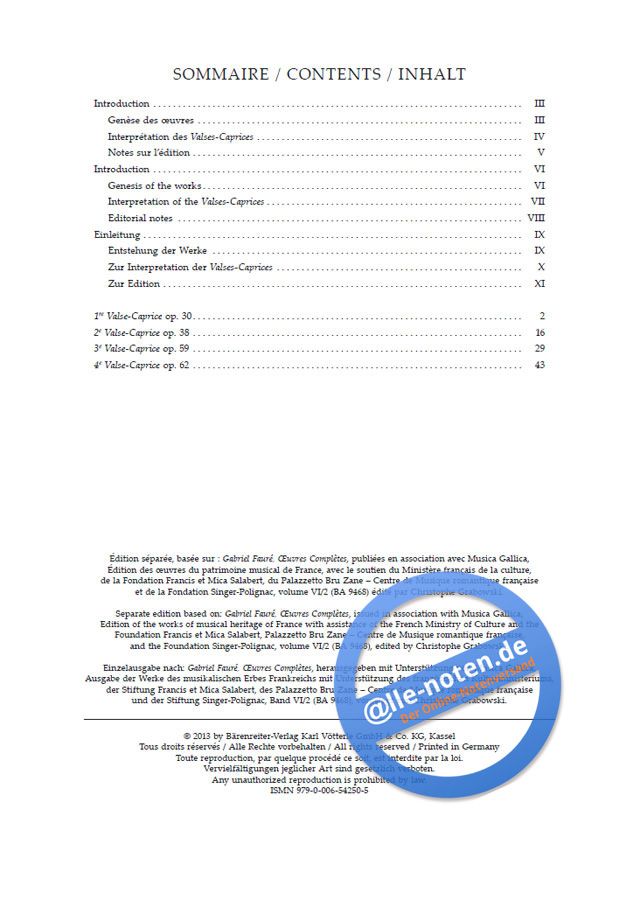
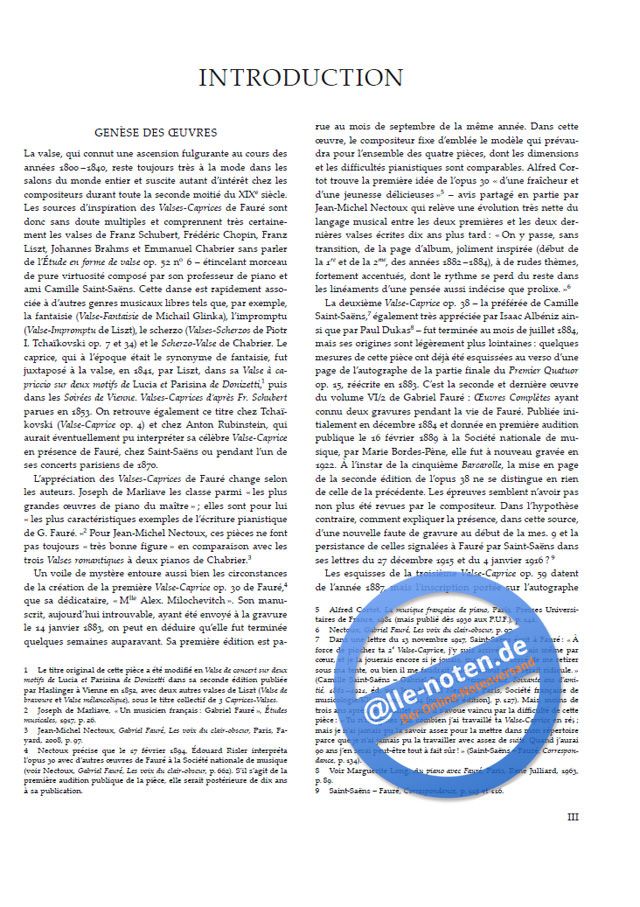
Introduction
-
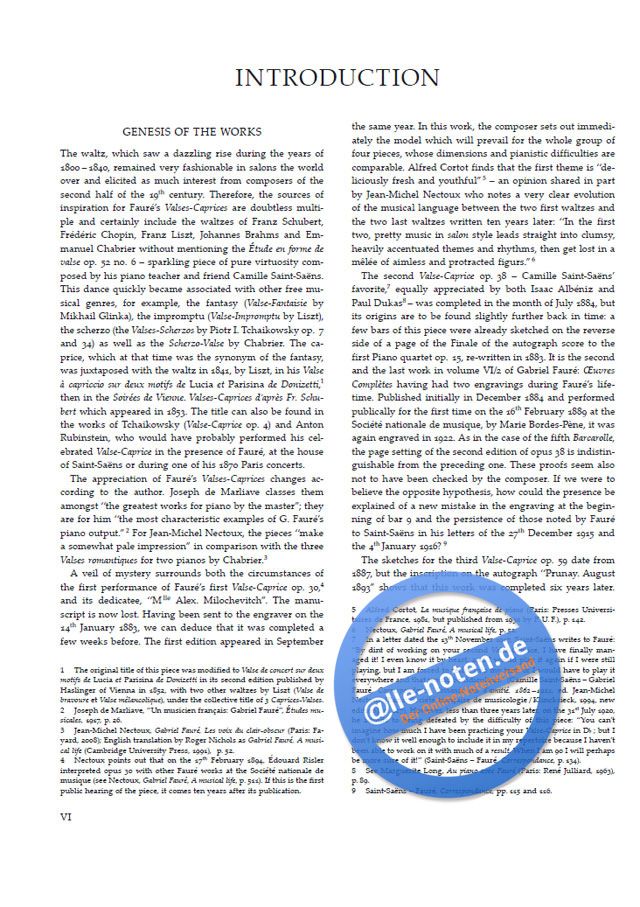
Introduction
-
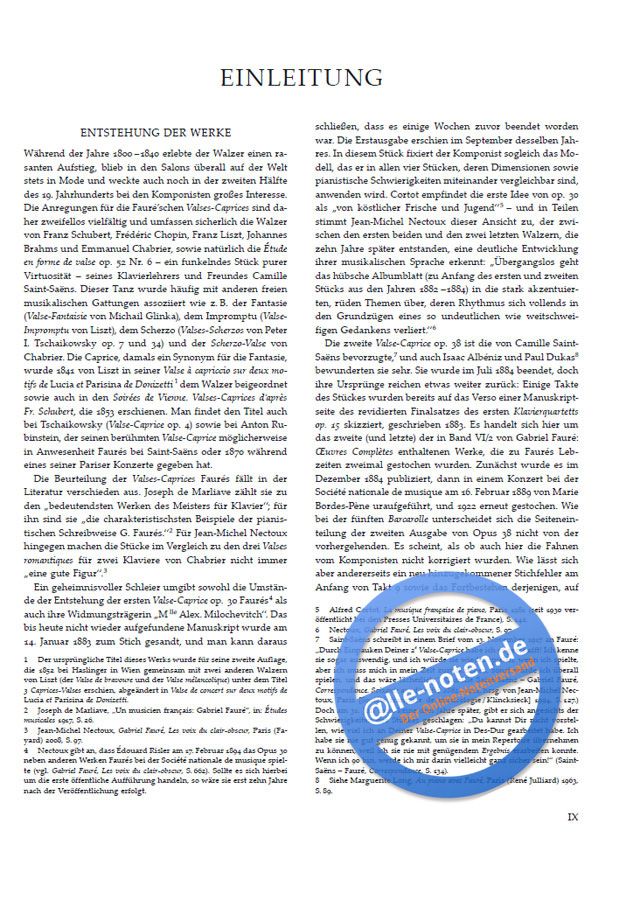
Einleitung
-
1re Valse-Caprice op. 30
-
2e Valse-Caprice op. 38
-
3e Valse-Caprice op. 59
-
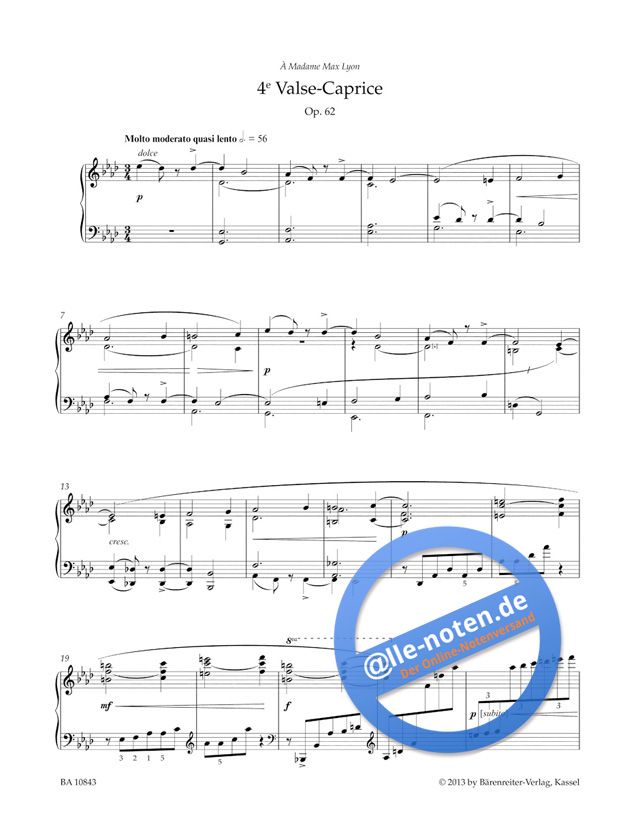
4e Valse-Caprice op. 62
Here is how the download works:
1 Buy download sheet music
Purchase the download score from our online store
2 Order confirmation with download link
Immediately after completing your order, you will receive an order confirmation by email listing all items. You will find the download link next to each item. You can use this link to start the download right away. Please also check your spam folder if necessary.
Customers rated this product:
Manufacturer Information:
Bärenreiter-Verlag Karl Vötterle GmbH & Co. KG
Heinrich-Schütz-Allee 35-37
34131
Kassel
Deutschland
Related products:
- Piano
- Sheet Music
- Bärenreiter Verlag
-
-
in stock
ships within 1-2 working days - Also available for download!
Other customers also bought:
- Piano
- Sheet Music
-
in stock
ships within 1-2 working days
Gabriel Fauré
- Piano
- Sheet Music (Urtext)
-
in stock
ships within 1-2 working days - Also available for download!


- Piano
- Sheet Music (Urtext)
-
in stock
ships within 1-2 working days - Also available for download!
- Piano
- Sheet Music (Urtext)
-
in stock
ships within 1-2 working days