
Classical Instrumental Works for Orchestra
Originally written for piano four hands in 1879, this set of 21 lively dance tunes, mostly on Hungarian themes, are among Johannes Brahms' most popular works today, and they were the most profitable f...
Originally written for piano four hands in 1879, this set of 21 lively dance tunes, mostly on Hungarian themes, are among Johannes Brahms' most popular works today, and they were the most profitable f...
- Orchestra
- Score and Parts
- Albert Parlow
- Edwin F. Kalmus
-
 ships within 2-4 weeks
ships within 2-4 weeks
Originally written for piano four hands in 1879, this set of 21 lively dance tunes, mostly on Hungarian themes, are among Johannes Brahms' (1833-1897) most popular works today, and they were the most...
Originally written for piano four hands in 1879, this set of 21 lively dance tunes, mostly on Hungarian themes, are among Johannes Brahms' (1833-1897) most popular works today, and they were the most...
- Orchestra
- Score
- Antonín Dvořák
- Edwin F. Kalmus
-
ships within 2-4 weeks
ships within 2-4 weeks
Originally written for piano four hands in 1879, this set of 21 lively dance tunes, mostly on Hungarian themes, are among Johannes Brahms' (1833-1897) most popular works today, and they were the most...
Originally written for piano four hands in 1879, this set of 21 lively dance tunes, mostly on Hungarian themes, are among Johannes Brahms' (1833-1897) most popular works today, and they were the most...
- Orchestra
- Score and Parts
- Antonín Dvořák
- Edwin F. Kalmus
-
ships within 2-4 weeks
ships within 2-4 weeks
Performed only three times during Anton Bruckner's (1824-1896) lifetime, the immense Symphony No. 8, considered the composer's most awesome and sweeping symphony, took over five years to write and rev...
Performed only three times during Anton Bruckner's (1824-1896) lifetime, the immense Symphony No. 8, considered the composer's most awesome and sweeping symphony, took over five years to write and rev...
- Orchestra
- Score
- Robert Haas
- Edwin F. Kalmus
-
ships within 2-4 weeks
ships within 2-4 weeks
Performed only three times during Anton Bruckner's (1824-1896) lifetime, the immense Symphony No. 8, considered the composer's most awesome and sweeping symphony, took over five years to write and rev...
Performed only three times during Anton Bruckner's (1824-1896) lifetime, the immense Symphony No. 8, considered the composer's most awesome and sweeping symphony, took over five years to write and rev...
- Orchestra
- Score and Parts
- Robert Haas
- Edwin F. Kalmus
-
ships within 2-4 weeks
ships within 2-4 weeks
LE ROI MALGRÉ LUI (THE RELUCTANT KING) is a comic opera by Emmanuel Chabrier (1841-1894), based on a 1836 vaudeville play by Virginie Ancelot. The stage work depicts the brief reign of Henri, Duke of...
LE ROI MALGRÉ LUI (THE RELUCTANT KING) is a comic opera by Emmanuel Chabrier (1841-1894), based on a 1836 vaudeville play by Virginie Ancelot. The stage work depicts the brief reign of Henri, Duke of...
- Orchestra
- Director's Score
- Edwin F. Kalmus
-
ships within 2-4 weeks
ships within 2-4 weeks
LE ROI MALGRÉ LUI (THE RELUCTANT KING) is a comic opera by Emmanuel Chabrier (1841-1894), based on a 1836 vaudeville play by Virginie Ancelot. The stage work depicts the brief reign of Henri, Duke of...
LE ROI MALGRÉ LUI (THE RELUCTANT KING) is a comic opera by Emmanuel Chabrier (1841-1894), based on a 1836 vaudeville play by Virginie Ancelot. The stage work depicts the brief reign of Henri, Duke of...
- Orchestra
- Score and Parts
- Edwin F. Kalmus
-
ships within 2-4 weeks
ships within 2-4 weeks
After España, the short work Joyeuse Marche is French composer Emmanuel Chabrier's (1841-1894) second most popular composition. The joyous and at times comical piece was originally written for piano,...
After España, the short work Joyeuse Marche is French composer Emmanuel Chabrier's (1841-1894) second most popular composition. The joyous and at times comical piece was originally written for piano,...
- Orchestra
- Score
- Edwin F. Kalmus
-
ships within 2-4 weeks
ships within 2-4 weeks
After España, the short work Joyeuse Marche is French composer Emmanuel Chabrier's (1841-1894) second most popular composition. The joyous and at times comical piece was originally written for piano,...
After España, the short work Joyeuse Marche is French composer Emmanuel Chabrier's (1841-1894) second most popular composition. The joyous and at times comical piece was originally written for piano,...
- Orchestra
- Score and Parts
- Edwin F. Kalmus
-
ships within 2-4 weeks
ships within 2-4 weeks

España, rhapsody for orchestra is the most well-known work by French composer Emmanuel Chabrier (1841-1894). Written in 1883, Chabrier was inspired following a trip to Spain with his wife, where he le...
España, rhapsody for orchestra is the most well-known work by French composer Emmanuel Chabrier (1841-1894). Written in 1883, Chabrier was inspired following a trip to Spain with his wife, where he le...
- Orchestra
- Score
- Clinton Nieweg
- Edwin F. Kalmus
-
ships within 2-4 weeks
ships within 2-4 weeks
Habanera, composed for piano in October 1885, explores a folk tune that Emmanuel Chabrier (1841-1894) collected on his five-month trip to Spain. The habanera derives its name from Havana, Cuba, charac...
Habanera, composed for piano in October 1885, explores a folk tune that Emmanuel Chabrier (1841-1894) collected on his five-month trip to Spain. The habanera derives its name from Havana, Cuba, charac...
- Orchestra
- Score and Parts
- Edwin F. Kalmus
-
ships within 2-4 weeks
ships within 2-4 weeks
Les Sylphides is a ballet blanc set to the music of Frédéric Chopin (1810-1849) by Russian composer, teacher, and conductor Alexander Glazunov. Described as a "romantic reverie" by dance historian and...
Les Sylphides is a ballet blanc set to the music of Frédéric Chopin (1810-1849) by Russian composer, teacher, and conductor Alexander Glazunov. Described as a "romantic reverie" by dance historian and...
- Orchestra
- Score
- Alexander Glasunow William McDermott
- Edwin F. Kalmus
-
ships within 2-4 weeks
ships within 2-4 weeks
Les Sylphides is a ballet blanc set to the music of Frédéric Chopin (1810-1849) by Russian composer, teacher, and conductor Alexander Glazunov. Described as a “romantic reverie” by dance historian and...
Les Sylphides is a ballet blanc set to the music of Frédéric Chopin (1810-1849) by Russian composer, teacher, and conductor Alexander Glazunov. Described as a “romantic reverie” by dance historian and...
- Orchestra
- Score and Parts
- Alexander Glasunow William McDermott
- Edwin F. Kalmus
-
ships within 2-4 weeks
ships within 2-4 weeks
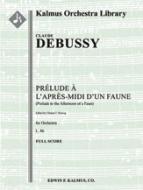
Prélude à l’après-midi d’un faune (Prelude to the Afternoon of a Faun, L. 86) was composed by Claude Debussy (1862-1918) in 1894. A symphonic poem based on Stéphane Mallarmé’s poem L’après-midi d’un f...
Prélude à l’après-midi d’un faune (Prelude to the Afternoon of a Faun, L. 86) was composed by Claude Debussy (1862-1918) in 1894. A symphonic poem based on Stéphane Mallarmé’s poem L’après-midi d’un f...
- Orchestra
- Score
- Edwin F. Kalmus
-
ships within 2-4 weeks
ships within 2-4 weeks
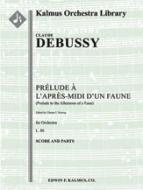
Prélude à l’après-midi d’un faune (Prelude to the Afternoon of a Faun, L. 86) was composed by Claude Debussy (1862-1918) in 1894. A symphonic poem based on Stéphane Mallarmé’s poem L’après-midi d’un f...
Prélude à l’après-midi d’un faune (Prelude to the Afternoon of a Faun, L. 86) was composed by Claude Debussy (1862-1918) in 1894. A symphonic poem based on Stéphane Mallarmé’s poem L’après-midi d’un f...
- Orchestra
- Score and Parts
- Edwin F. Kalmus
-
ships within 2-4 weeks
ships within 2-4 weeks
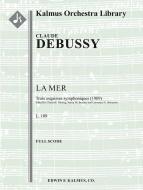
LA MER was the second of Claude Debussy's (1862-1918) three orchestral works in three sections. Although the composition of LA MER took him more than a year and a half, this was unusually quick progre...
LA MER was the second of Claude Debussy's (1862-1918) three orchestral works in three sections. Although the composition of LA MER took him more than a year and a half, this was unusually quick progre...
- Orchestra
- Score
- Edwin F. Kalmus
-
ships within 2-4 weeks
ships within 2-4 weeks
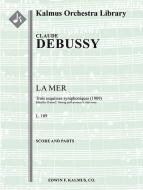
LA MER was the second of Claude Debussy's (1862-1918) three orchestral works in three sections. Although the composition of LA MER took him more than a year and a half, this was unusually quick progre...
LA MER was the second of Claude Debussy's (1862-1918) three orchestral works in three sections. Although the composition of LA MER took him more than a year and a half, this was unusually quick progre...
- Orchestra
- Score and Parts
- Clinton F. Nieweg
- Edwin F. Kalmus
-
ships within 2-4 weeks
ships within 2-4 weeks
Léo Delibes' (1836-1891) Coppélia (1870) is a comic ballet that tells the story of a sinister doctor who has made a beautiful, life-sized dancing doll (the title character) and the young man who becom...
Léo Delibes' (1836-1891) Coppélia (1870) is a comic ballet that tells the story of a sinister doctor who has made a beautiful, life-sized dancing doll (the title character) and the young man who becom...
- Orchestra
- Score
- William McDermott
- Edwin F. Kalmus
-
ships within 2-4 weeks
ships within 2-4 weeks
Léo Delibes' (1836-1891) Coppélia (1870) is a comic ballet that tells the story of a sinister doctor who has made a beautiful, life-sized dancing doll (the title character) and the young man who becom...
Léo Delibes' (1836-1891) Coppélia (1870) is a comic ballet that tells the story of a sinister doctor who has made a beautiful, life-sized dancing doll (the title character) and the young man who becom...
- Orchestra
- Score and Parts
- William McDermott
- Edwin F. Kalmus
-
ships within 2-4 weeks
ships within 2-4 weeks
Léo Delibes (1836-1891) looked to a play of the Italian Renaissance, Torquato Tasso's AMINTA, for narrative material when composing his full-length ballet SYLVIA. Choreographed by Louis Mérante, with...
Léo Delibes (1836-1891) looked to a play of the Italian Renaissance, Torquato Tasso's AMINTA, for narrative material when composing his full-length ballet SYLVIA. Choreographed by Louis Mérante, with...
- Orchestra
- Score
- Edwin F. Kalmus
-
ships within 2-4 weeks
ships within 2-4 weeks
Léo Delibes (1836-1891) looked to a play of the Italian Renaissance, Torquato Tasso's AMINTA, for narrative material when composing his full-length ballet SYLVIA. Choreographed by Louis Mérante, with...
Léo Delibes (1836-1891) looked to a play of the Italian Renaissance, Torquato Tasso's AMINTA, for narrative material when composing his full-length ballet SYLVIA. Choreographed by Louis Mérante, with...
- Orchestra
- Score and Parts
- Edwin F. Kalmus
-
ships within 2-4 weeks
ships within 2-4 weeks
Don Pasquale, regarded as one of the crowning gems of comic opera, had its first performance on January 3, 1843 by the Theatre-Italien at the Salle Ventadour in Paris. Gaetano Donizetti (1797-1848) co...
Don Pasquale, regarded as one of the crowning gems of comic opera, had its first performance on January 3, 1843 by the Theatre-Italien at the Salle Ventadour in Paris. Gaetano Donizetti (1797-1848) co...
- Orchestra
- Score
- Edwin F. Kalmus
-
ships within 2-4 weeks
ships within 2-4 weeks
Don Pasquale, regarded as one of the crowning gems of comic opera, had its first performance on January 3, 1843 by the Theatre-Italien at the Salle Ventadour in Paris. Gaetano Donizetti (1797-1848) co...
Don Pasquale, regarded as one of the crowning gems of comic opera, had its first performance on January 3, 1843 by the Theatre-Italien at the Salle Ventadour in Paris. Gaetano Donizetti (1797-1848) co...
- Orchestra
- Score and Parts
- Edwin F. Kalmus
-
ships within 2-4 weeks
ships within 2-4 weeks
![Symphony No. 5 in F, Op. 76/B. 54 [Symphony No. 3 in F, Op. 76 - obsolete numbering]](https://www.all-sheetmusic.com/out/pictures/generated/product/1/145_190_75/Art_1522047.JPEG)
Antonín Dvorák (1841-1904) composed his SYMPHONY No. 5 in F Major, Op. 76, in the summer of 1875. Originally published as SYMPHONY No. 3, it received its first performance at the Prague Zofín concert...
Antonín Dvorák (1841-1904) composed his SYMPHONY No. 5 in F Major, Op. 76, in the summer of 1875. Originally published as SYMPHONY No. 3, it received its first performance at the Prague Zofín concert...
- Orchestra
- Score
- Edwin F. Kalmus
-
ships within 2-4 weeks
ships within 2-4 weeks
![Symphony No. 5 in F, Op. 76/B. 54 [Symphony No. 3 in F, Op. 76 - obsolete numbering]](https://www.all-sheetmusic.com/out/pictures/generated/product/1/145_190_75/Art_1522048.JPEG)
Antonín Dvorák (1841-1904) composed his SYMPHONY No. 5 in F Major, Op. 76, in the summer of 1875. Originally published as SYMPHONY No. 3, it received its first performance at the Prague Žofín concert...
Antonín Dvorák (1841-1904) composed his SYMPHONY No. 5 in F Major, Op. 76, in the summer of 1875. Originally published as SYMPHONY No. 3, it received its first performance at the Prague Žofín concert...
- Orchestra
- Score and Parts
- Edwin F. Kalmus
-
ships within 2-4 weeks
ships within 2-4 weeks