
Maurice Ravel
Sonata in four parts
for violin and violoncello

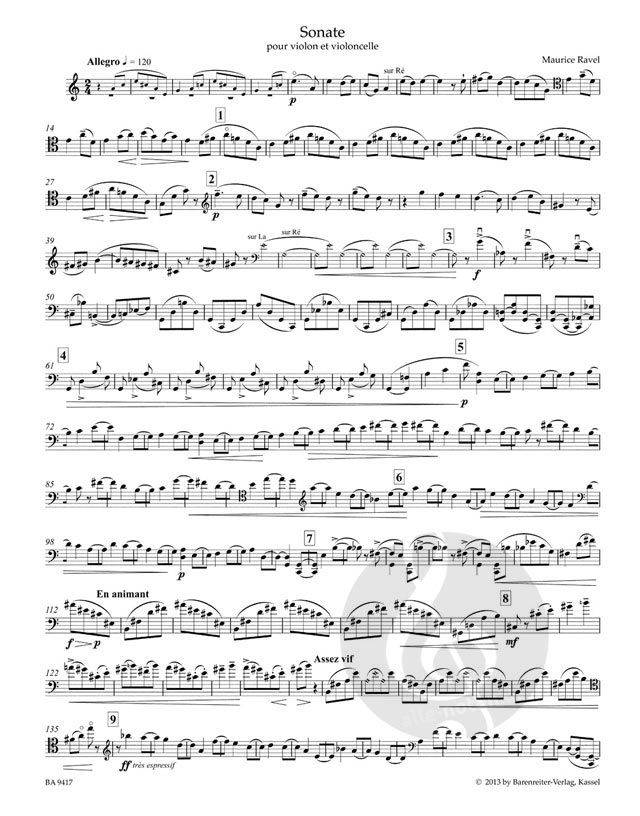
Maurice Ravel
Sonata in four parts
for violin and violoncello
- Instrumentation String Duet (Cello and Violin)
- Composer Maurice Ravel
- Series Bärenreiter Urtext
- Editor Douglas Woodfull-Harris
-
Difficulty Level
- Edition Sheet Music Download (Urtext)
- Publisher Bärenreiter Verlag
- Order no. BA9417-DL
 immediately available
Download immediately after ordering
incl. tax,
excl. shipping costs
Not available in all countries. Learn more
Description:
In 1920, Maurice Ravel was asked by his publisher Durand to contribute to an issue of the magazine "La Revue musicale" dedicated to Claude Debussy. A supplement was to contain the first movement of Ravel's Sonata for violin and cello as well as other contributions by Debussy's friends, including Stravinsky, Satie, Dukas, Bartók, de Falla and others. This first movement, the autograph of which is lost, subsequently developed into a large-scale, four-movement chamber music work.
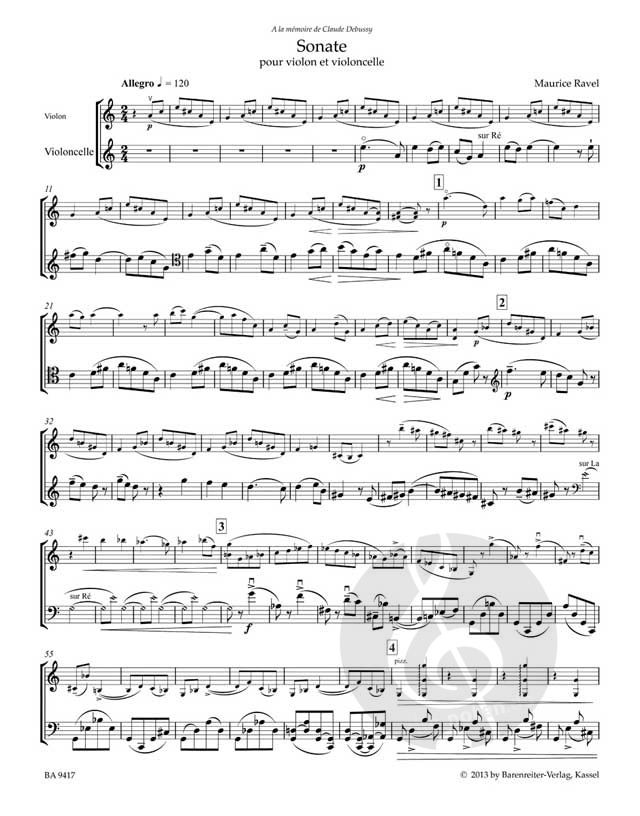
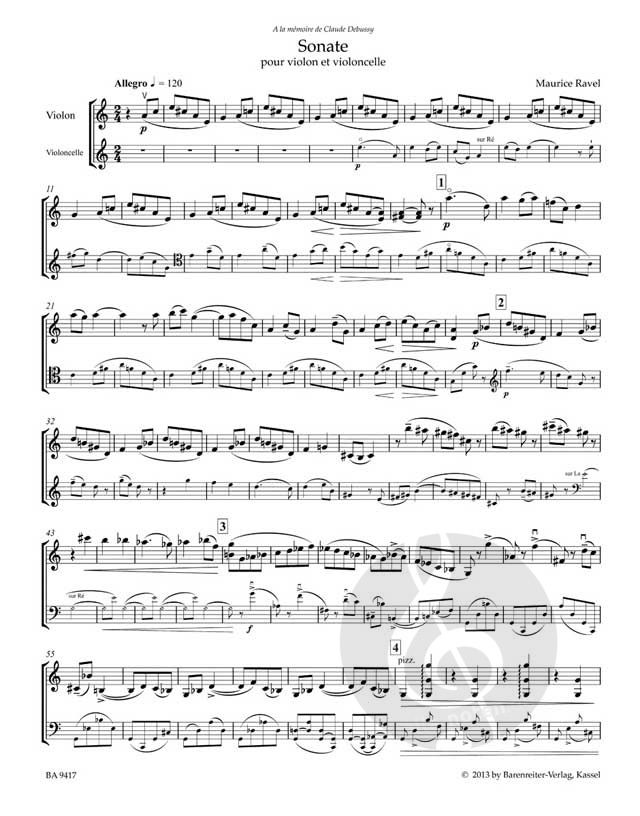
This scholarly-critical edition - the first ever of this masterpiece - presents the composition in two playing scores. The preface provides information about the history of the work, in which the rehearsals with the violinist Hélène Jourdan-Morhange and the cellist Maurice Maréchal play an important role.
The sources for this new edition are the engraver's model, the personal autograph scores (with earlier versions of some passages) used during rehearsals, as well as the scores of the first edition owned by Jourdan-Morhange and Maréchal, which contain additions by Jourdan-Morhange. The appendix contains the musicians' original fingerings, which were not reproduced in the first edition and represent an important document for performance practice in the early 20th century.
This scholarly-critical edition - the first ever of this masterpiece - presents the composition in two playing scores. The preface provides information about the history of the work, in which the rehearsals with the violinist Hélène Jourdan-Morhange and the cellist Maurice Maréchal play an important role.
The sources for this new edition are the engraver's model, the personal autograph scores (with earlier versions of some passages) used during rehearsals, as well as the scores of the first edition owned by Jourdan-Morhange and Maréchal, which contain additions by Jourdan-Morhange. The appendix contains the musicians' original fingerings, which were not reproduced in the first edition and represent an important document for performance practice in the early 20th century.
-
Einführung
-
Introduction
-
Introduction
-
Facsimiles
-
Sources / Critical Commentary
-
Sonate in vier Teilen für Violine und Violoncello
Related products:
Here is how the download works:
1 Buy download sheet music
Purchase the download score from our online store
2 Order confirmation with download link
Immediately after completing your order, you will receive an order confirmation by email listing all items. You will find the download link next to each item. You can use this link to start the download right away. Please also check your spam folder if necessary.
Customers rated this product:
Manufacturer Information:
Bärenreiter-Verlag Karl Vötterle GmbH & Co. KG
Heinrich-Schütz-Allee 35-37
34131
Kassel
Deutschland
Other customers also bought:

Rainer Lischka
- String Duet (Cello and Violin)
- Sheet Music
-
in stock
ships within 1-2 working days
- String Duet (Cello and Violin)
- Score and Parts
-
ships within 4-8 working days
- String Orchestra
- Set of Parts
- Anita Hewitt-Jones
-
ships within 2-4 weeks

- String Duet (Cello and Viola)
- Sheet Music
-
in stock
ships within 1-2 working days
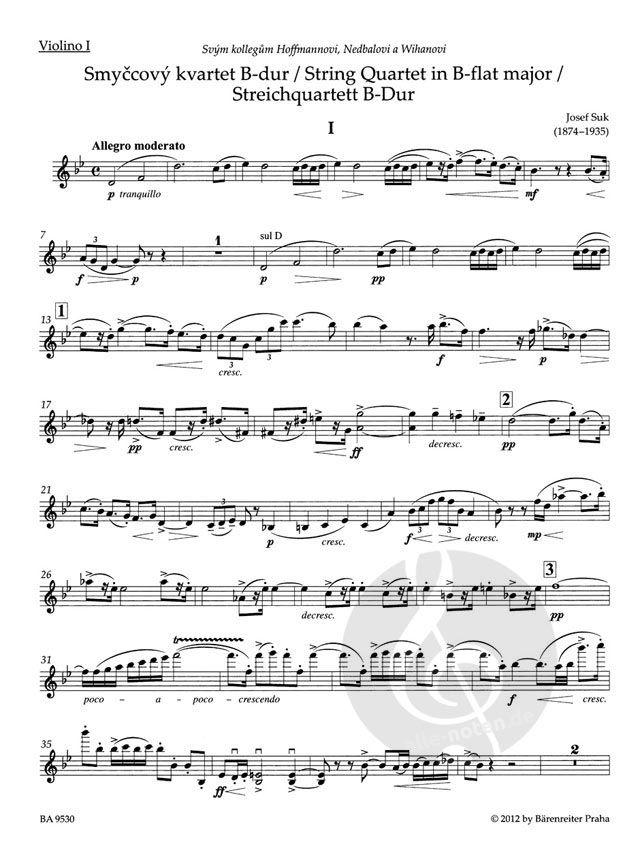
Josef Suk
- String Quartet (2 Violins, Viola and Cello)
- Set of Parts
-
ships within 2-4 working days
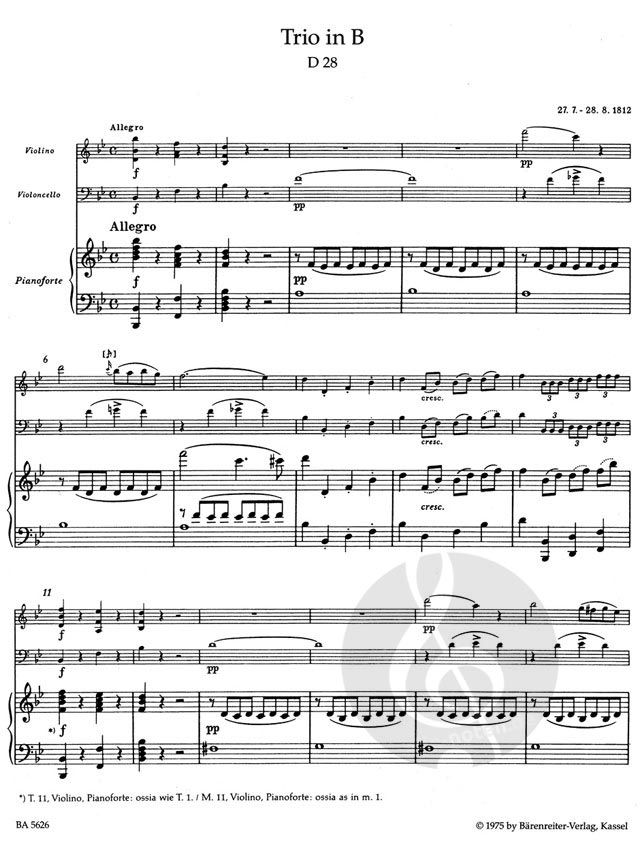
- Violin, Cello and Piano
- Score and Parts (Urtext)
-
in stock
ships within 1-2 working days - Also available for download!
- String Trio (Cello, Viola and Violin)
- Set of Parts (Urtext)
-
in stock
ships within 1-2 working days - Also available for download!
Bedrich Smetana
- String Quartet (2 Violins, Viola and Cello)
- Set of Parts (Urtext)
-
in stock
ships within 1-2 working days
César Franck
- String Quartet
- Set of Parts (Urtext)
-
ships within 2-4 working days
- Also available for download!
César Franck
- String Quartet
- Study Score (Urtext)
-
in stock
ships within 1-2 working days
Maurice Ravel
- Violin, Cello and Piano
- Score and Parts (Urtext)
- Pascal Rogé
-
in stock
ships within 1-2 working days
- String Duet (Cello and Violin)
- Sheet Music
-
ships within 3-6 working days

- String Duet (Cello and Violin)
- Sheet Music
- Bernhard Päuler
-
ships within 4-8 working days




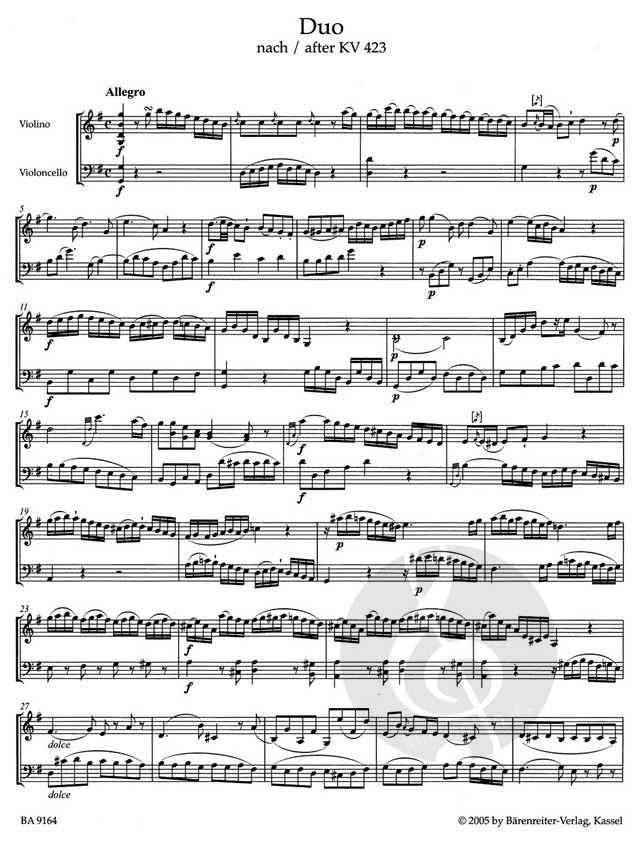
Wolfgang Amadeus Mozart
after the Duos for Violin and Viola K. 423, 424
- String Duet (Cello and Violin)
- Score and Parts
-
in stock
ships within 1-2 working days - Also available for download!
Zoltán Kodály
- String Duet (Cello and Violin)
- Set of Parts
-
in stock
ships within 1-2 working days