
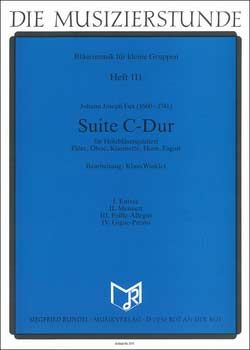
Johann Joseph Fux
Suite C major
Ensemble Time 111
PDF
view
Johann Joseph Fux
Suite C major
Ensemble Time 111
- Instrumentation 5 Woodwind Instruments
- Composer Johann Joseph Fux
- Editor Klaus Winkler
- Series Die Musizierstunde
-
Difficulty Level
- Edition Score and Parts
- Publisher Musikverlag Rundel
- Order no. MVSR5111
 ships within 2-5 working days
incl. tax,
excl. shipping costs
Not available in all countries. Learn more

Description:
Flute in C
Oboe
Clarinet in Bb
Horn in Eb/F
Bassoon (Basson)
Johann Joseph Fux (1660 - 1741), known as a music theorist and Kapellmeister of three emperors in Vienna, created an extensive oeuvre: a large number of church music works (masses, requiems, vespers, psalms, etc.).), oratorios, operas and instrumental music, only a small part of which appeared in print.
His collection 'Concento musico-instrumentalis', dedicated to Emperor Joseph I, appeared in print in Nuremberg in 1701; the volume contains 7 partitas (orchestral suites), each with a fluctuating number of individual movements, scored for strings, oboes, bassoon, and occasionally flauto and clarino.
In order to make J.J. Fux's instrumental works accessible to a wider public, individual movements were assembled into 'suites'. In the selection, attention was paid to the possibility of cyclic performance. Other considerations were that the melodic formations should have as high an affinity as possible to wind music and that the keys of the individual movements should be identical or related. The movements were originally conceived for four or five voices; occasionally the fifth voice was added in motivic alignment on the basis of the figured basso continuo. The original notation shows hardly any rules for articulation; individual slurs were added analogously. Some suggestions are made for the dynamic execution of the individual movements, but these must by no means be regarded as binding. The indicated metronome numbers can also serve as orientation.
May the pieces serve to make the unfortunately often forgotten compositional work of Fux known in a new form and to recall it again.
Klaus Winkler
Oboe
Clarinet in Bb
Horn in Eb/F
Bassoon (Basson)
Johann Joseph Fux (1660 - 1741), known as a music theorist and Kapellmeister of three emperors in Vienna, created an extensive oeuvre: a large number of church music works (masses, requiems, vespers, psalms, etc.).), oratorios, operas and instrumental music, only a small part of which appeared in print.
His collection 'Concento musico-instrumentalis', dedicated to Emperor Joseph I, appeared in print in Nuremberg in 1701; the volume contains 7 partitas (orchestral suites), each with a fluctuating number of individual movements, scored for strings, oboes, bassoon, and occasionally flauto and clarino.
In order to make J.J. Fux's instrumental works accessible to a wider public, individual movements were assembled into 'suites'. In the selection, attention was paid to the possibility of cyclic performance. Other considerations were that the melodic formations should have as high an affinity as possible to wind music and that the keys of the individual movements should be identical or related. The movements were originally conceived for four or five voices; occasionally the fifth voice was added in motivic alignment on the basis of the figured basso continuo. The original notation shows hardly any rules for articulation; individual slurs were added analogously. Some suggestions are made for the dynamic execution of the individual movements, but these must by no means be regarded as binding. The indicated metronome numbers can also serve as orientation.
May the pieces serve to make the unfortunately often forgotten compositional work of Fux known in a new form and to recall it again.
Klaus Winkler
-
Entrée
-
Menuett
-
Follie-Allegro
-
Gigue-Presto
Customers rated this product:
Manufacturer Information:
Musikverlag Rundel
Untere Gewendhalde 27
88430
Rot an der Rot
Deutschland
Other customers also bought:
Horn Part
- Flute, Oboe, Clarinet, Horn and Bassoon
- Instrumental Part: Horn
-
ships within 2-4 weeks
Oboe Part
- Flute, Oboe, Clarinet, Horn and Bassoon
- Instrumental Part: Oboe
-
ships within 2-4 weeks
Bassoon Part
- Flute, Oboe, Clarinet, Horn and Bassoon
- Instrumental Part: Bassoon
-
ships within 2-4 weeks

Villem Kapp
- 5 Woodwind Instruments
- Score and Parts
-
ships within 4-8 working days
Flute Part
- Flute, Oboe, Clarinet, Horn and Bassoon
- Instrumental Part: Flute
-
in stock
ships within 1-2 working days
Clarinet Part
- Flute, Oboe, Clarinet, Horn and Bassoon
- Instrumental Part: Clarinet
-
ships within 2-4 weeks
Gabriel Fauré
- 5 Woodwind Instruments
- Score and Parts
- Georges Moreau
-
ships within 2-4 weeks
Wolfgang Amadeus Mozart
- 5 Woodwind Instruments
- Sheet Music
- David Marlatt
-
ships within 4-8 working days
- Woodwind Ensemble
- Score and Parts
-
ships within 2-5 working days
- 3 Oboes and Bassoon
- Score and Parts
-
ships within 2-4 working days
for Woodwind Quartet
- 4 Woodwind Instruments
- Score and Parts
- Bertrand Moren
-
in stock
ships within 1-2 working days - Also available for download!
- Flute and 4 Woodwind Instruments
- Score and Parts
-
in stock
ships within 1-2 working days
For Oboe (Flute), B flat Clarinet and Bassoon
- Oboe, Clarinet and Bassoon
- Sheet Music
- Bertold Hummel
-
in stock
ships within 1-2 working days
- Flute, Oboe and Bassoon
- Study Score
-
in stock
ships within 1-2 working days

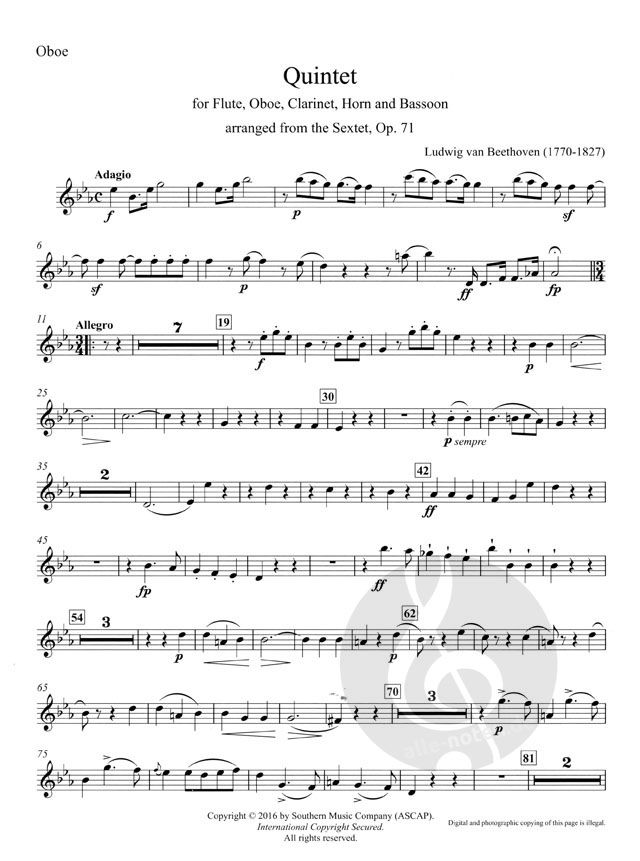
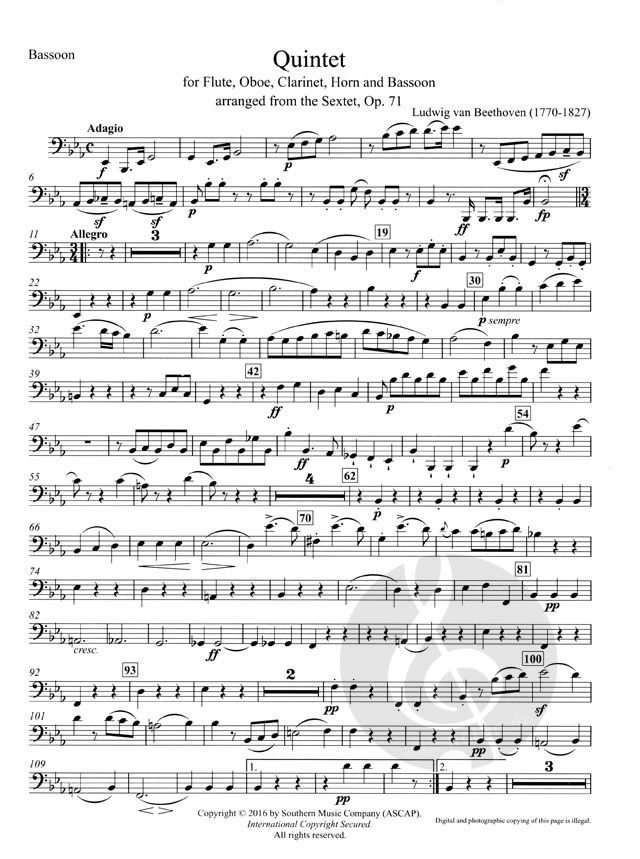

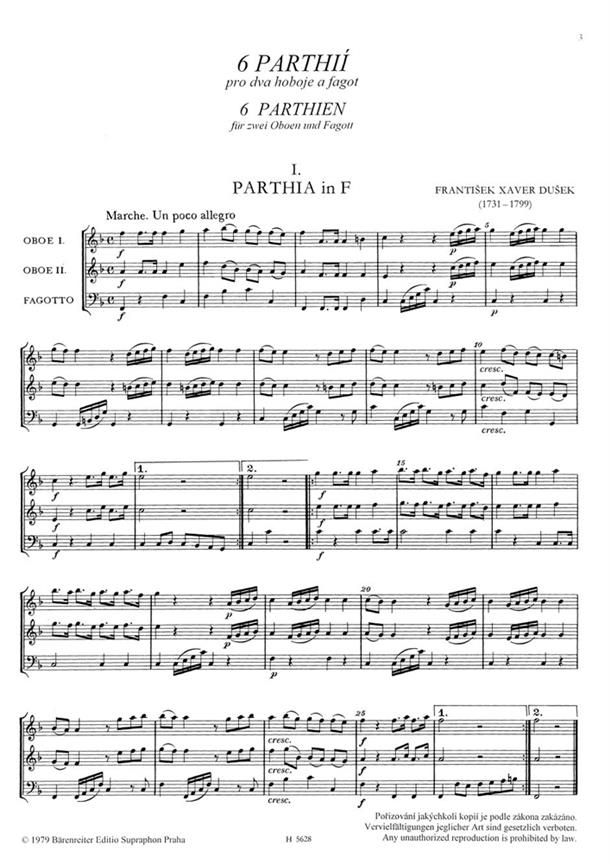
Frantisek-Xaver Dusek
- 2 Oboes and Bassoon
- Score and Parts
-
ships within 2-4 weeks