
Johann Sebastian Bach
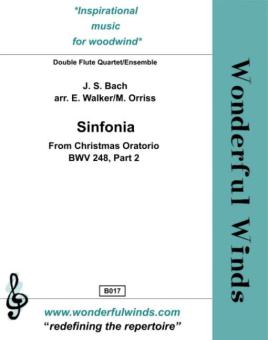
Sinfonia from Christmas Oratorio BWV 248, Part 2
NEW
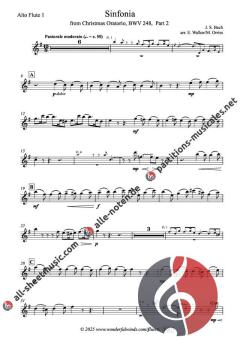
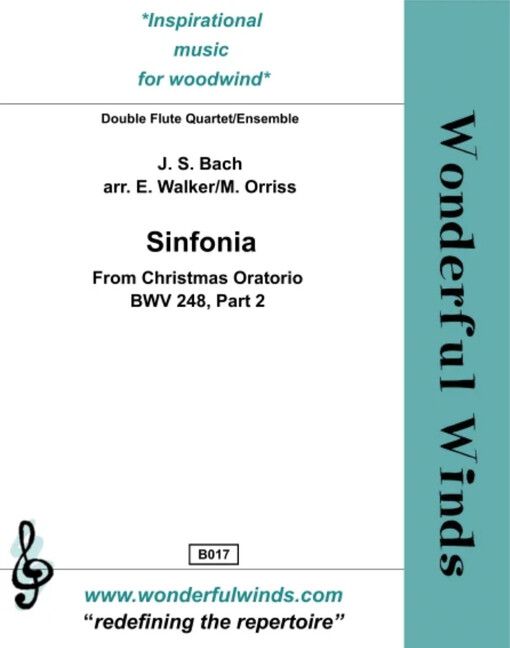
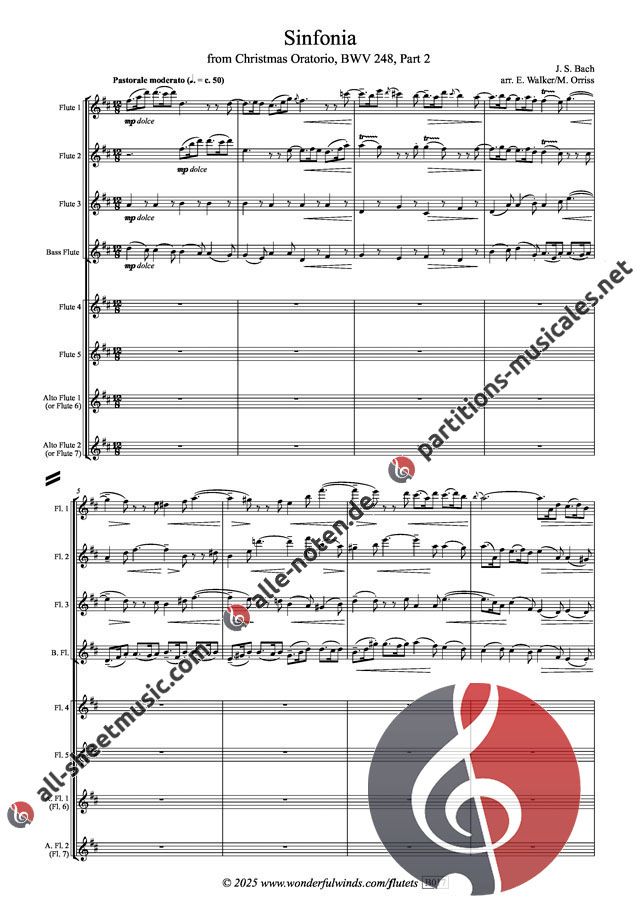
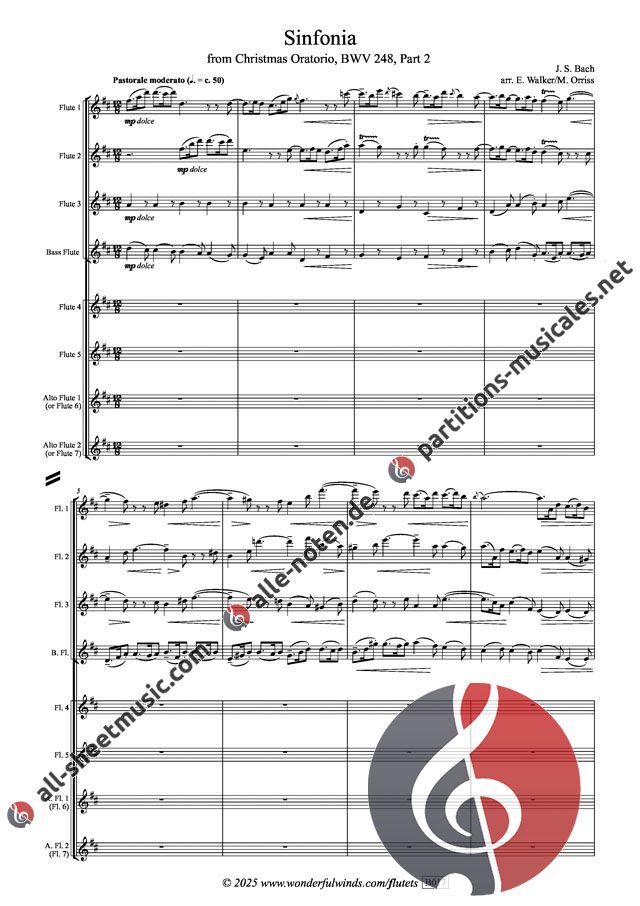
Demo
listen
Johann Sebastian Bach
Sinfonia from Christmas Oratorio BWV 248, Part 2
- Instrumentation 8 Flutes
- Composer Johann Sebastian Bach
- Editor Mel Orriss Elizabeth Walker
-
Difficulty Level
- Edition Sheet Music
- Publisher Wonderful Winds
- Order no. CLSW-B017
Description:
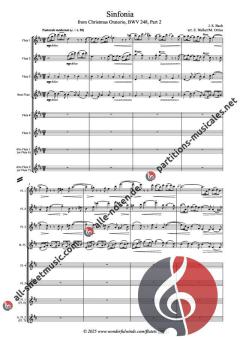
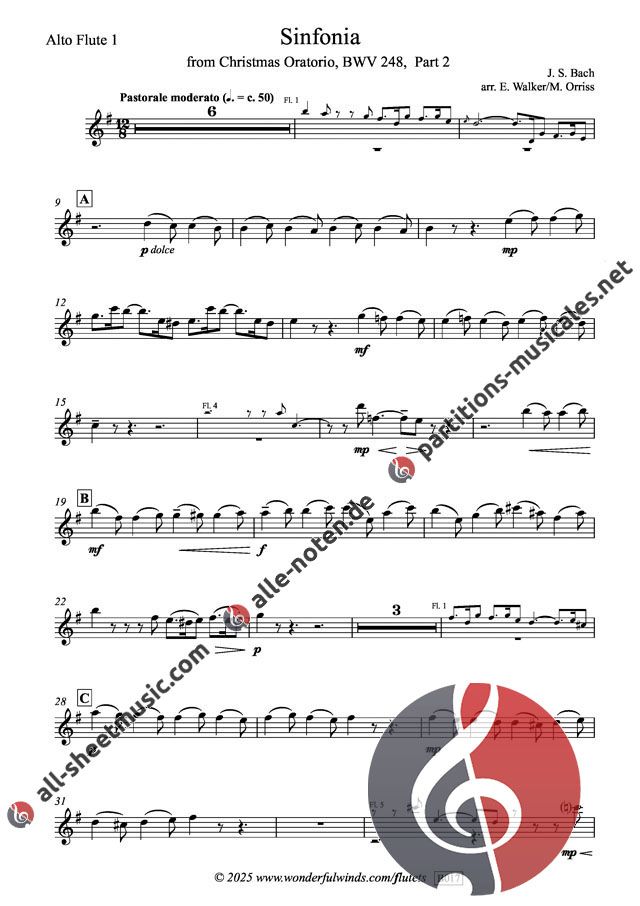
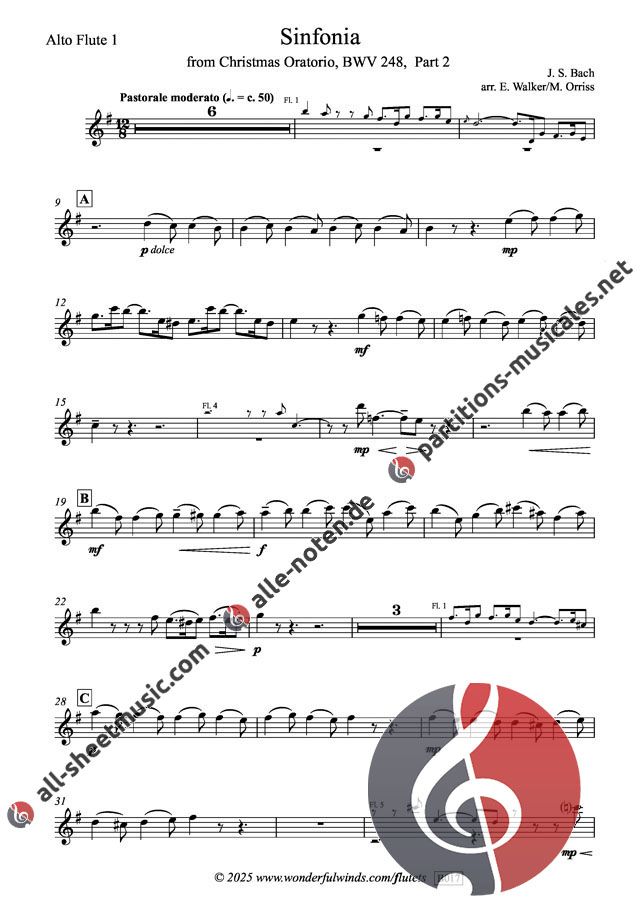
This radiant Sinfonia opens Part 2 of Bach's Christmas Oratorio (1734) — the only cantata in the cycle without an opening chorus. Instead, Bach lets the orchestra speak, capturing the moment heaven and earth briefly become one. It's the sole instrumental movement in the entire Oratorio, and a rare example of Bach's use of purely orchestral writing in his sacred works.
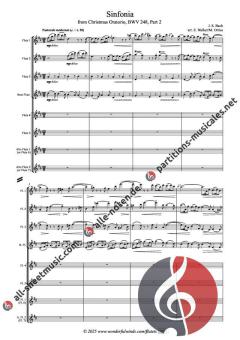
Scored for strings, continuo, two flutes, and a remarkable quartet of oboes (two oboes d'amore and two oboes da caccia), the music is built on contrasts: strings, long associated with angels, play the gentle rocking rhythm of the siciliano, while the reed instruments — evoking shepherds — sustain bourdon-like tones in a rustic pastorale. The result is a soft yet richly textured soundscape, full of warmth and wonder.
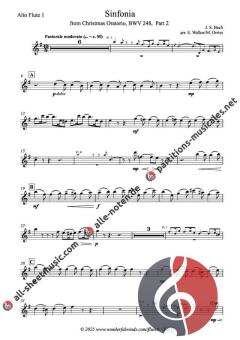
In this arrangement, we've added two alto flutes to deepen the resonance of the 'reed' group. Both alto parts may be played on C flutes if preferred, and all options are included. For added spatial magic, we suggest separating the 'orchestra' (three top flutes and bass flute) from the 'oboe' quartet (two flutes and two alto flutes) in performance.
Scored for strings, continuo, two flutes, and a remarkable quartet of oboes (two oboes d'amore and two oboes da caccia), the music is built on contrasts: strings, long associated with angels, play the gentle rocking rhythm of the siciliano, while the reed instruments — evoking shepherds — sustain bourdon-like tones in a rustic pastorale. The result is a soft yet richly textured soundscape, full of warmth and wonder.
In this arrangement, we've added two alto flutes to deepen the resonance of the 'reed' group. Both alto parts may be played on C flutes if preferred, and all options are included. For added spatial magic, we suggest separating the 'orchestra' (three top flutes and bass flute) from the 'oboe' quartet (two flutes and two alto flutes) in performance.
Customers rated this product:
Manufacturer Information:
Wonderful Winds
PO Box 24
PL19 8XQ
Tavistock
United Kingdom
Related products:

- 8 Flutes
- Sheet Music Download
- Mel Orriss Elizabeth Walker
- Wonderful Winds
-
-
 immediately available
Download immediately after ordering - Instant download