
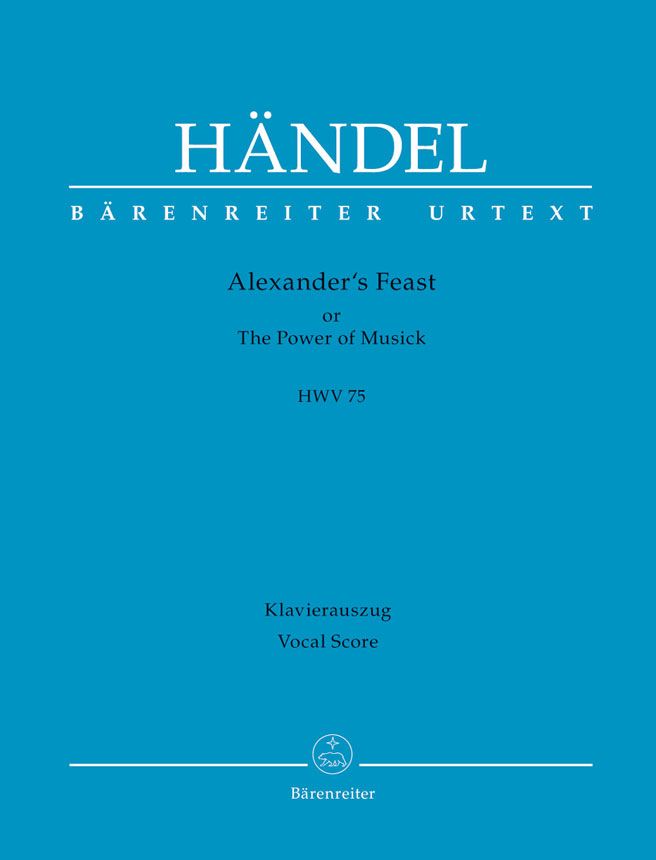
Georg Friedrich Händel
Alexander's Feast or The Power of Musick
Ode for St. Cecilia's Day
PDF
view
Georg Friedrich Händel
Alexander's Feast or The Power of Musick
Ode for St. Cecilia's Day
- Instrumentation Soloists, Mixed Choir (SSATTB) and Piano
- Composer Georg Friedrich Händel
- Editor Konrad Ameln
- Series Bärenreiter Urtext
- Editor Konrad Ameln
- Lyricist John Dryden
- Edition Piano Reduction (Urtext)
- Publisher Bärenreiter Verlag
- Order no. BA4001-92
 in stock
ships within 1-2 working days
incl. tax,
excl. shipping costs
Not available in all countries. Learn more

Description:
Soprano solo, tenor solo, bass solo, mixed choir: SSATTB, violin (2), viola (2), cello, double bass, oboe (2), bassoon (3), recorder (2), horn (2), timpani, basso continuo (harpsichord, organ, bassoon, cello, double bass)
Händel composed John Dryden's poem 'Alexander's Feast or The Power of Musick' in 1736 in the form of a two-part cantata.
At the suggestion of Baron Gottfried van Swieten, Mozart arranged this ode in honor of Saint Cecilia in 1790. This arrangement was based on the German translation of the poem by Karl Wilhelm Ramler from 1770. As in other arrangements of Handel's works, Mozart's reorchestration brings about a change in the sound character that places the composition in the tradition of Viennese Classicism.
> Handel: New, clearly arranged music and typeface (BA4001-92, only available in English)
> Mozart: Piano reduction available for purchase for the first time (BA4527-90)
Now in revised form:
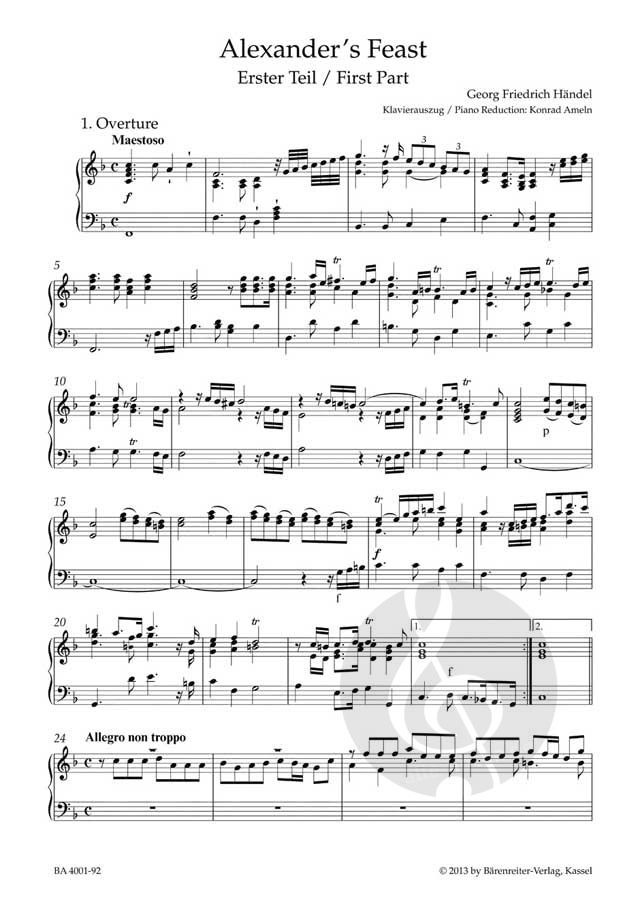
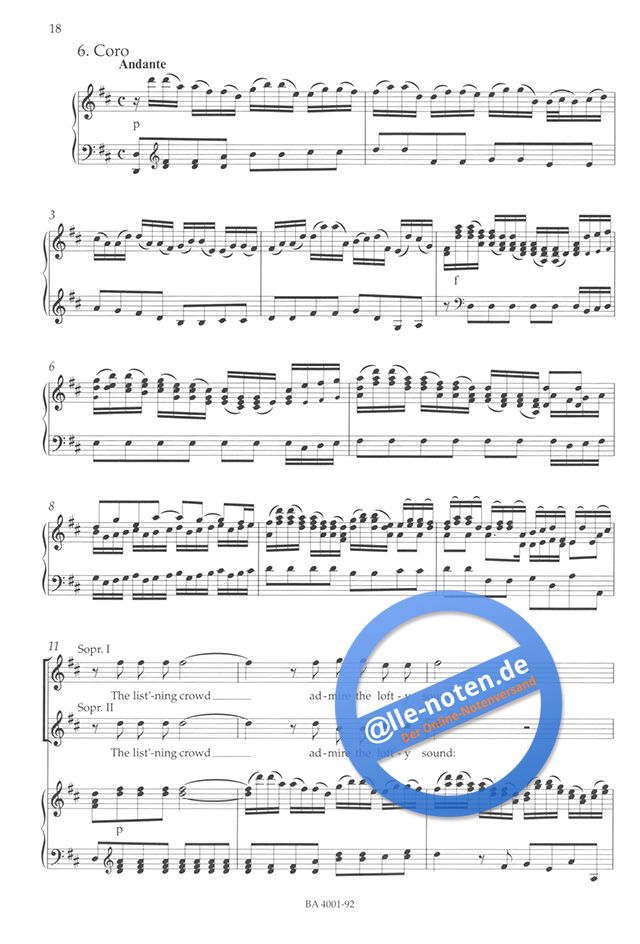
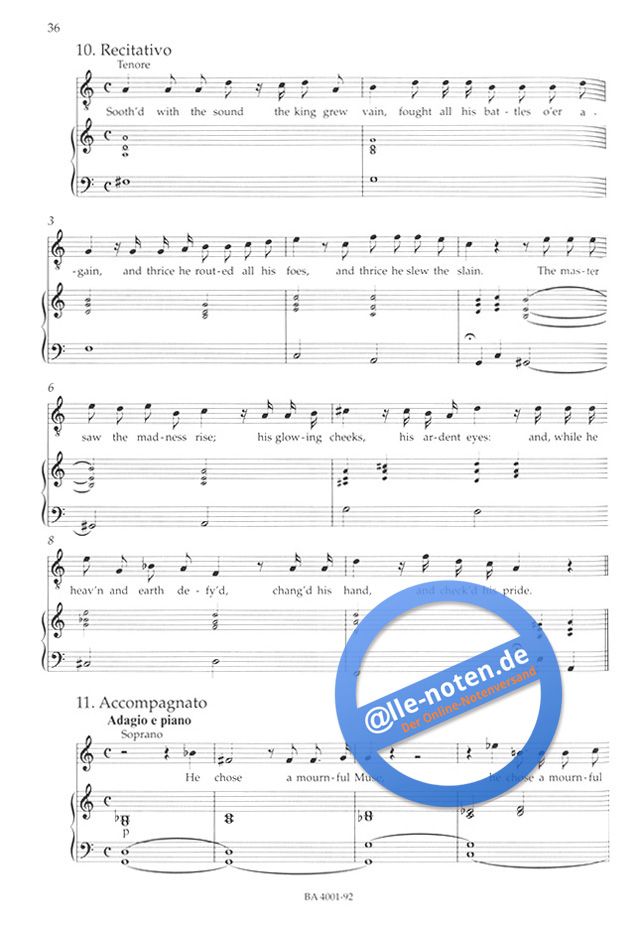
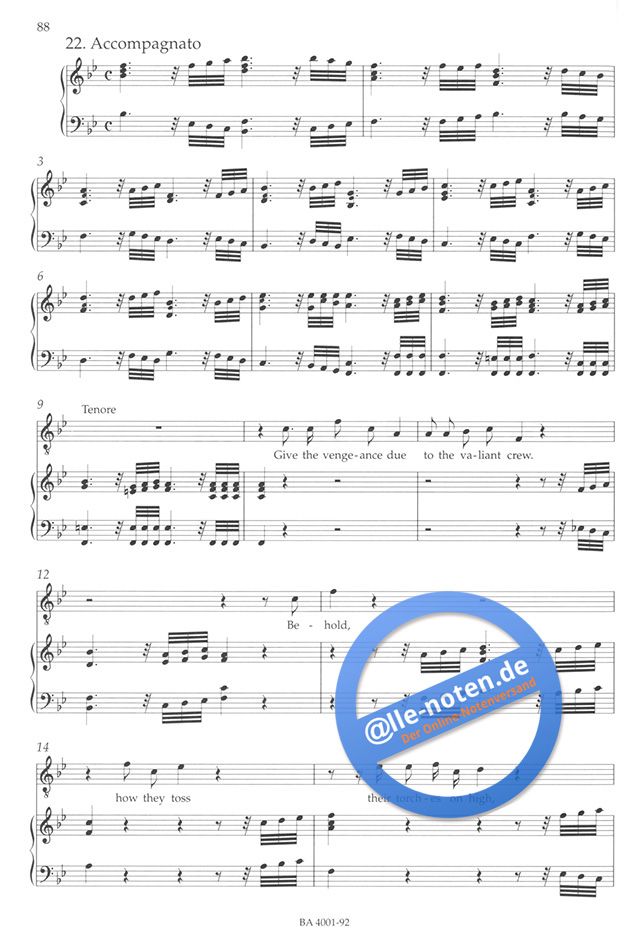
For the new edition of the Handel version, the dynamic indications have undergone a fundamental revision, the three movements of the appendix which Handel added are published for the first time in the piano reduction (BA 4001-92). The legibility of the edition has been significantly improved.
Händel composed John Dryden's poem 'Alexander's Feast or The Power of Musick' in 1736 in the form of a two-part cantata.
At the suggestion of Baron Gottfried van Swieten, Mozart arranged this ode in honor of Saint Cecilia in 1790. This arrangement was based on the German translation of the poem by Karl Wilhelm Ramler from 1770. As in other arrangements of Handel's works, Mozart's reorchestration brings about a change in the sound character that places the composition in the tradition of Viennese Classicism.
> Handel: New, clearly arranged music and typeface (BA4001-92, only available in English)
> Mozart: Piano reduction available for purchase for the first time (BA4527-90)
Now in revised form:
For the new edition of the Handel version, the dynamic indications have undergone a fundamental revision, the three movements of the appendix which Handel added are published for the first time in the piano reduction (BA 4001-92). The legibility of the edition has been significantly improved.
-
Das Alexander-Fest oder Die Macht der Musik HWV 75. Ode zu Ehren der Heiligen Cäcilie:
-
Preface
-
Alexander's Feast or The Power of Musick HWV 75. Ode for St. Cecilia's Day:
-
Erster Teil
-
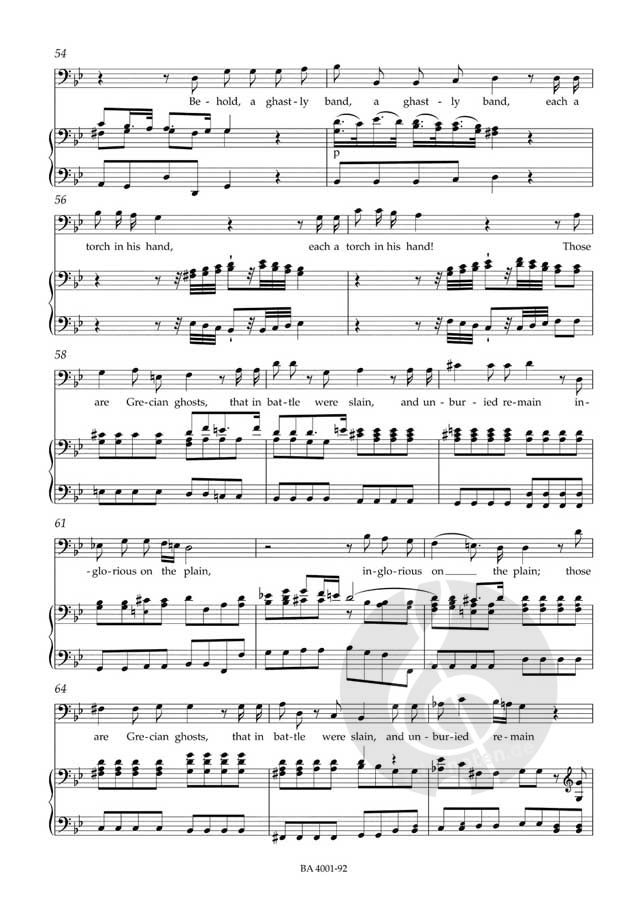
Zweiter Teil
-
Anhang:
-
28. Recitativo. Your voices tune (Alto)
-
29. Duetto. Let's imitate her notes above (Soprano ed Alto)
-
30. Coro. Your voices tune
Customers rated this product:
Manufacturer Information:
Bärenreiter-Verlag Karl Vötterle GmbH & Co. KG
Heinrich-Schütz-Allee 35-37
34131
Kassel
Deutschland
Related products:
- Soloists (STB), Mixed Choir (SSATTB) and Orchestra
- Score
- Bärenreiter Verlag
-
-
ships within 2-4 working days

- Soloists, Mixed Choir (SSATTB) and Piano
- Piano reduction Download (Urtext)
- Konrad Ameln
- Bärenreiter Verlag
-
immediately available
Download immediately after ordering - Instant download
- Mixed Choir (SATB)
- Choral Part Soprano (Urtext)
- Bärenreiter Verlag
-
in stock
ships within 1-2 working days
- Mixed Choir (SATB) and Orchestra
- Critical Comment (Urtext)
- Bärenreiter Verlag
-
in stock
ships within 1-2 working days
Other customers also bought:
- Soloists, Mixed Choir (SATB) and Chamber Orchestra
- Piano Reduction
-
ships within 2-5 working days
- Also available for download!
- Soloists, Piano and Mixed Choir (SATB)
- Piano Reduction (Urtext)
- Olga Kroupová
-
in stock
ships within 1-2 working days
- Soloists, Mixed Choir (SATB) and Chamber Orchestra
- Piano Reduction
-
in stock
ships within 1-2 working days


- Soloists (SAATB), Mixed Choir (SSATB) and Orchestra
- Piano Reduction (Urtext)
- Max Schneider Andreas Köhs
-
in stock
ships within 1-2 working days - Also available for download!