
Georg Friedrich Händel
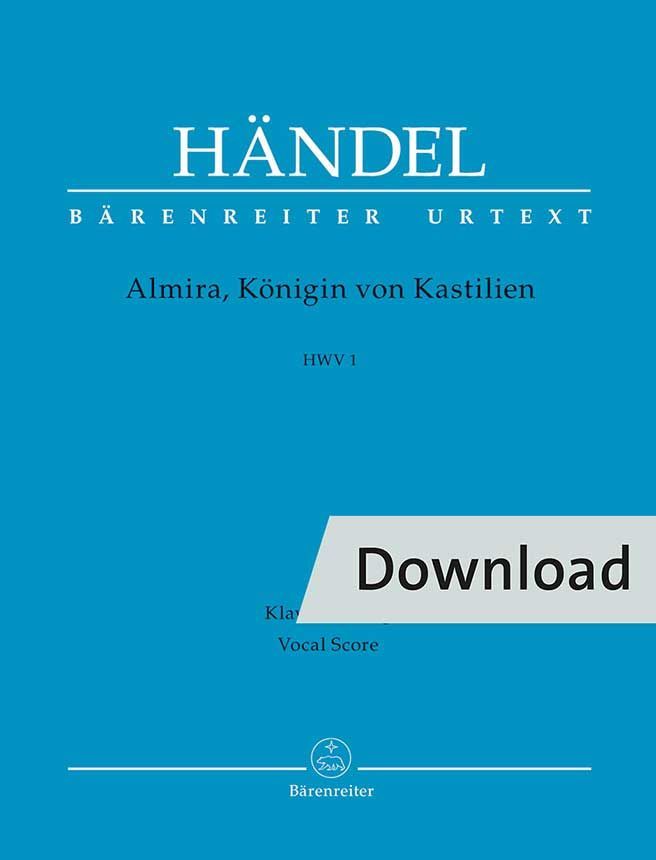
Almira, Queen of Castile HWV 1
Opera in three acts
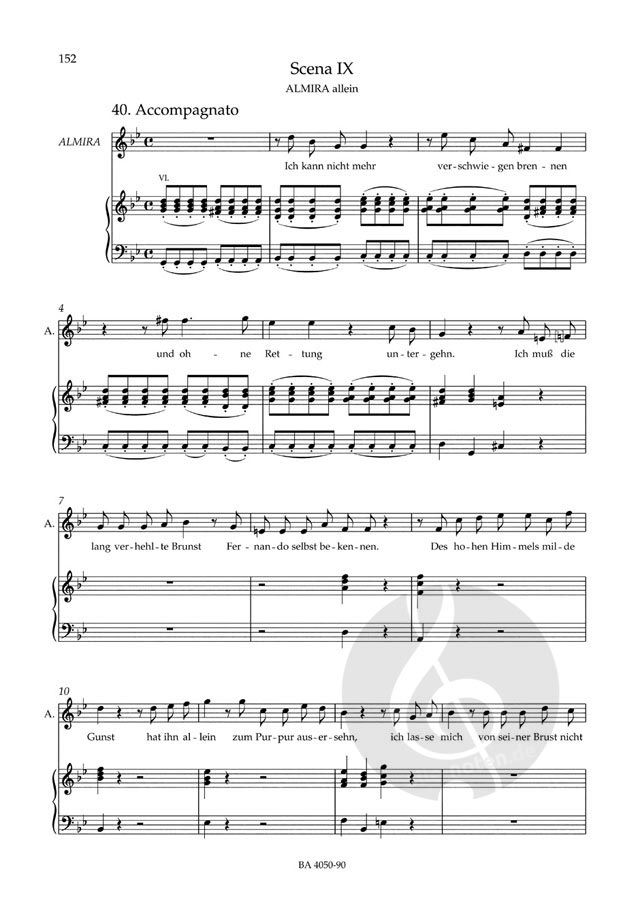
PDF
view
Georg Friedrich Händel
Almira, Queen of Castile HWV 1
Opera in three acts
- Instrumentation Soloists, Mixed Choir (SATB) and Chamber Orchestra
- Composer Georg Friedrich Händel
- Editor Andreas Köhs
- Series Bärenreiter Urtext
- Editor Dorothea Schröder
- Lyricist Friedrich Christian Feustking
-
Difficulty Level
- Edition Piano Reduction Download
- Publisher Bärenreiter Verlag
- Order no. BA4050-90-DL
 immediately available
Download immediately after ordering
incl. tax,
excl. shipping costs
Not available in all countries. Learn more

Description:
Almira, Handel's first opera, was successfully premiered in 1705 at the Theater am Gänsemarkt in Hamburg. It was conducted by Reinhard Keiser, who, remarkably, had previously set the libretto by Friedrich Christian Feustking to music himself. The role of Fernando was created by Johann Mattheson. The translation used by Handel leaves some Italian arias untranslated, resulting in a charming German-Italian hybrid form.
The opera, which ends with a triple wedding after all kinds of love entanglements, is characterized above all by richly decorated scenes, such as the procession on the occasion of Almira's coronation ceremony, a duel, a dungeon scene and a masked dance of the three continents of Europe, Africa and Asia.
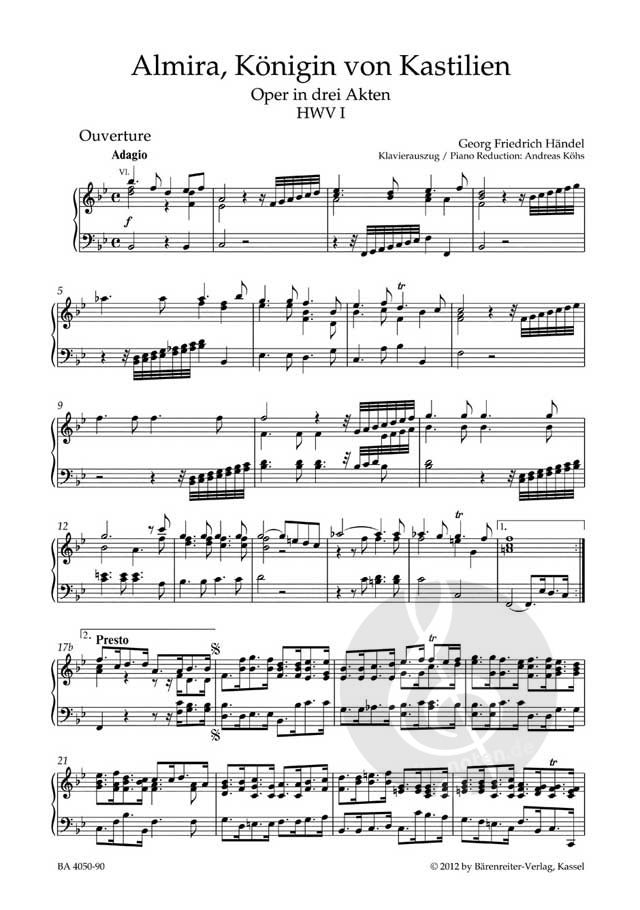
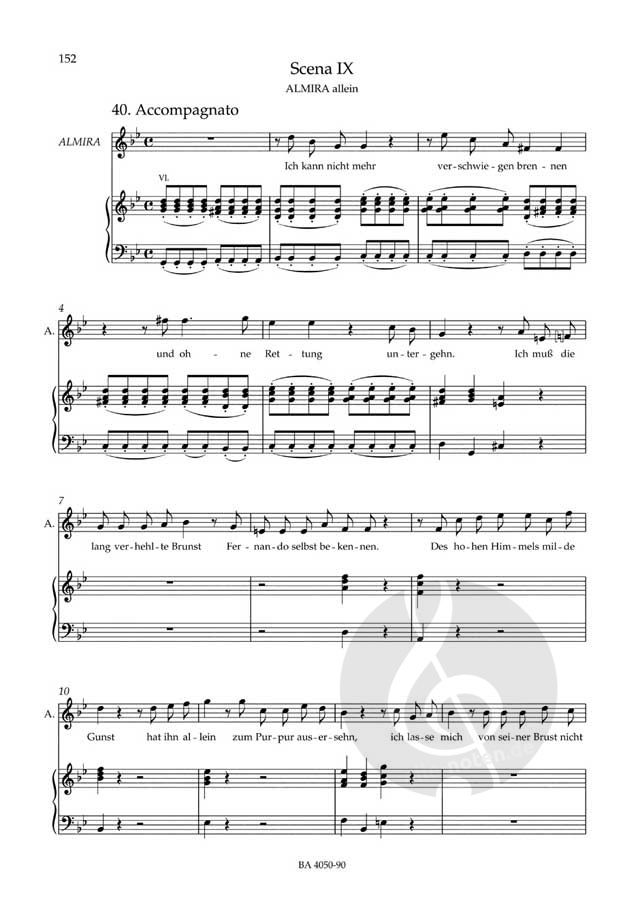
The piano reduction of George Frideric Handel's "Almira" has a minor sensation in store: in 1732, Georg Philipp Telemann conducted a revival of Handel's "Almira". He removed the aria no. 28 "Ingrato, spietato" from his conducting copy, which had been considered lost ever since. In the 1994 volume of the "Hallische Händel-Ausgabe" (HHA), it is still included only with the edited vocal text, but without any music at all, thanks to a contemporary copy from the beginning of the 18th century found in the music library of the Mariengymnasium in Jever, the aria can be made available in a piano reduction for musical practice and thus also performed and played. Previously, the pages in question were only reproduced as a facsimile in an article in the "Göttinger Händel-Beiträge".
Furthermore, with the help of the Jever source, the bars of the basso continuo part in Bellante's aria "Ich brenne zwar" (No. 71), which had previously been missing or added by the editor of the score, could be reconstructed.
The opera, which ends with a triple wedding after all kinds of love entanglements, is characterized above all by richly decorated scenes, such as the procession on the occasion of Almira's coronation ceremony, a duel, a dungeon scene and a masked dance of the three continents of Europe, Africa and Asia.
The piano reduction of George Frideric Handel's "Almira" has a minor sensation in store: in 1732, Georg Philipp Telemann conducted a revival of Handel's "Almira". He removed the aria no. 28 "Ingrato, spietato" from his conducting copy, which had been considered lost ever since. In the 1994 volume of the "Hallische Händel-Ausgabe" (HHA), it is still included only with the edited vocal text, but without any music at all, thanks to a contemporary copy from the beginning of the 18th century found in the music library of the Mariengymnasium in Jever, the aria can be made available in a piano reduction for musical practice and thus also performed and played. Previously, the pages in question were only reproduced as a facsimile in an article in the "Göttinger Händel-Beiträge".
Furthermore, with the help of the Jever source, the bars of the basso continuo part in Bellante's aria "Ich brenne zwar" (No. 71), which had previously been missing or added by the editor of the score, could be reconstructed.
-
Besetzung
-
Vorwort
-
Preface
-
Verzeichnis der Szenen und Nummern
-
Almira, Königin von Kastilien HWV 1. Oper in drei Akten:
-
Ouvertüre
-
I. Akt
-
II. Akt
-
III. Akt
Here is how the download works:
1 Buy download sheet music
Purchase the download score from our online store
2 Order confirmation with download link
Immediately after completing your order, you will receive an order confirmation by email listing all items. You will find the download link next to each item. You can use this link to start the download right away. Please also check your spam folder if necessary.
Customers rated this product:
Manufacturer Information:
Bärenreiter-Verlag Karl Vötterle GmbH & Co. KG
Heinrich-Schütz-Allee 35-37
34131
Kassel
Deutschland
Related products:
- Soloists, Orchestra and Continuo
- Score (Urtext)
- Bärenreiter Verlag
-
ships within 2-4 working days
- Soloists, Mixed Choir (SATB) and Chamber Orchestra
- Piano Reduction
- Bärenreiter Verlag
-
-
in stock
ships within 1-2 working days - With slight signs of use
- Soloists, Mixed Choir (SATB) and Chamber Orchestra
- Piano Reduction
- Bärenreiter Verlag
-
-
ships within 2-4 working days
- Also available for download!
Other customers also bought:
Karl Leich-Galland
- Soloists, Choir and Piano
- Piano Reduction
- Karl-Heinz Müller
-
ships within 2-4 working days
- Also available for download!
- Soloists and Piano
- Piano Reduction (Urtext)
- Martin Focke
-
in stock
ships within 1-2 working days
- Soloists and Piano
- Piano Reduction
- Andreas Köhs
-
ships within 2-4 working days
- Also available for download!
- Soloists, Mixed Choir (SATB) and Chamber Orchestra
- Piano Reduction (Urtext)
- Michael Pacholke
-
in stock
ships within 1-2 working days - Also available for download!
- Soloists and Piano
- Piano Reduction (Urtext)
- Eugen Epplée
-
ships within 2-4 working days
- Also available for download!
- Soloists and Piano
- Piano Reduction
- Andreas Köhs
-
ships within 2-4 working days
- Also available for download!
- Soloists, Mixed Choir (SSATB) and Piano
- Piano Reduction (Urtext)
- Martin Focke Andrea Campora
-
in stock
ships within 1-2 working days - Also available for download!
- Soloists, Mixed Choir (SATB) and Chamber Orchestra
- Piano Reduction (Urtext)
-
ships within 2-4 working days
- Soloists and Piano
- Piano Reduction (Urtext)
- Hans Georg Kluge
-
in stock
ships within 1-2 working days
- Soloists and Piano
- Piano Reduction (Urtext)
- Elisabeth Heckmann
-
ships within 2-4 working days
- Soloists, Mixed Choir (SATB) and Chamber Orchestra
- Piano Reduction (Urtext)
- Michael Pacholke
-
ships within 2-4 working days
- Soloists, 2 Narrators, Mixed Choir and Piano
- Piano Reduction
- Karl-Heinz Müller
-
ships within 2-4 working days
- Also available for download!
- Soloists, Mixed Choir (SATB) and Chamber Orchestra
- Piano Reduction (Urtext)
- Hans Georg Kluge
-
ships within 2-4 working days
- Also available for download!
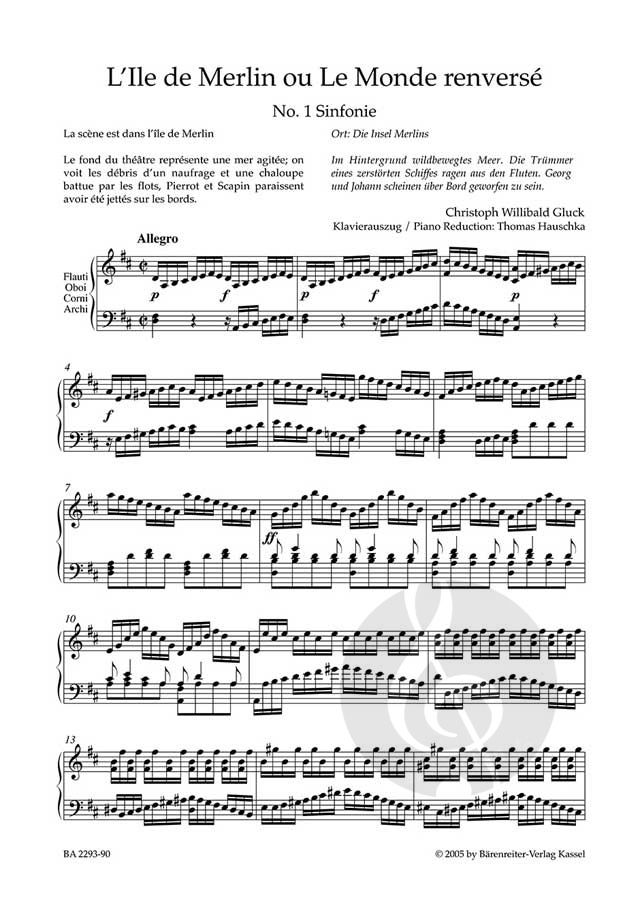
Christoph Willibald Gluck
Komische Oper in einem Akt (Merlins Insel oder Die verkehrte Welt)
- Soloists, Narrator and Piano
- Piano Reduction
- Thomas Hauschka
-
ships within 3-6 working days
- Also available for download!

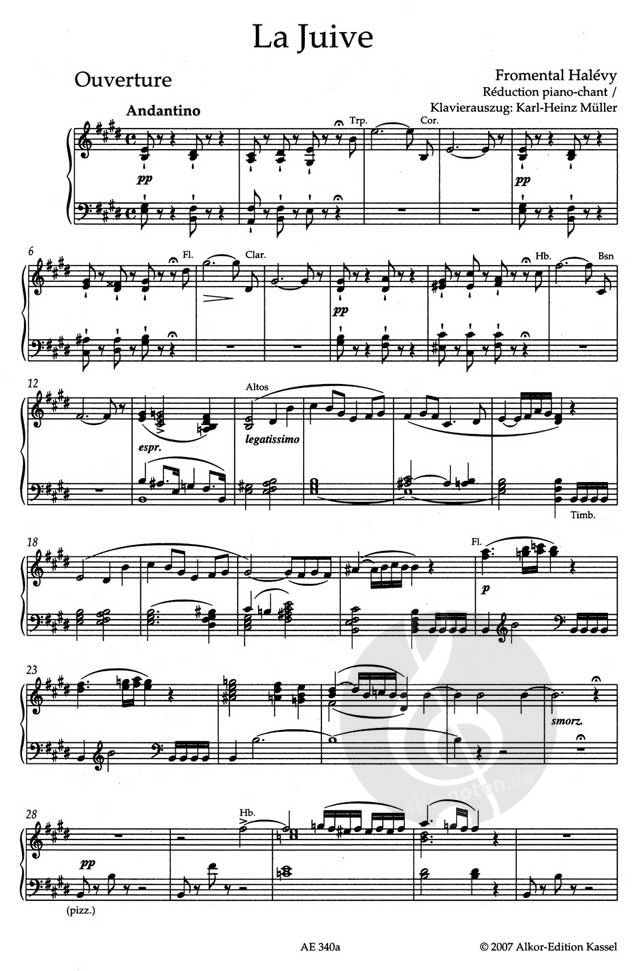



- Soloists and Piano
- Piano Reduction
- Eike Wernhard
-
ships within 2-4 working days