
Francesco Cavalli, Jean Baptiste Lully
Il Xerse
Dramma per musica
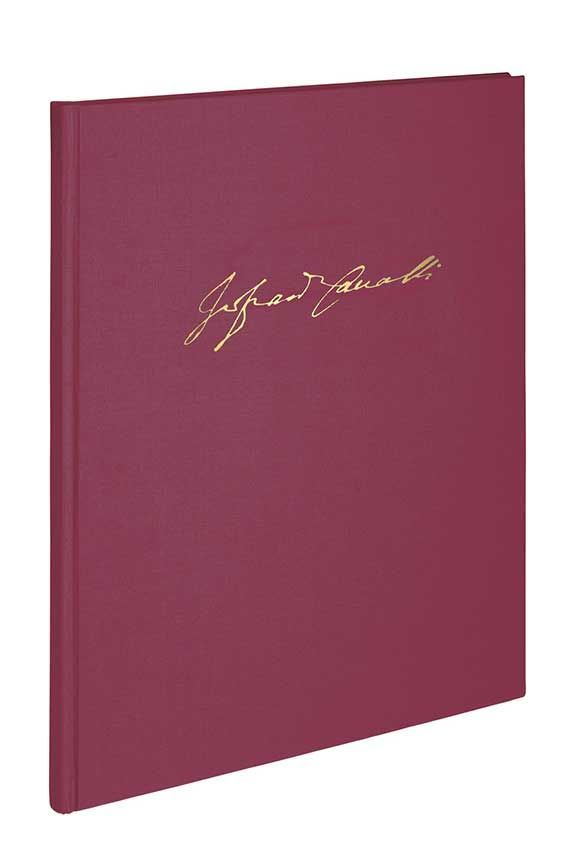
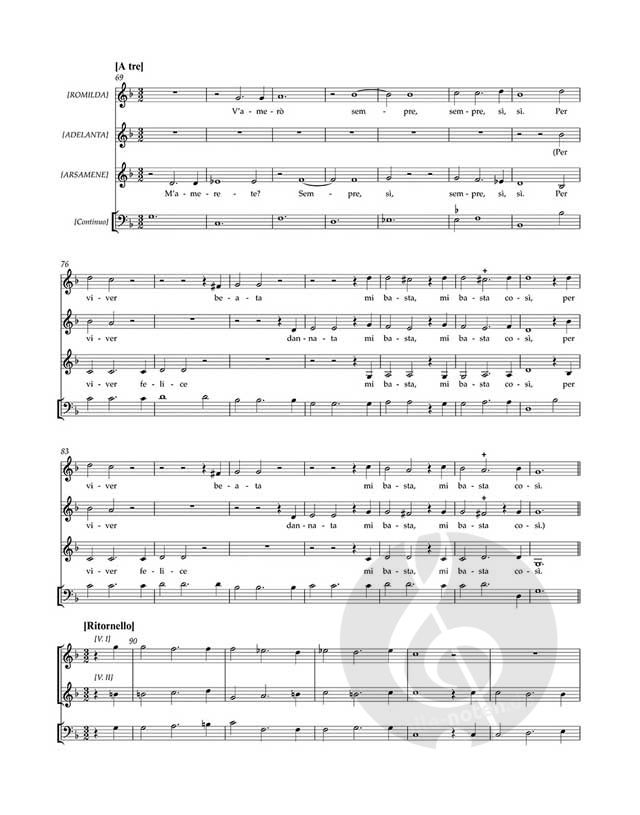
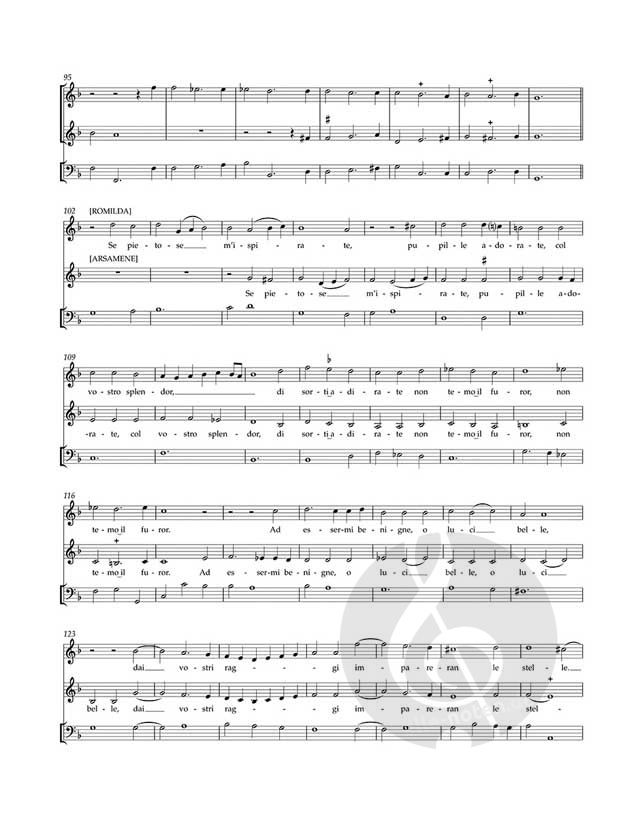
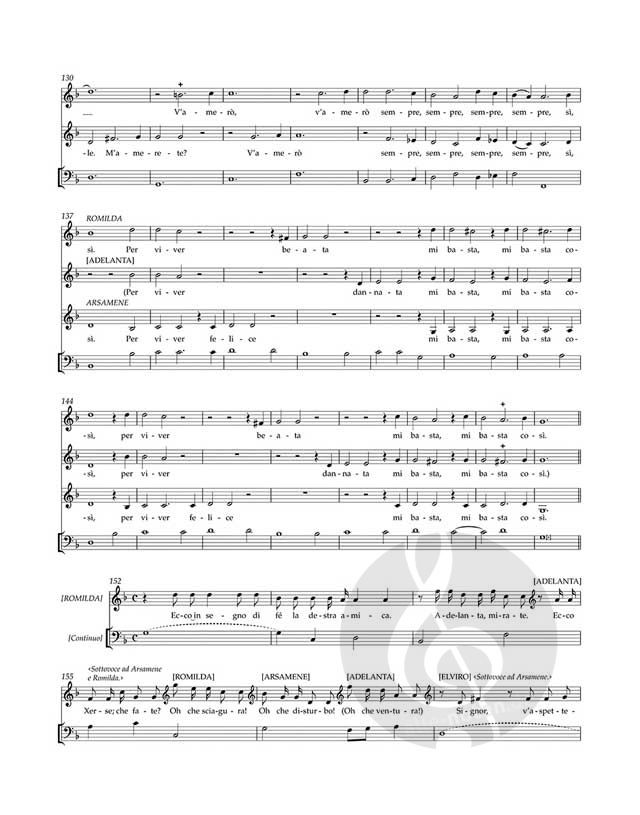
Francesco Cavalli, Jean Baptiste Lully
Il Xerse
Dramma per musica
- Instrumentation Soloists, Choir, 2 Violins and Continuo
- Composer Francesco Cavalli Jean Baptiste Lully
- Series Francesco Cavalli. Opere
- Editor Barbara Nestola Michael Klaper
- Lyricist Nicolò Minato
- Edition Score
- Publisher Bärenreiter Verlag
- Order no. BA8914-01
 ships within 2-4 working days
incl. tax,
excl. shipping costs
Not available in all countries. Learn more

Description:
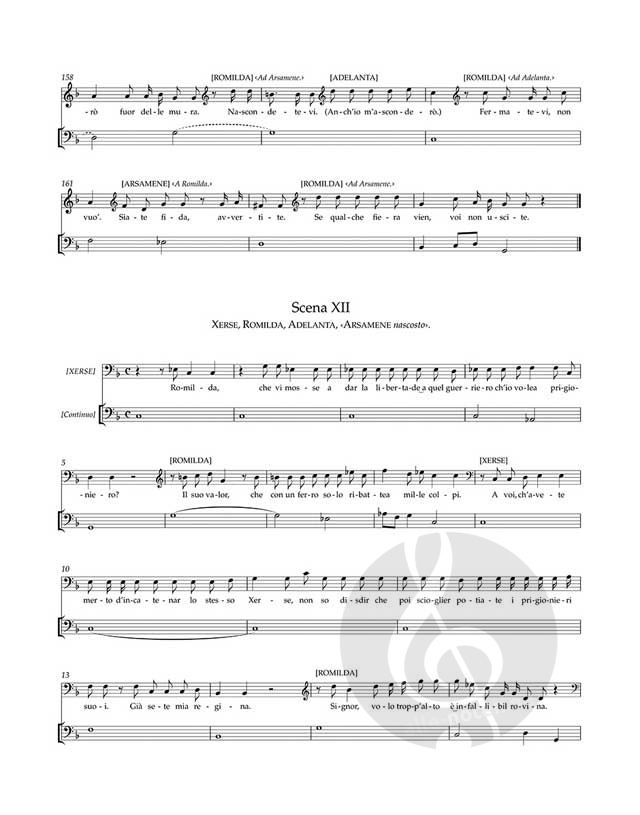
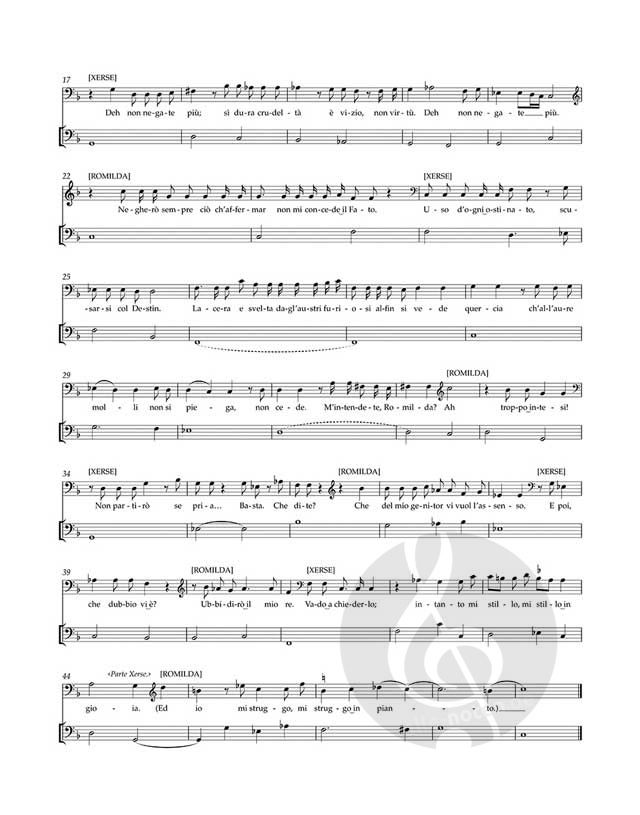
Francesco Cavalli's "Xerse" (Venice 1655) was one of the most successful operas of the 17th century. Among its numerous revivals, the one for the Parisian court on the occasion of the wedding celebrations for Louis XIV in 1660 stands out, whereby the version performed here, apart from a printed scenario, is documented by a copy of the score. This reveals extensive dramaturgical changes that can be linked to a French reception, such as the division into five (instead of three) acts, which, like the prologue, are followed by ballets composed by the French composer Jean-Baptiste Lully. In connection with this, the opera was greatly shortened and the role of the title hero, originally written for an alto castrato, was transposed to the bass-baritone register in order to conform to contemporary French ideas of appropriate stage representation.
The plot of "Xerse" is, according to the ancient historian Herodotus, dedicated to the Persian king of the 5th century BC who attempted to conquer Greece. In the opera, this is linked to an intrigue structure borrowed from a play by the Spanish poet Lope de Vega (1562-1635). Xerse, although betrothed to the princess Amastre, who is befitting of his rank, falls in love with Romilda, who is socially inferior to him and who in turn is in mutual love with Xerse's brother Arsamene. In his courtship, his jealousy and his tyrannical behavior, the Persian king behaves as insubordinately as possible - only agreeing to marry Amastre at the very end and bringing about the happy ending. While in the city republic of Venice this could be seen as a critical and smirking examination of the monarchy's form of government, in Paris it was probably seen more as an admonition to the French king to behave in a manner befitting his rank.
A libretto has not survived, so it had to be reconstructed from the score - a challenge for the edition of the Paris version. At the same time, it was necessary to extract the characteristic features of the Parisian setting from this by no means flawless source: accelerated recitatives and the shortening of coloraturas, for example. A comparison with the scenario shows that the performed version contains far more deletions of entire scenes than the score alone would suggest. This means that it is now possible to bring the authentic Parisian version of "Xerse" back to the stage.
The plot of "Xerse" is, according to the ancient historian Herodotus, dedicated to the Persian king of the 5th century BC who attempted to conquer Greece. In the opera, this is linked to an intrigue structure borrowed from a play by the Spanish poet Lope de Vega (1562-1635). Xerse, although betrothed to the princess Amastre, who is befitting of his rank, falls in love with Romilda, who is socially inferior to him and who in turn is in mutual love with Xerse's brother Arsamene. In his courtship, his jealousy and his tyrannical behavior, the Persian king behaves as insubordinately as possible - only agreeing to marry Amastre at the very end and bringing about the happy ending. While in the city republic of Venice this could be seen as a critical and smirking examination of the monarchy's form of government, in Paris it was probably seen more as an admonition to the French king to behave in a manner befitting his rank.
A libretto has not survived, so it had to be reconstructed from the score - a challenge for the edition of the Paris version. At the same time, it was necessary to extract the characteristic features of the Parisian setting from this by no means flawless source: accelerated recitatives and the shortening of coloraturas, for example. A comparison with the scenario shows that the performed version contains far more deletions of entire scenes than the score alone would suggest. This means that it is now possible to bring the authentic Parisian version of "Xerse" back to the stage.