
Sheet Music for Symphonic Orchestra
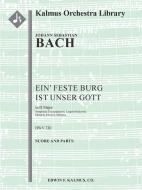
EIN' FESTE BURG IST UNSER GOTT ('A Mighty Fortress Is Our God') is among the best known hymns written by reformer Martin Luther, and has been used by many composers, including by J.S. Bach, in various...
EIN' FESTE BURG IST UNSER GOTT ('A Mighty Fortress Is Our God') is among the best known hymns written by reformer Martin Luther, and has been used by many composers, including by J.S. Bach, in various...
- Orchestra
- Score and Parts
- Leopold Stokowski Edwin E. Heilakka
- Edwin F. Kalmus
-
 ships within 2-4 weeks
ships within 2-4 weeks
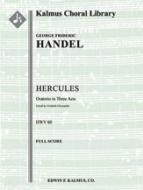
George Frideric Handel (1685-1759) composed the three-act oratorio Hercules, HWV 60 during a four-week period in 1744. Telling the story of the ancient Greek hero Hercules' death through the jealousy...
George Frideric Handel (1685-1759) composed the three-act oratorio Hercules, HWV 60 during a four-week period in 1744. Telling the story of the ancient Greek hero Hercules' death through the jealousy...
- Soloists, Choir and Orchestra
- Score
- Edwin F. Kalmus
-
ships within 2-4 weeks
ships within 2-4 weeks
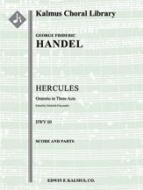
George Frideric Handel (1685-1759) composed the three-act oratorio Hercules, HWV 60 during a four-week period in 1744. Telling the story of the ancient Greek hero Hercules' death through the jealousy...
George Frideric Handel (1685-1759) composed the three-act oratorio Hercules, HWV 60 during a four-week period in 1744. Telling the story of the ancient Greek hero Hercules' death through the jealousy...
- Soloists, Choir and Orchestra
- Score and Parts
- Edwin F. Kalmus
-
ships within 2-4 weeks
ships within 2-4 weeks
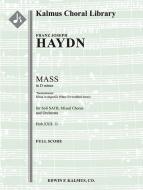
During the semi-retirement from his long service as Kapellmeister to the Esterházy family, Franz Joseph Haydn (1732-1809) was tasked with composing a Coronation Mass for the wife of his patron, Prince...
During the semi-retirement from his long service as Kapellmeister to the Esterházy family, Franz Joseph Haydn (1732-1809) was tasked with composing a Coronation Mass for the wife of his patron, Prince...
- Soloists, Choir and Orchestra
- Score
- Edwin F. Kalmus
-
ships within 2-4 weeks
ships within 2-4 weeks
During the semi-retirement from his long service as Kapellmeister to the Esterházy family, Franz Joseph Haydn (1732-1809) was tasked with composing a Coronation Mass for the wife of his patron, Prince...
During the semi-retirement from his long service as Kapellmeister to the Esterházy family, Franz Joseph Haydn (1732-1809) was tasked with composing a Coronation Mass for the wife of his patron, Prince...
- Soloists, Choir and Orchestra
- Score and Parts
- Edwin F. Kalmus
-
ships within 2-4 weeks
ships within 2-4 weeks
During the semi-retirement from his long service as Kapellmeister to the Esterházy family, Franz Joseph Haydn (1732-1809) was tasked with composing a Coronation Mass for the wife of his patron, Prince...
During the semi-retirement from his long service as Kapellmeister to the Esterházy family, Franz Joseph Haydn (1732-1809) was tasked with composing a Coronation Mass for the wife of his patron, Prince...
- Soloists, Choir and Orchestra
- Piano Reduction
- Edwin F. Kalmus
-
ships within 2-4 weeks
ships within 2-4 weeks
The original setting for chorus and keyboard of the "Tui sun coeli" from Psalm 88 (Vulgate) vv. 12, 15a was completed by Franz Joseph Haydn (1732-1809) between 1796 and 1799. Alternate titles include:...
The original setting for chorus and keyboard of the "Tui sun coeli" from Psalm 88 (Vulgate) vv. 12, 15a was completed by Franz Joseph Haydn (1732-1809) between 1796 and 1799. Alternate titles include:...
- Mixed Choir (SATB), Strings and Orchestra
- Score and Parts
- August Hoeglauer
- Edwin F. Kalmus
-
ships within 2-4 weeks
ships within 2-4 weeks
The original setting for chorus and keyboard of the "Tui sun coeli" from Psalm 88 (Vulgate) vv. 12, 15a was completed by Franz Joseph Haydn (1732-1809) between 1796 and 1799. Alternate titles include:...
The original setting for chorus and keyboard of the "Tui sun coeli" from Psalm 88 (Vulgate) vv. 12, 15a was completed by Franz Joseph Haydn (1732-1809) between 1796 and 1799. Alternate titles include:...
- Mixed Choir (SATB), Strings and Orchestra
- Choral Score
- August Hoeglauer
- Edwin F. Kalmus
-
ships within 2-4 weeks
ships within 2-4 weeks
The original setting for chorus and keyboard of the "Tui sun coeli" from Psalm 88 (Vulgate) vv. 12, 15a was completed by Franz Joseph Haydn (1732-1809) between 1796 and 1799. Alternate titles include:...
The original setting for chorus and keyboard of the "Tui sun coeli" from Psalm 88 (Vulgate) vv. 12, 15a was completed by Franz Joseph Haydn (1732-1809) between 1796 and 1799. Alternate titles include:...
- Mixed Choir (SATB), Strings and Orchestra
- Director's Score
- August Hoeglauer
- Edwin F. Kalmus
-
ships within 2-4 weeks
ships within 2-4 weeks
Wolfgang Amadeus Mozart (1756-1791) composed the sacred choral work Veni Sancte Spiritus (Come, Holy Spirit), K. 47 in 1768, at the age of 12. As Mozart added the subtitle "Offertorium," it is clear t...
Wolfgang Amadeus Mozart (1756-1791) composed the sacred choral work Veni Sancte Spiritus (Come, Holy Spirit), K. 47 in 1768, at the age of 12. As Mozart added the subtitle "Offertorium," it is clear t...
- Soloists, Choir and Orchestra
- Score
- Edwin F. Kalmus
-
ships within 2-4 weeks
ships within 2-4 weeks
Wolfgang Amadeus Mozart (1756-1791) composed the sacred choral work Veni Sancte Spiritus (Come, Holy Spirit), K. 47 in 1768, at the age of 12. As Mozart added the subtitle "Offertorium," it is clear t...
Wolfgang Amadeus Mozart (1756-1791) composed the sacred choral work Veni Sancte Spiritus (Come, Holy Spirit), K. 47 in 1768, at the age of 12. As Mozart added the subtitle "Offertorium," it is clear t...
- Soloists, Choir and Orchestra
- Score and Parts
- Edwin F. Kalmus
-
ships within 2-4 weeks
ships within 2-4 weeks
Wolfgang Amadeus Mozart (1756-1791) composed the sacred choral work Veni Sancte Spiritus (Come, Holy Spirit), K. 47 in 1768, at the age of 12. As Mozart added the subtitle "Offertorium," it is clear t...
Wolfgang Amadeus Mozart (1756-1791) composed the sacred choral work Veni Sancte Spiritus (Come, Holy Spirit), K. 47 in 1768, at the age of 12. As Mozart added the subtitle "Offertorium," it is clear t...
- Mixed Choir (SATB), Soloists and Orchestra
- Organ Score
- Edwin F. Kalmus
-
ships within 2-4 weeks
ships within 2-4 weeks
The sublime Ave Verum Corpus, K. 618 was composed by Wolfgang Amadeus Mozart (1756-1791) in June of 1791 for his friend Anton Stoll, and it premiered on June 23 of that year at St. Stephen's church in...
The sublime Ave Verum Corpus, K. 618 was composed by Wolfgang Amadeus Mozart (1756-1791) in June of 1791 for his friend Anton Stoll, and it premiered on June 23 of that year at St. Stephen's church in...
- Choir and Orchestra
- Score
- Edwin F. Kalmus
-
ships within 2-4 weeks
ships within 2-4 weeks
The sublime Ave Verum Corpus, K. 618 was composed by Wolfgang Amadeus Mozart (1756-1791) in June of 1791 for his friend Anton Stoll, and it premiered on June 23 of that year at St. Stephen's church in...
The sublime Ave Verum Corpus, K. 618 was composed by Wolfgang Amadeus Mozart (1756-1791) in June of 1791 for his friend Anton Stoll, and it premiered on June 23 of that year at St. Stephen's church in...
- Choir and Orchestra
- Score and Parts
- Edwin F. Kalmus
-
ships within 2-4 weeks
ships within 2-4 weeks
The MASS IN C, K. 220/196b, often referred to by the nickname "Spatzenmesse" or "Sparrow Mass" due to the violin figure in the Hosanna of the Sanctus that recalls the chirping of birds, is Mozart's 9t...
The MASS IN C, K. 220/196b, often referred to by the nickname "Spatzenmesse" or "Sparrow Mass" due to the violin figure in the Hosanna of the Sanctus that recalls the chirping of birds, is Mozart's 9t...
- Soloists, Choir and Orchestra
- Score and Parts
- Edwin F. Kalmus
-
ships within 2-4 weeks
ships within 2-4 weeks
The MASS IN C, K. 220/196b, often referred to by the nickname "Spatzenmesse" or "Sparrow Mass" due to the violin figure in the Hosanna of the Sanctus that recalls the chirping of birds, is Mozart's 9t...
The MASS IN C, K. 220/196b, often referred to by the nickname "Spatzenmesse" or "Sparrow Mass" due to the violin figure in the Hosanna of the Sanctus that recalls the chirping of birds, is Mozart's 9t...
- Soloists, Choir and Orchestra
- Score and Parts
- Edwin F. Kalmus
-
ships within 2-4 weeks
ships within 2-4 weeks
Regina Caeli in C Major, K. 276 by Wolfgang Amadeus Mozart (1756-1791) was written ca. 1779 during the composer's time at the Salzburg Cathedral. The third of three settings of the Marian antiphon Reg...
Regina Caeli in C Major, K. 276 by Wolfgang Amadeus Mozart (1756-1791) was written ca. 1779 during the composer's time at the Salzburg Cathedral. The third of three settings of the Marian antiphon Reg...
- Mixed Choir (SATB) and Orchestra
- Score
- Edwin F. Kalmus
-
ships within 2-4 weeks
ships within 2-4 weeks
- Mixed Choir (SATB) and Orchestra
- Score and Parts
- Edwin F. Kalmus
-
ships within 2-4 weeks
ships within 2-4 weeks
Wolfgang Amadeus Mozart (1756-1791) completed his Mass No. 15 in C, K. 317 on March 23, 1779 after a period of seeking for employment in places such as Paris and Mannheim. Failing that, Mozart's fathe...
Wolfgang Amadeus Mozart (1756-1791) completed his Mass No. 15 in C, K. 317 on March 23, 1779 after a period of seeking for employment in places such as Paris and Mannheim. Failing that, Mozart's fathe...
- Soloists, Choir and Orchestra
- Score and Parts
- Edwin F. Kalmus
-
ships within 2-4 weeks
ships within 2-4 weeks
The final work composed by Mozart for the Salzburg Cathedral, the original title of this sacred choral composition, VESPERAE SOLENNES DE CONFESSORE (Solemn Vespers for a Confessor) did not include "de...
The final work composed by Mozart for the Salzburg Cathedral, the original title of this sacred choral composition, VESPERAE SOLENNES DE CONFESSORE (Solemn Vespers for a Confessor) did not include "de...
- Soloists (SATB), Mixed Choir and Orchestra
- Score
- Edwin F. Kalmus
-
ships within 2-4 weeks
ships within 2-4 weeks
![Three Songs (Drei Lieder) [collection]](https://www.all-sheetmusic.com/out/pictures/generated/product/1/145_190_75/Art_1522100.JPEG)
This arrangement for orchestra for Three Songs (Drei Lieder) by Johannes Brahms (1833-1897) has been completed by Willy Weide (1880-1910). Songs included: 1. Liebestreu (True Love), Op. 3, No. 1; 2. W...
This arrangement for orchestra for Three Songs (Drei Lieder) by Johannes Brahms (1833-1897) has been completed by Willy Weide (1880-1910). Songs included: 1. Liebestreu (True Love), Op. 3, No. 1; 2. W...
- Orchestra
- Score
- Willy Weide
- Edwin F. Kalmus
-
ships within 2-4 weeks
ships within 2-4 weeks
![Three Songs (Drei Lieder) [collection]](https://www.all-sheetmusic.com/out/pictures/generated/product/1/145_190_75/Art_1522101.JPEG)
This arrangement for orchestra for Three Songs (Drei Lieder) by Johannes Brahms (1833-1897) has been completed by Willy Weide (1880-1910). Songs included: 1. Liebestreu (True Love), Op. 3, No. 1; 2. W...
This arrangement for orchestra for Three Songs (Drei Lieder) by Johannes Brahms (1833-1897) has been completed by Willy Weide (1880-1910). Songs included: 1. Liebestreu (True Love), Op. 3, No. 1; 2. W...
- Orchestra
- Score and Parts
- Willy Weide
- Edwin F. Kalmus
-
ships within 2-4 weeks
ships within 2-4 weeks
Wolfgang Amadeus Mozart (1756-1791) began composition of his Great Mass in C minor, K. 427/417a in 1782 as a promise to himself to write a major work for his native Salzburg. This period was shortly a...
Wolfgang Amadeus Mozart (1756-1791) began composition of his Great Mass in C minor, K. 427/417a in 1782 as a promise to himself to write a major work for his native Salzburg. This period was shortly a...
- Soloists, Choir and Orchestra
- Score
- Alois Schmitt
- Edwin F. Kalmus
-
ships within 2-4 weeks
ships within 2-4 weeks
Wolfgang Amadeus Mozart (1756-1791) began composition of his Great Mass in C minor, K. 427/417a in 1782 as a promise to himself to write a major work for his native Salzburg. This period was shortly a...
Wolfgang Amadeus Mozart (1756-1791) began composition of his Great Mass in C minor, K. 427/417a in 1782 as a promise to himself to write a major work for his native Salzburg. This period was shortly a...
- Soloists, Choir and Orchestra
- Score and Parts
- Alois Schmitt
- Edwin F. Kalmus
-
ships within 2-4 weeks
ships within 2-4 weeks
This wonderful, short choral masterpiece has a confusing heritage. Spuriously attributed in 1910 to Giovanni Battista Pergolesi (1710-1736), the six-movement MAGNIFICAT was actually composed by...
This wonderful, short choral masterpiece has a confusing heritage. Spuriously attributed in 1910 to Giovanni Battista Pergolesi (1710-1736), the six-movement MAGNIFICAT was actually composed by...
- Soloists, Choir and Orchestra
- Score
- Edwin F. Kalmus
-
ships within 2-4 weeks
ships within 2-4 weeks