
Ludwig van Beethoven
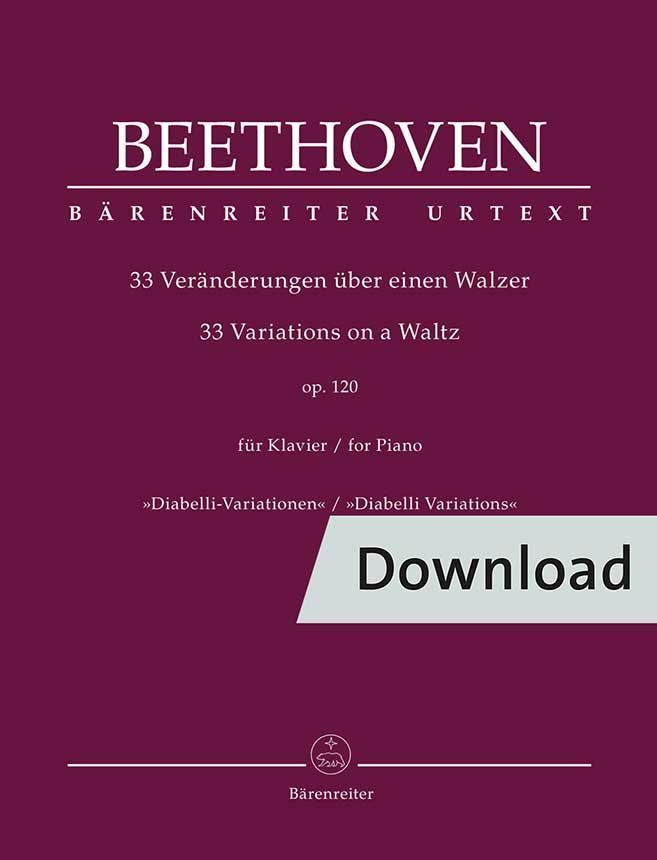
33 Changes over a Waltz op. 120
for piano - 'Diabelli Variations'
Ludwig van Beethoven
33 Changes over a Waltz op. 120
for piano - 'Diabelli Variations'
- Instrumentation Piano
- Composer Ludwig van Beethoven
- Series Bärenreiter Urtext
- Editor Mario Aschauer
-
Difficulty Level
- Edition Sheet Music Download (Urtext)
- Publisher Bärenreiter Verlag
- Order no. BA9657-DL
 immediately available
Download immediately after ordering
incl. tax,
excl. shipping costs
Not available in all countries. Learn more

Description:
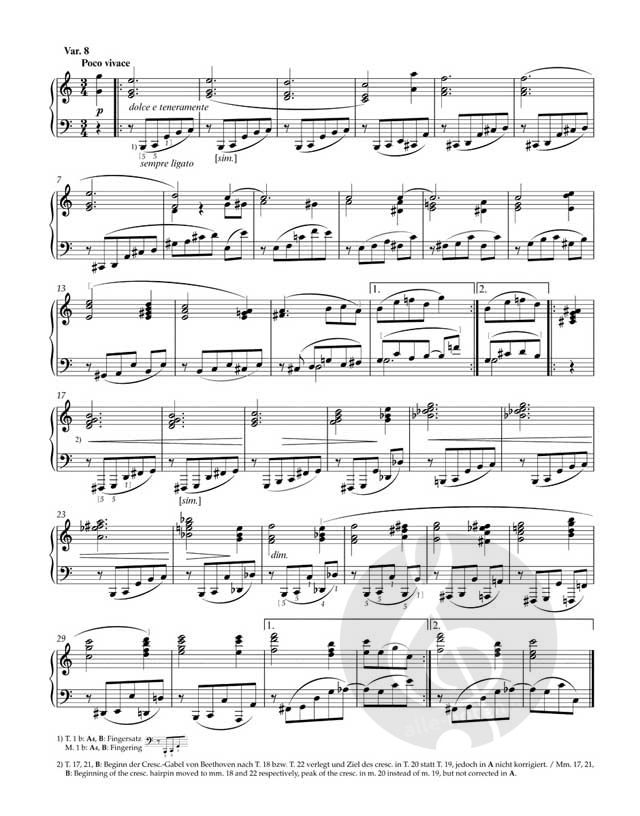
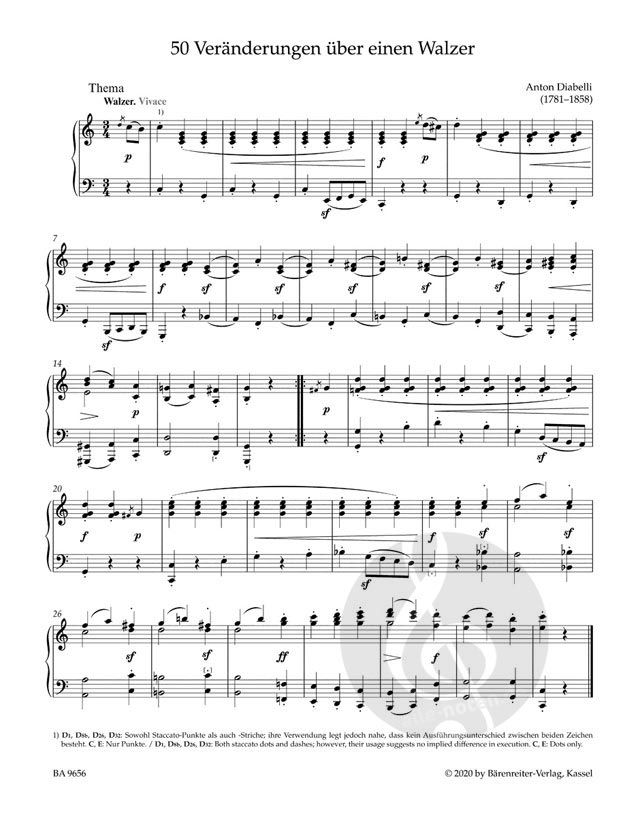
In December 1818, the Viennese music publisher Pietro Cappi announced the founding of a new publishing house with his business partner Anton Diabelli. The new company Cappi & Diabelli proved to have a good feel for the tastes of the time and quickly became one of the most influential music publishers of the Viennese Biedermeier period.
Shortly after its foundation, Diabelli sent a 32-bar waltz that he had composed himself to the most famous composers of the Austrian Empire with a call to write variations for publication as part of a joint project. As far as we know today, only one of the composers explicitly rejected this collaboration: Beethoven.
It is not known why Beethoven did not want to take part in the competition. Nevertheless, he composed 33 variations, which were not to be published as part of Diabelli's project, but by other means. Beethoven's Diabelli Variations mark the peak of his variation output and, like Bach's "Goldberg Variations", are among the most important contributions to this art form.
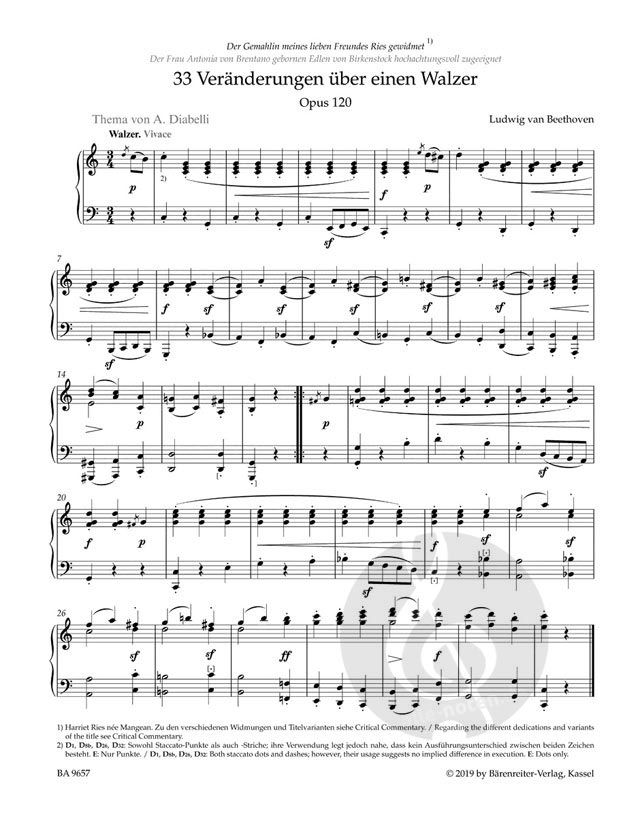
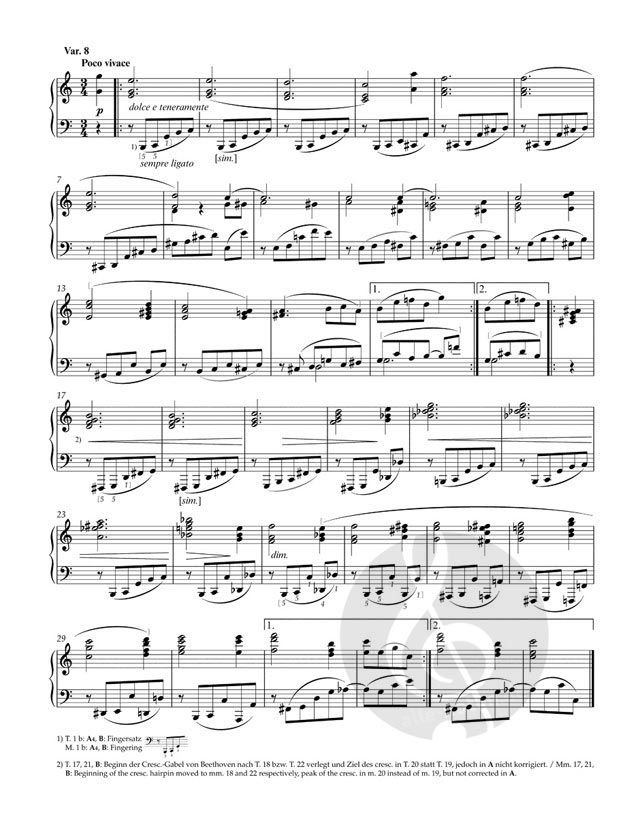
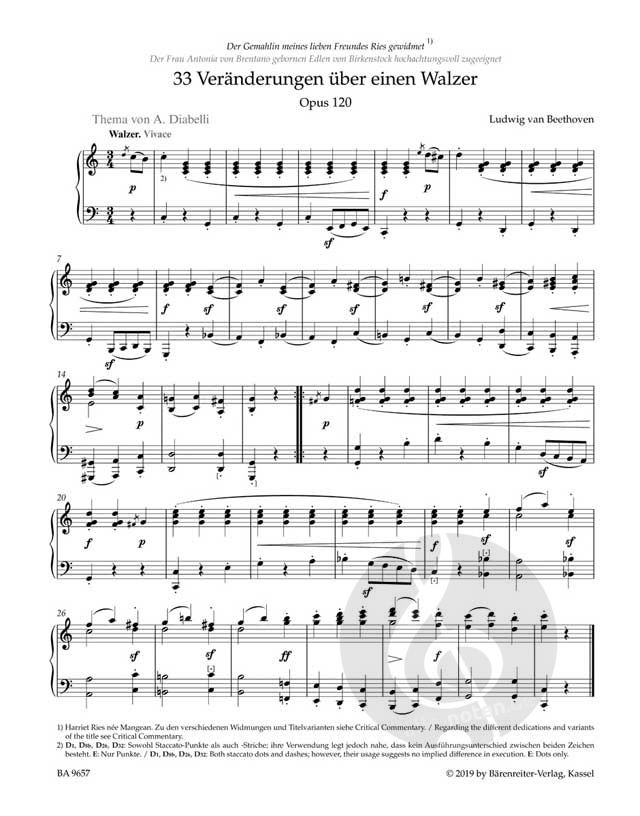
In the foreword to this edition, editor Mario Aschauer describes the extremely complex source situation. Discrepancies between the main sources have been highlighted as "Ossia" passages in light gray print. A detailed Critical Report (English) and practical performance notes on Viennese piano playing in Beethoven's time (German/English) round off this outstanding Urtext edition.
Shortly after its foundation, Diabelli sent a 32-bar waltz that he had composed himself to the most famous composers of the Austrian Empire with a call to write variations for publication as part of a joint project. As far as we know today, only one of the composers explicitly rejected this collaboration: Beethoven.
It is not known why Beethoven did not want to take part in the competition. Nevertheless, he composed 33 variations, which were not to be published as part of Diabelli's project, but by other means. Beethoven's Diabelli Variations mark the peak of his variation output and, like Bach's "Goldberg Variations", are among the most important contributions to this art form.
In the foreword to this edition, editor Mario Aschauer describes the extremely complex source situation. Discrepancies between the main sources have been highlighted as "Ossia" passages in light gray print. A detailed Critical Report (English) and practical performance notes on Viennese piano playing in Beethoven's time (German/English) round off this outstanding Urtext edition.
Here is how the download works:
1 Buy download sheet music
Purchase the download score from our online store
2 Order confirmation with download link
Immediately after completing your order, you will receive an order confirmation by email listing all items. You will find the download link next to each item. You can use this link to start the download right away. Please also check your spam folder if necessary.
Customers rated this product:
Manufacturer Information:
Bärenreiter-Verlag Karl Vötterle GmbH & Co. KG
Heinrich-Schütz-Allee 35-37
34131
Kassel
Deutschland
Related products:
Ludwig van Beethoven
für Klavier - 'Diabelli-Variationen'
- Piano
- Sheet Music (Urtext)
- Bärenreiter Verlag
-
-
in stock
ships within 1-2 working days - Also available for download!

Ludwig van Beethoven
Diabelli Variations - composed by the most outstanding composers and virtuosos in Vienna
- Piano
- Sheet Music Download (Urtext)
- Bärenreiter Verlag
-
immediately available
Download immediately after ordering - Instant download
Other customers also bought:
- Violin and Piano
- Sheet Music
-
ships within 3-6 working days
- Piano
- Sheet Music
-
in stock
ships within 1-2 working days - Also available for download!
Tim Richards
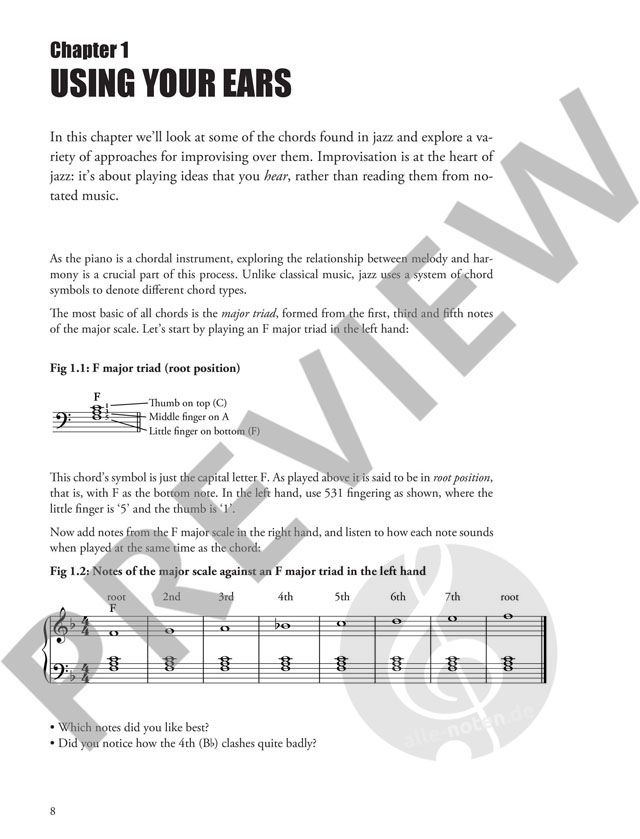
An introduction to swing, blues, latin and funk Part 1: Chords and Improvisation
- Piano
- Sheet Music and Online Audio
-
in stock
ships within 1-2 working days

- Solo Voices (SATB), Mixed Choir (SATB) and Orchestra
- Score (Urtext)
-
in stock
ships within 1-2 working days - Also available for download!