
Ludwig van Beethoven
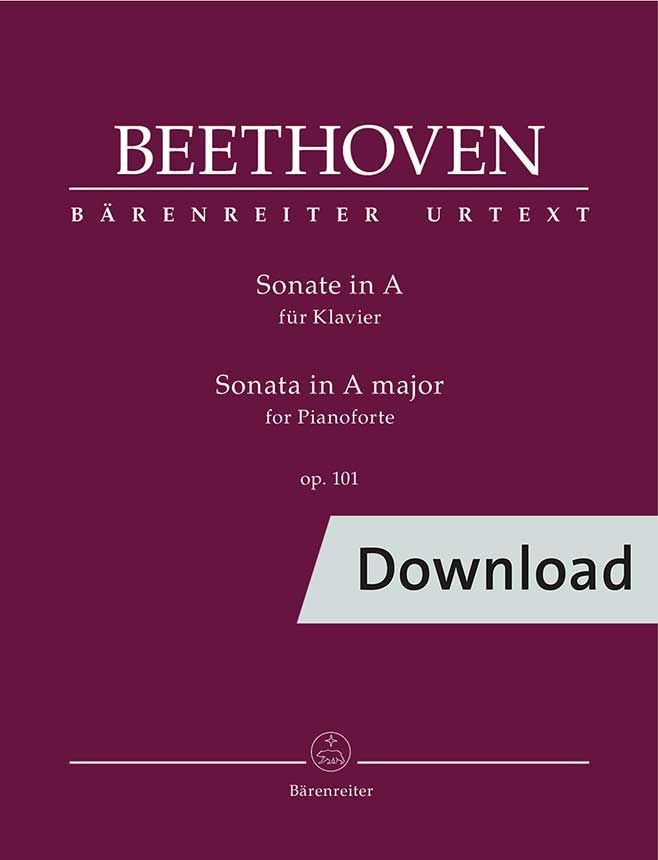
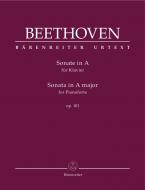
Sonata in A op. 101
for piano

Ludwig van Beethoven
Sonata in A op. 101
for piano
- Instrumentation Piano
- Composer Ludwig van Beethoven
- Series Bärenreiter Urtext
- Editor Jonathan Del Mar
-
Difficulty Level
- Edition Sheet Music Download (Urtext)
- Publisher Bärenreiter Verlag
- Order no. BA11811-DL
 immediately available
Download immediately after ordering
incl. tax,
excl. shipping costs
Not available in all countries. Learn more

Description:
The Sonata op. 101 has an unusually long history of composition. Beethoven's earliest sketches date from 1815. The first edition of the "Difficult to Exegetate Sonata in A", as Beethoven called it, was published in 1817. Beethoven's patriotic sentiments during this time led him to strive for German equivalents for the traditional Italian musical terminology. The autograph of op. 101 is inconsistent in this respect, as the outer movements are in Italian and the inner movements in German. The first edition uses both languages throughout, as does this Bärenreiter Urtext edition. In January 1817, Beethoven informed his publisher that in future all his works should bear the designation "Hammerklavier" instead of "Pianoforte". This instruction was only implemented in the case of op. 101 and op. 106; the latter still bears the nickname "Hammerklavier Sonata" to this day.
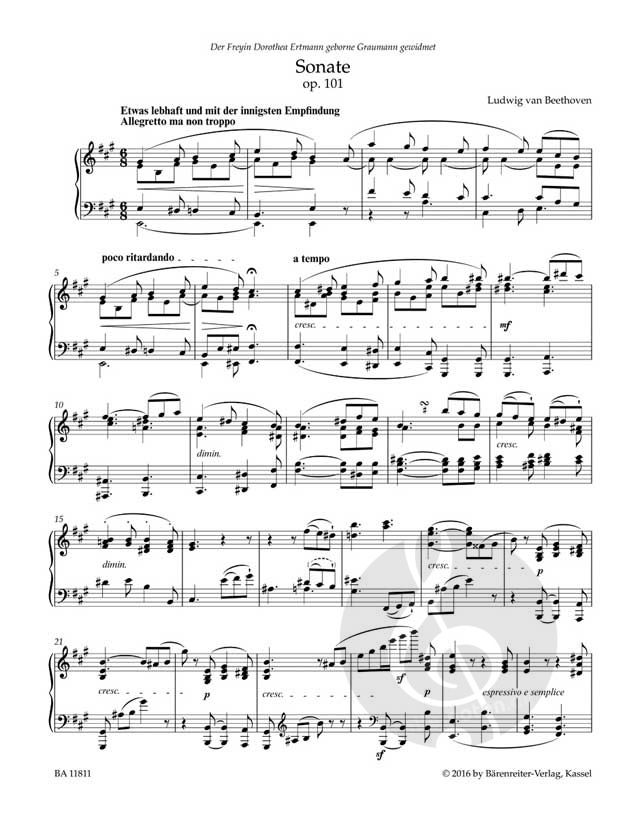
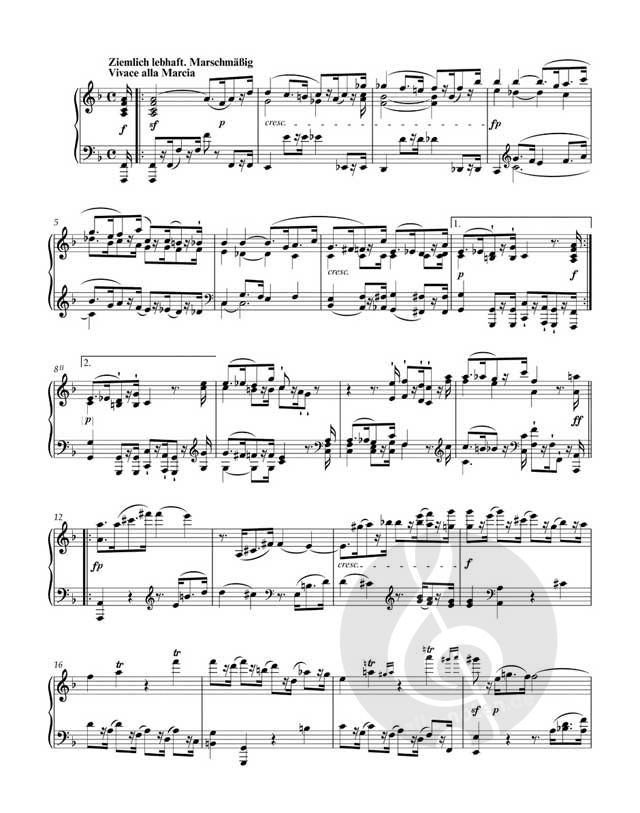
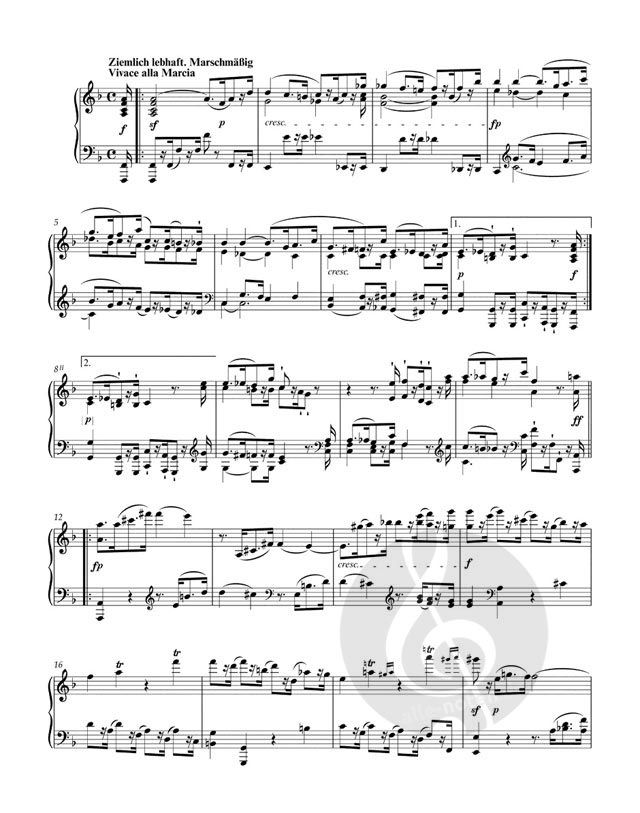
For the present edition, emphasis was placed on a reader-friendly musical notation which, on the one hand, takes into account the flow and tempo of the musical movement and, on the other hand, should facilitate the study of this technically demanding work through a transparent and clear musical notation as well as favorable turning points.
The preface to this edition is particularly illuminating, containing information on the peculiarities of Beethoven's notation (slurs, dots and dashes) and on historical performance practice (instruments, use of pedal, tempo, dynamics, articulation, accents, ornaments, repetitions).
For the present edition, emphasis was placed on a reader-friendly musical notation which, on the one hand, takes into account the flow and tempo of the musical movement and, on the other hand, should facilitate the study of this technically demanding work through a transparent and clear musical notation as well as favorable turning points.
The preface to this edition is particularly illuminating, containing information on the peculiarities of Beethoven's notation (slurs, dots and dashes) and on historical performance practice (instruments, use of pedal, tempo, dynamics, articulation, accents, ornaments, repetitions).
Here is how the download works:
1 Buy download sheet music
Purchase the download score from our online store
2 Order confirmation with download link
Immediately after completing your order, you will receive an order confirmation by email listing all items. You will find the download link next to each item. You can use this link to start the download right away. Please also check your spam folder if necessary.
Customers rated this product:
Manufacturer Information:
Bärenreiter-Verlag Karl Vötterle GmbH & Co. KG
Heinrich-Schütz-Allee 35-37
34131
Kassel
Deutschland
Related products:
- Piano
- Sheet Music (Urtext)
- Bärenreiter Verlag
-
-
in stock
ships within 1-2 working days - Also available for download!