
Kalmus Orchestra Library
Kuolema ("Death" in Finnish) is a play by Arvid Järnefelt. Jean Sibelius (1865-1957) happened to be Järnefelt's brother-in-law, and he composed incidental music to the play under the same title (Kuole...
Kuolema ("Death" in Finnish) is a play by Arvid Järnefelt. Jean Sibelius (1865-1957) happened to be Järnefelt's brother-in-law, and he composed incidental music to the play under the same title (Kuole...
- Orchestra
- Score and Parts
- Edwin F. Kalmus
-
 ships within 2-4 weeks
ships within 2-4 weeks
Jean Sibelius (1865-1957) first composed the tone poem En Saga, Op. 9 in 1892, with the work premiering on February 16th, 1893, with Sibelius conducting the Helsinki Philharmonic. While one might imag...
Jean Sibelius (1865-1957) first composed the tone poem En Saga, Op. 9 in 1892, with the work premiering on February 16th, 1893, with Sibelius conducting the Helsinki Philharmonic. While one might imag...
- Orchestra
- Score
- Edwin F. Kalmus
-
ships within 2-4 weeks
ships within 2-4 weeks
Jean Sibelius (1865-1957) first composed the tone poem En Saga, Op. 9 in 1892, with the work premiering on February 16th, 1893, with Sibelius conducting the Helsinki Philharmonic. While one might imag...
Jean Sibelius (1865-1957) first composed the tone poem En Saga, Op. 9 in 1892, with the work premiering on February 16th, 1893, with Sibelius conducting the Helsinki Philharmonic. While one might imag...
- Orchestra
- Score and Parts
- Edwin F. Kalmus
-
ships within 2-4 weeks
ships within 2-4 weeks
Má vlast (My Fatherland or My Country) is a collection of six symphonic poems composed by Bedrich Smetana (1824-1884) between 1874 and 1879. Conceived as individual works, though commonly presented as...
Má vlast (My Fatherland or My Country) is a collection of six symphonic poems composed by Bedrich Smetana (1824-1884) between 1874 and 1879. Conceived as individual works, though commonly presented as...
- Orchestra
- Score
- Edwin F. Kalmus
-
ships within 2-4 weeks
ships within 2-4 weeks
Má vlast (My Fatherland or My Country) is a collection of six symphonic poems composed by Bedrich Smetana (1824-1884) between 1874 and 1879. Conceived as individual works, though commonly presented as...
Má vlast (My Fatherland or My Country) is a collection of six symphonic poems composed by Bedrich Smetana (1824-1884) between 1874 and 1879. Conceived as individual works, though commonly presented as...
- Orchestra
- Score and Parts
- Edwin F. Kalmus
-
ships within 2-4 weeks
ships within 2-4 weeks
Louis Spohr (1784-1859), a German composer, conductor, and violinist, formed an acquaintance with Beethoven and, although greatly critical of his ninth symphony, promoted much of his work. His innovat...
Louis Spohr (1784-1859), a German composer, conductor, and violinist, formed an acquaintance with Beethoven and, although greatly critical of his ninth symphony, promoted much of his work. His innovat...
- 2 Violins, Viola, Cello and Orchestra
- Score
- Edwin F. Kalmus
-
ships within 2-4 weeks
ships within 2-4 weeks
Louis Spohr (1784-1859), a German composer, conductor, and violinist, formed an acquaintance with Beethoven and, although greatly critical of his ninth symphony, promoted much of his work. His innovat...
Louis Spohr (1784-1859), a German composer, conductor, and violinist, formed an acquaintance with Beethoven and, although greatly critical of his ninth symphony, promoted much of his work. His innovat...
- 2 Violins, Viola, Cello and Orchestra
- Score and Parts
- Edwin F. Kalmus
-
ships within 2-4 weeks
ships within 2-4 weeks
An der Schönen Blauen Donau (On the Beautiful Blue Danube), Op. 314, written by Johann Strauss II (1825-1899) is one of the most popular works in classical music, and remains well-known in popular cul...
An der Schönen Blauen Donau (On the Beautiful Blue Danube), Op. 314, written by Johann Strauss II (1825-1899) is one of the most popular works in classical music, and remains well-known in popular cul...
- Orchestra
- Score
- Edwin F. Kalmus
-
ships within 2-4 weeks
ships within 2-4 weeks
An der Schönen Blauen Donau (On the Beautiful Blue Danube), Op. 314, written by Johann Strauss II (1825-1899) is one of the most popular works in classical music, and remains well-known in popular cul...
An der Schönen Blauen Donau (On the Beautiful Blue Danube), Op. 314, written by Johann Strauss II (1825-1899) is one of the most popular works in classical music, and remains well-known in popular cul...
- Orchestra
- Score and Parts
- Edwin F. Kalmus
-
ships within 2-4 weeks
ships within 2-4 weeks
Johann Strauss, Jr. (1825-1899) wrote the KAISER-WALZER, Op. 437 (EMPEROR WALTZES) to celebrate the toast of friendship that Franz Joseph I extended when he visited Wilhelm II in 1889. Fritz Simrock,...
Johann Strauss, Jr. (1825-1899) wrote the KAISER-WALZER, Op. 437 (EMPEROR WALTZES) to celebrate the toast of friendship that Franz Joseph I extended when he visited Wilhelm II in 1889. Fritz Simrock,...
- Orchestra
- Score
- Edwin F. Kalmus
-
ships within 2-4 weeks
ships within 2-4 weeks
Johann Strauss, Jr. (1825-1899) wrote the KAISER-WALZER, Op. 437 (EMPEROR WALTZES) to celebrate the toast of friendship that Franz Joseph I extended when he visited Wilhelm II in 1889. Fritz Simrock,...
Johann Strauss, Jr. (1825-1899) wrote the KAISER-WALZER, Op. 437 (EMPEROR WALTZES) to celebrate the toast of friendship that Franz Joseph I extended when he visited Wilhelm II in 1889. Fritz Simrock,...
- Orchestra
- Score and Parts
- Edwin F. Kalmus
-
ships within 2-4 weeks
ships within 2-4 weeks
The comic operetta DIE FLEDERMAUS (The Bat) by Johann Strauss II (1825-1899) is the composer's best known operetta, though "The Waltz King" is perhaps better remembered yet for his contribut...
The comic operetta DIE FLEDERMAUS (The Bat) by Johann Strauss II (1825-1899) is the composer's best known operetta, though "The Waltz King" is perhaps better remembered yet for his contribut...
- Orchestra
- Score and Parts
- Edwin F. Kalmus
-
ships within 2-4 weeks
ships within 2-4 weeks
Johann Strauss II (1825-1899) wrote FURIOSO POLKA, OP. 260, in 1861, at a time when these quick dances thrived in Viennese ballrooms. In the subtitle "quasi Galopp", he indicated that the piece should...
Johann Strauss II (1825-1899) wrote FURIOSO POLKA, OP. 260, in 1861, at a time when these quick dances thrived in Viennese ballrooms. In the subtitle "quasi Galopp", he indicated that the piece should...
- Orchestra
- Score
- Edwin F. Kalmus
-
ships within 2-4 weeks
ships within 2-4 weeks
THE GYPSY BARON (DER ZIGEUNERBARON) is an operetta in three acts by Johann Strauss II (1825-1899) which premiered at the Theater an der Wien on October 24, 1885. Its libretto, penned by the author Ign...
THE GYPSY BARON (DER ZIGEUNERBARON) is an operetta in three acts by Johann Strauss II (1825-1899) which premiered at the Theater an der Wien on October 24, 1885. Its libretto, penned by the author Ign...
- Orchestra
- Score and Parts
- Edwin F. Kalmus
-
ships within 2-4 weeks
ships within 2-4 weeks
THE QUEEN'S LACE HANDKERCHIEF (DAS SPITZENTUCH DER KÖNIGIN) is an operetta by Johann Strauss II (1825-1899). The libretto by Heinrich Bohrmann-Riegen and Richard Genée is based on a fictional story ab...
THE QUEEN'S LACE HANDKERCHIEF (DAS SPITZENTUCH DER KÖNIGIN) is an operetta by Johann Strauss II (1825-1899). The libretto by Heinrich Bohrmann-Riegen and Richard Genée is based on a fictional story ab...
- Orchestra
- Score and Parts
- Max Schoenherr
- Edwin F. Kalmus
-
ships within 2-4 weeks
ships within 2-4 weeks
THE QUEEN'S LACE HANDKERCHIEF (DAS SPITZENTUCH DER KÖNIGIN) is an operetta by Johann Strauss II (1825-1899). The libretto by Heinrich Bohrmann-Riegen and Richard Genée is based on a fictional story ab...
THE QUEEN'S LACE HANDKERCHIEF (DAS SPITZENTUCH DER KÖNIGIN) is an operetta by Johann Strauss II (1825-1899). The libretto by Heinrich Bohrmann-Riegen and Richard Genée is based on a fictional story ab...
- Orchestra
- Director's Score
- Max Schoenherr
- Edwin F. Kalmus
-
ships within 2-4 weeks
ships within 2-4 weeks
JOHANN STRAUSS II (1825-1899) initially wrote FRÜHLINGSSTIMMEN, Op. 410 (VOICES OF SPRING) as a concert aria. He dedicated the piece, with a libretto by Richard Genée, to pianist-composer Alfred Grünf...
JOHANN STRAUSS II (1825-1899) initially wrote FRÜHLINGSSTIMMEN, Op. 410 (VOICES OF SPRING) as a concert aria. He dedicated the piece, with a libretto by Richard Genée, to pianist-composer Alfred Grünf...
- Orchestra
- Score
- Edwin F. Kalmus
-
ships within 2-4 weeks
ships within 2-4 weeks
Written between 1886 and 1888, Richard Strauss' (1864-1949) MACBETH, Op. 23 was the then young composer's first tone poem, which he described as "a completely new path" in his composition. It premiere...
Written between 1886 and 1888, Richard Strauss' (1864-1949) MACBETH, Op. 23 was the then young composer's first tone poem, which he described as "a completely new path" in his composition. It premiere...
- Orchestra
- Score
- Edwin F. Kalmus
-
ships within 2-4 weeks
ships within 2-4 weeks
Written between 1886 and 1888, Richard Strauss' (1864-1949) MACBETH, Op. 23 was the then young composer's first tone poem, which he described as "a completely new path" in his composition. It premiere...
Written between 1886 and 1888, Richard Strauss' (1864-1949) MACBETH, Op. 23 was the then young composer's first tone poem, which he described as "a completely new path" in his composition. It premiere...
- Orchestra
- Score and Parts
- Edwin F. Kalmus
-
ships within 2-4 weeks
ships within 2-4 weeks
Richard Strauss (1864-1949) originally wrote this work for solo piano and orchestra under the title Scherzo in D minor in 1886 for conductor and pianist Hans von Bülow, a large influence on Strauss' c...
Richard Strauss (1864-1949) originally wrote this work for solo piano and orchestra under the title Scherzo in D minor in 1886 for conductor and pianist Hans von Bülow, a large influence on Strauss' c...
- Piano and Orchestra
- Score
- Edwin F. Kalmus
-
ships within 2-4 weeks
ships within 2-4 weeks
Richard Strauss (1864-1949) originally wrote this work for solo piano and orchestra under the title Scherzo in D minor in 1886 for conductor and pianist Hans von Bülow, a large influence on Strauss' c...
Richard Strauss (1864-1949) originally wrote this work for solo piano and orchestra under the title Scherzo in D minor in 1886 for conductor and pianist Hans von Bülow, a large influence on Strauss' c...
- Piano and Orchestra
- Score and Parts
- Edwin F. Kalmus
-
ships within 2-4 weeks
ships within 2-4 weeks
Richard Strauss (1864-1949) originally wrote this work for solo piano and orchestra under the title Scherzo in D minor in 1886 for conductor and pianist Hans von Bülow, a large influence on Strauss' c...
Richard Strauss (1864-1949) originally wrote this work for solo piano and orchestra under the title Scherzo in D minor in 1886 for conductor and pianist Hans von Bülow, a large influence on Strauss' c...
- Piano and Orchestra
- Piano Reduction
- Edwin F. Kalmus
-
ships within 2-4 weeks
ships within 2-4 weeks
Richard Strauss (1864-1949) composed his Symphonia Domestica, Op. 53 (TrV 209) in 1902-1903, creating one of his most expansive and personal tone poems, a richly orchestrated portrait of a day in the...
Richard Strauss (1864-1949) composed his Symphonia Domestica, Op. 53 (TrV 209) in 1902-1903, creating one of his most expansive and personal tone poems, a richly orchestrated portrait of a day in the...
- Orchestra
- Sheet Music
- Edwin F. Kalmus
-
ships within 2-4 weeks
ships within 2-4 weeks
Richard Strauss (1864-1949) wrote his VIOLIN CONCERTO IN D MINOR, Op. 8, between 1881 and 1882, and it remained his only foray in that genre. Composed while a teenager and still in school. While still...
Richard Strauss (1864-1949) wrote his VIOLIN CONCERTO IN D MINOR, Op. 8, between 1881 and 1882, and it remained his only foray in that genre. Composed while a teenager and still in school. While still...
- Violin and Orchestra
- Score
- Edwin F. Kalmus
-
ships within 2-4 weeks
ships within 2-4 weeks
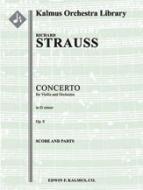
Richard Strauss (1864-1949) wrote his VIOLIN CONCERTO IN D MINOR, Op. 8, between 1881 and 1882, and it remained his only foray in that genre. Composed while a teenager and still in school. While still...
Richard Strauss (1864-1949) wrote his VIOLIN CONCERTO IN D MINOR, Op. 8, between 1881 and 1882, and it remained his only foray in that genre. Composed while a teenager and still in school. While still...
- Violin and Orchestra
- Score and Parts
- Edwin F. Kalmus
-
ships within 2-4 weeks
ships within 2-4 weeks