
Henry Eccles
Sonata in G minor
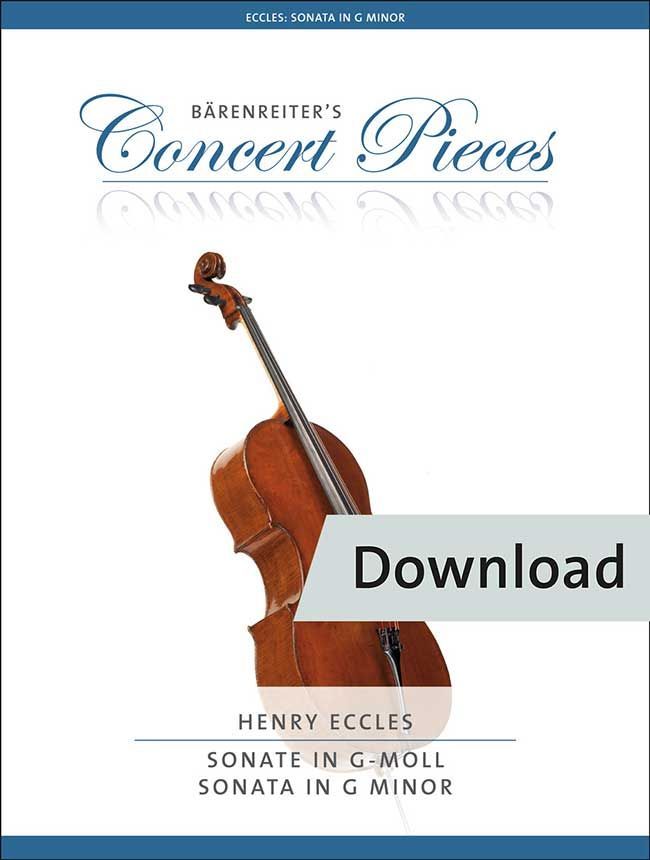
Henry Eccles
Sonata in G minor
- Instrumentation Cello and Piano
- Composer Henry Eccles
- Series Bärenreiter's Concert Pieces
- Editor Christoph Sassmannshaus
-
Difficulty Level
- Edition Score and Parts Download
- Publisher Bärenreiter Verlag
- Order no. BA10699-DL
 immediately available
Download immediately after ordering
incl. tax,
excl. shipping costs
Not available in all countries. Learn more

Description:
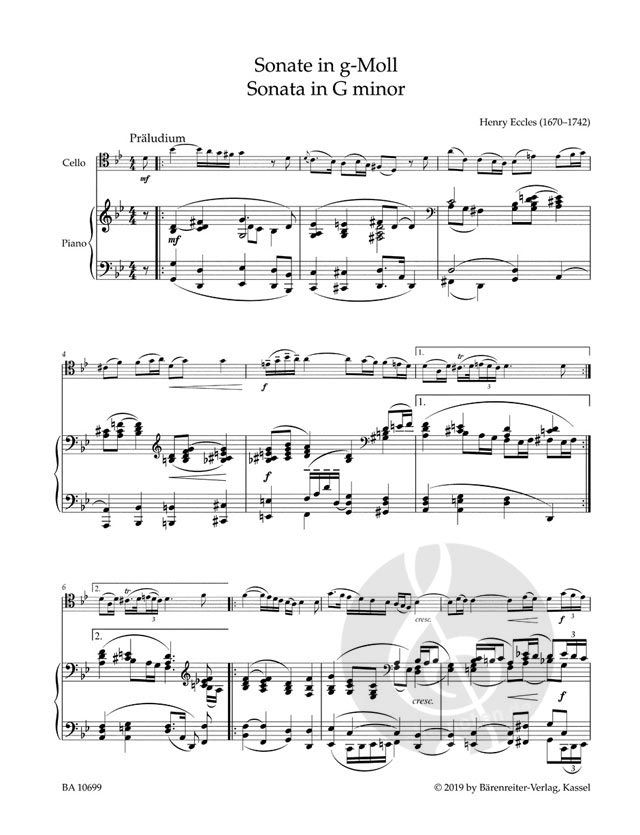
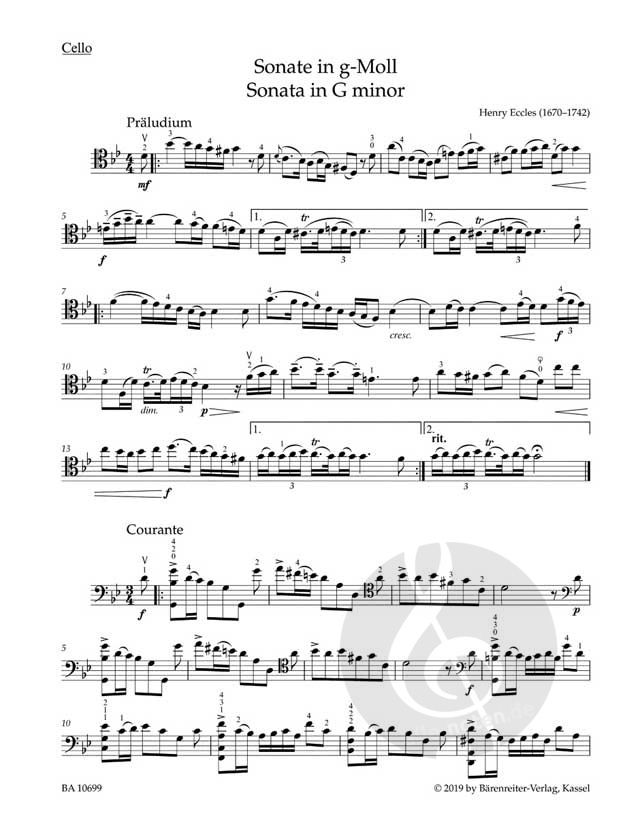
Henry Eccles was a Baroque composer and contemporary of Johann Sebastian Bach (1685-1750), George Frideric Handel (1685-1759) and Antonio Vivaldi (1678-1741). His Violin Sonata in G minor was first published in 1720 for violin and figured bass and later transcribed for cello and double bass.
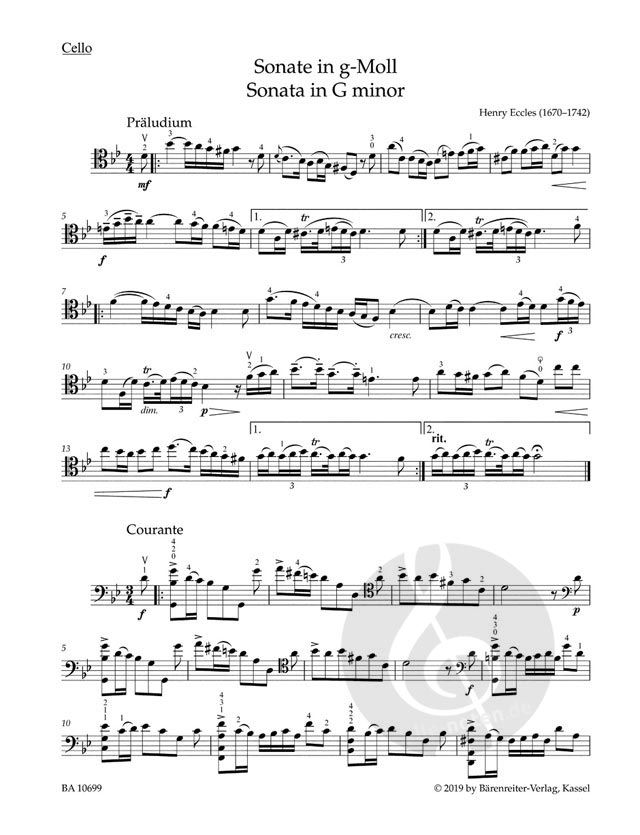
This sonata is written in Baroque sonata form and consists of a slow introduction followed by three dance movements. The dance movements are based on court dances from the period. Students can listen to the movements "Courante, Sarabande" and "Gigue" from Bach's six solo suites for cello and compare them with the corresponding movements in the "Eccles Sonata".
This sonata represents an important step on the way to a more developed technique. It requires spiccato and martelé with string changes. The work also requires changes of position up to the thumb position. These techniques enable the student to prepare for more demanding works such as the "Allegro appassionato" by Saint-Saëns and the sonata repertoire for cello.
This sonata is written in Baroque sonata form and consists of a slow introduction followed by three dance movements. The dance movements are based on court dances from the period. Students can listen to the movements "Courante, Sarabande" and "Gigue" from Bach's six solo suites for cello and compare them with the corresponding movements in the "Eccles Sonata".
This sonata represents an important step on the way to a more developed technique. It requires spiccato and martelé with string changes. The work also requires changes of position up to the thumb position. These techniques enable the student to prepare for more demanding works such as the "Allegro appassionato" by Saint-Saëns and the sonata repertoire for cello.
Here is how the download works:
1 Buy download sheet music
Purchase the download score from our online store
2 Order confirmation with download link
Immediately after completing your order, you will receive an order confirmation by email listing all items. You will find the download link next to each item. You can use this link to start the download right away. Please also check your spam folder if necessary.
Customers rated this product:
Manufacturer Information:
Bärenreiter-Verlag Karl Vötterle GmbH & Co. KG
Heinrich-Schütz-Allee 35-37
34131
Kassel
Deutschland
Related products:
- Cello and Piano
- Score and Parts
- Bärenreiter Verlag
-
-
in stock
ships within 1-2 working days - Also available for download!
Other customers also bought:
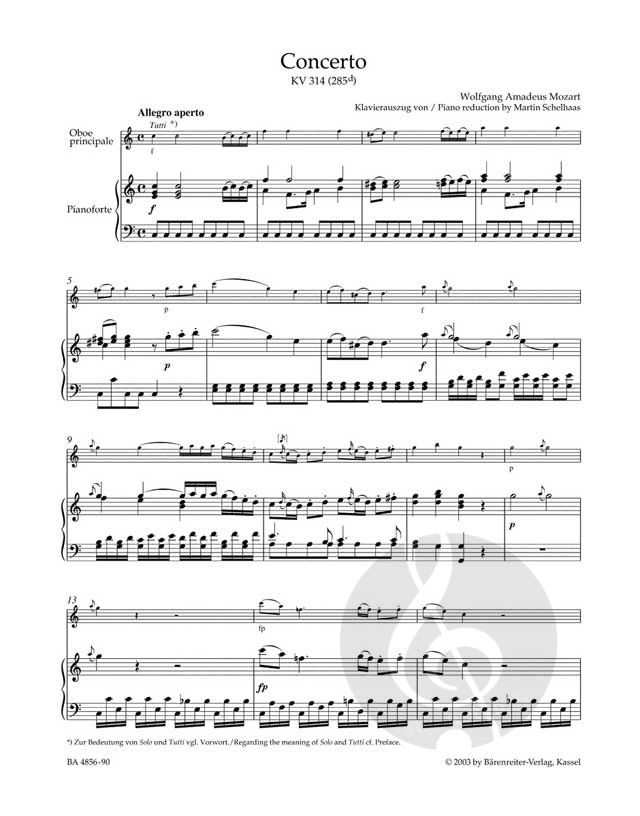
- Oboe and Piano
- Piano reduction with part(s)
- Martin Schelhaas
-
in stock
ships within 1-2 working days - Also available for download!
- Oboe and Continuo
- Score and Parts
-
in stock
ships within 1-2 working days - Also available for download!
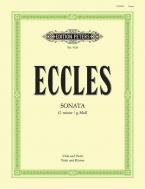
Henry Eccles
- Viola and Piano
- Piano Score and Part(s)
-
in stock
ships within 1-2 working days
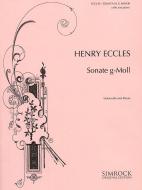
Henry Eccles
- Cello and Piano
- Sheet Music
- Alfred Dawes
-
in stock
ships within 1-2 working days
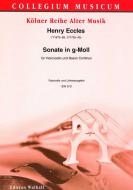
- Cello and Continuo
- Sheet Music
-
in stock
ships within 1-2 working days
- Cello and Piano
- Piano reduction with part(s)
- Karl Heinz Füssl
-
in stock
ships within 1-2 working days - Also available for download!
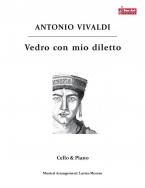
- Cello and Piano
- Piano Score and Part(s)
- Lucian Moraru
-
in stock
ships within 1-2 working days
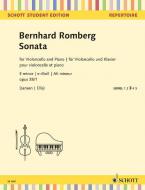
- Cello and Piano
- Piano Score and Part(s)
- Friedrich Gustav Jansen
-
in stock
ships within 1-2 working days - Also available for download!
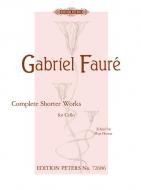
- Cello and Piano
- Piano Score and Part(s)
-
in stock
ships within 1-2 working days