
Felix Mendelssohn Bartholdy
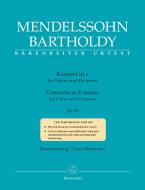
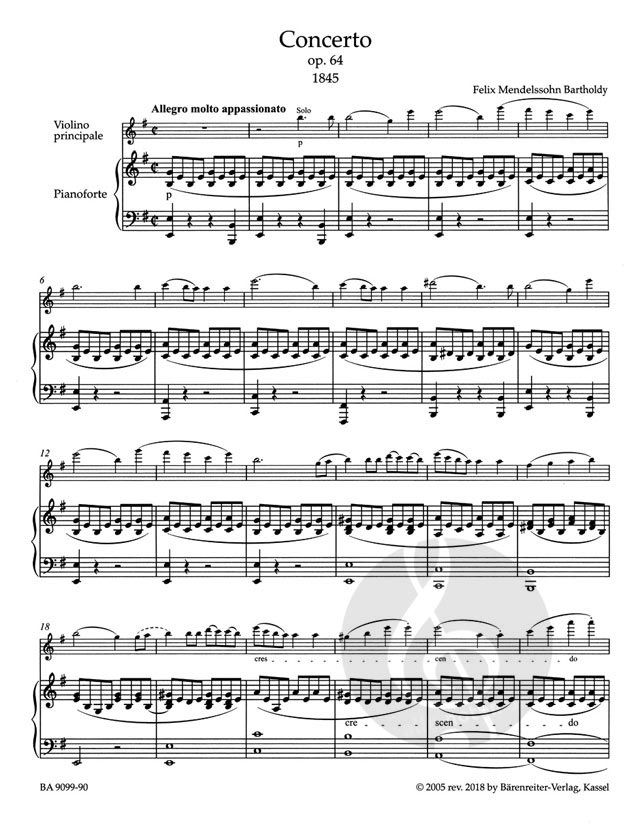
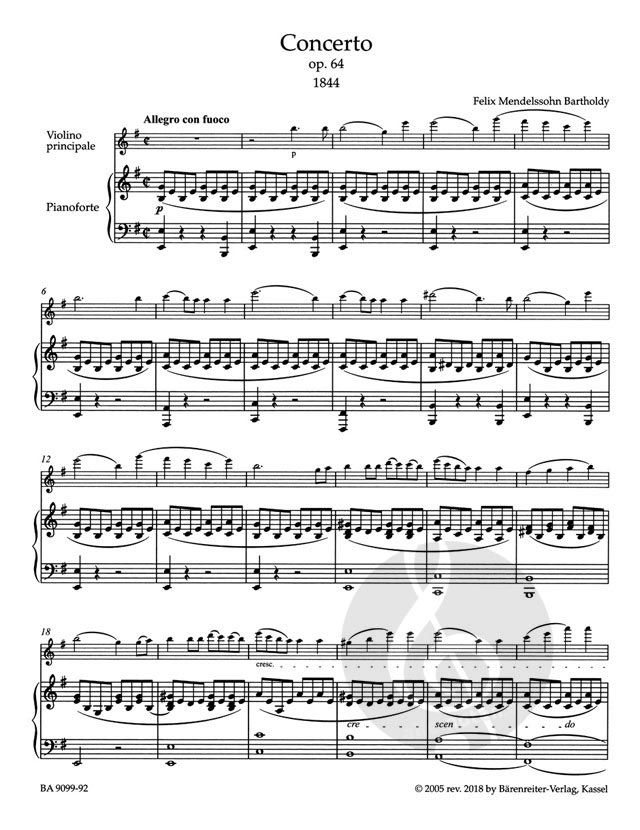
Konzert e-Moll op. 64 für Violine und Orchester
Zweite Fassung 1845 mit separatem Kommentar zur Aufführungspraxis
NEW
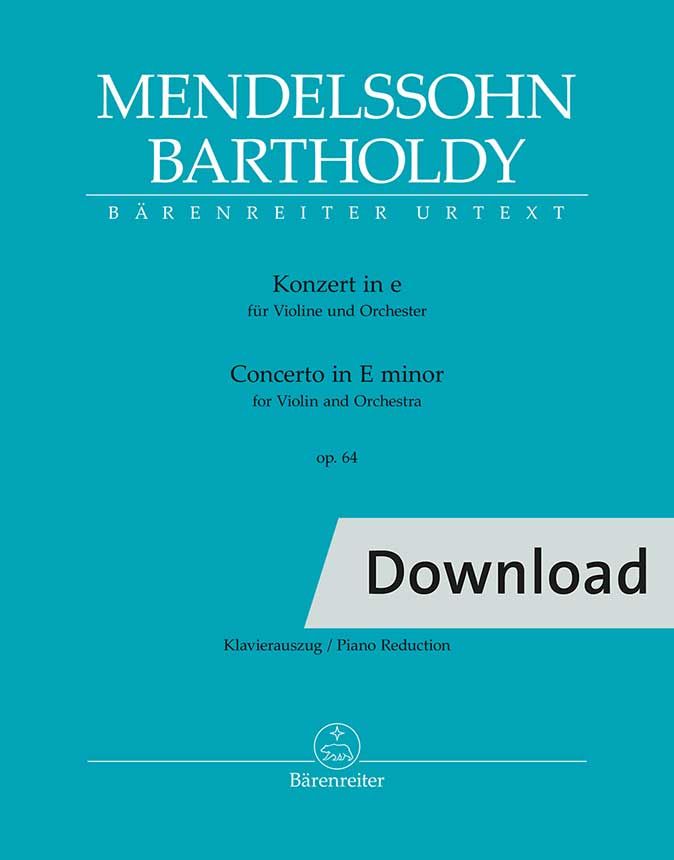
Felix Mendelssohn Bartholdy
Konzert e-Moll op. 64 für Violine und Orchester
Zweite Fassung 1845 mit separatem Kommentar zur Aufführungspraxis
- Instrumentation Violin and Piano
- Composer Felix Mendelssohn Bartholdy
- Series Bärenreiter Urtext
- Editor R. Larry Todd Clive Brown
- Edition Piano reduction with part(s) Download (Urtext)
- Publisher Bärenreiter Verlag
- Order no. BA9099-93-DL
 immediately available
Download immediately after ordering
incl. tax,
excl. shipping costs
Not available in all countries. Learn more

Description:
Mendelssohn’s Violin Concerto, Op. 64, is a seminal work of the 19th century that, on the one hand, remains rooted in Beethoven’s classical style, while on the other hand, points the way toward Brahms’s Romantic ideal of expression. It has long been known that Mendelssohn premiered the work with three soloists in succession: Ferdinand David, who collaborated closely with the composer during the composition process and performed the premiere; Joseph Joachim, the "child prodigy"; and Hubert Léonard, a young Belgian virtuoso about whom we know very little.
Proof sheets for the Violin Concerto in E minor were long thought to be lost; so it came as something of a sensation when, recently, such proof sheets for the solo violin part were discovered along with a letter from Mendelssohn to Léonard.
The letter informs us that the composer invited Léonard to his home in Frankfurt to get to know him. It was already known that Mendelssohn gave proof sheets to David; but now we know that Léonard received them as well.
The recently discovered proof sheets document how Léonard performed the concerto together with Mendelssohn on that evening in February 1845. They contain bowing marks and fingering indications and show how Léonard executed position changes and where he used open strings; they also include modified dynamic markings and additional legato slurs.
We can assume that all of this was done in accordance with Mendelssohn’s wishes. The fact that the young violinist made a positive impression on Mendelssohn is confirmed in the composer’s letters written after their evening together; Mendelssohn highly praises Léonard’s playing and offers to help him find work in Germany.
Bärenreiter’s revised edition of Mendelssohn’s Violin Concerto—in which only the orchestral parts remain unchanged—includes a separate booklet on performance practice. The editor is Clive Brown, a recognized expert on Romantic performance practice.
Proof sheets for the Violin Concerto in E minor were long thought to be lost; so it came as something of a sensation when, recently, such proof sheets for the solo violin part were discovered along with a letter from Mendelssohn to Léonard.
The letter informs us that the composer invited Léonard to his home in Frankfurt to get to know him. It was already known that Mendelssohn gave proof sheets to David; but now we know that Léonard received them as well.
The recently discovered proof sheets document how Léonard performed the concerto together with Mendelssohn on that evening in February 1845. They contain bowing marks and fingering indications and show how Léonard executed position changes and where he used open strings; they also include modified dynamic markings and additional legato slurs.
We can assume that all of this was done in accordance with Mendelssohn’s wishes. The fact that the young violinist made a positive impression on Mendelssohn is confirmed in the composer’s letters written after their evening together; Mendelssohn highly praises Léonard’s playing and offers to help him find work in Germany.
Bärenreiter’s revised edition of Mendelssohn’s Violin Concerto—in which only the orchestral parts remain unchanged—includes a separate booklet on performance practice. The editor is Clive Brown, a recognized expert on Romantic performance practice.
Here is how the download works:
1 Buy download sheet music
Purchase the download score from our online store
2 Order confirmation with download link
Immediately after completing your order, you will receive an order confirmation by email listing all items. You will find the download link next to each item. You can use this link to start the download right away. Please also check your spam folder if necessary.
Customers rated this product:
Manufacturer Information:
Bärenreiter-Verlag Karl Vötterle GmbH & Co. KG
Heinrich-Schütz-Allee 35-37
34131
Kassel
Deutschland
Related products:
- Violin
- Piano reduction with part(s) Download (Urtext)
- Bärenreiter Verlag
-
immediately available
Download immediately after ordering - Instant download
Felix Mendelssohn Bartholdy
Zweite Fassung 1845; mit separatem Kommentar zur Aufführungspraxis
- Violin and Piano
- Piano reduction with part(s) (Urtext)
- Bärenreiter Verlag
-
ships within 2-4 working days
- Also available for download!
- Violin
- Piano reduction with part(s) (Urtext)
- Bärenreiter Verlag
-
in stock
ships within 1-2 working days - Also available for download!

Felix Mendelssohn Bartholdy
First version 1844 and second version 1845
- Violin and Orchestra
- Score (Urtext) Download
- Bärenreiter Verlag
-
immediately available
Download immediately after ordering - Instant download
- Violin and Orchestra
- Study Score
- Bärenreiter Verlag
-
in stock
ships within 1-2 working days
- Violin and Orchestra
- Piano reduction with part(s) Download (Urtext)
- Bärenreiter Verlag
-
immediately available
Download immediately after ordering - Instant download
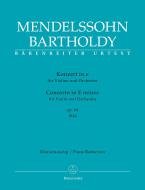
- Violin and Orchestra
- Piano reduction with part(s) (Urtext)
- Bärenreiter Verlag
-
in stock
ships within 1-2 working days - Also available for download!
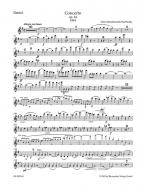
- Violin and Orchestra
- Harmony Parts (Urtext)
- Bärenreiter Verlag
-
ships within 2-4 working days
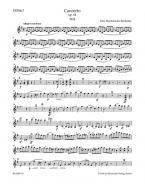
- Violin and Orchestra
- Instrumental Part: Violin 1 (Urtext)
- Bärenreiter Verlag
-
ships within 2-4 working days
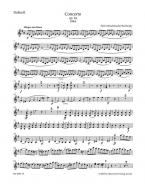
- Violin and Orchestra
- Instrumental Part: Violin 2 (Urtext)
- Bärenreiter Verlag
-
ships within 2-4 working days
- Violin and Orchestra
- Instrumental Part: Viola (Urtext)
- Bärenreiter Verlag
-
ships within 2-4 working days
- Violin and Orchestra
- Instrumental Part: Cello (Urtext)
- Bärenreiter Verlag
-
ships within 2-4 working days
- Violin and Orchestra
- Instrumental Part: Double Bass (Urtext)
- Bärenreiter Verlag
-
ships within 2-4 working days
Other customers also bought:
Anne Terzibaschitsch
- Piano 4 Hands
- Sheet Music
-
in stock
ships within 1-2 working days
Antonín Dvořák
- String Quartet (2 Violins, Viola and Cello)
- Set of Parts (Urtext)
- Hartmut Schick
-
ships within 2-4 working days
- Also available for download!

- Piano 4 Hands
- Sheet Music
-
in stock
ships within 1-2 working days
- String Quartet (2 Violins, Viola and Cello)
- Set of Parts (Urtext)
-
in stock
ships within 1-2 working days
- Piano 4 Hands
- Sheet Music
-
in stock
ships within 1-2 working days
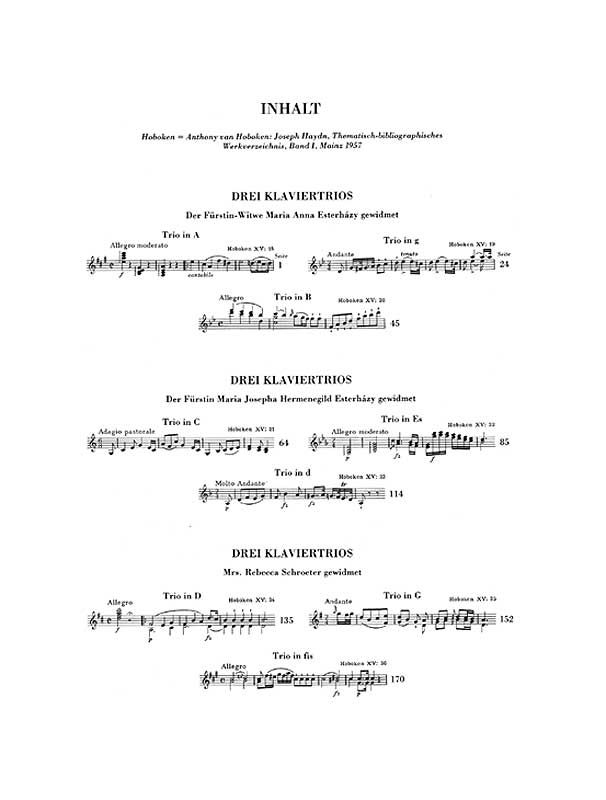
Joseph Haydn
- Violin, Cello and Piano
- Piano Score and Part(s)
-
in stock
ships within 1-2 working days
Wolfgang Amadeus Mozart
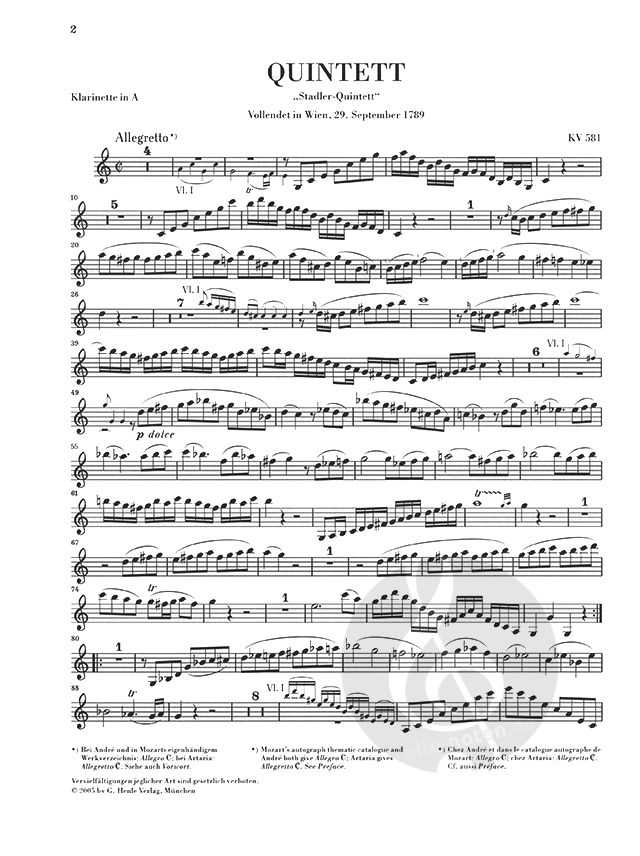
- Clarinet, 2 Violins, Viola and Cello
- Set of Parts (Urtext)
-
in stock
ships within 1-2 working days
Joseph Haydn
- Violin, Cello and Piano
- Piano Score and Part(s)
-
in stock
ships within 1-2 working days
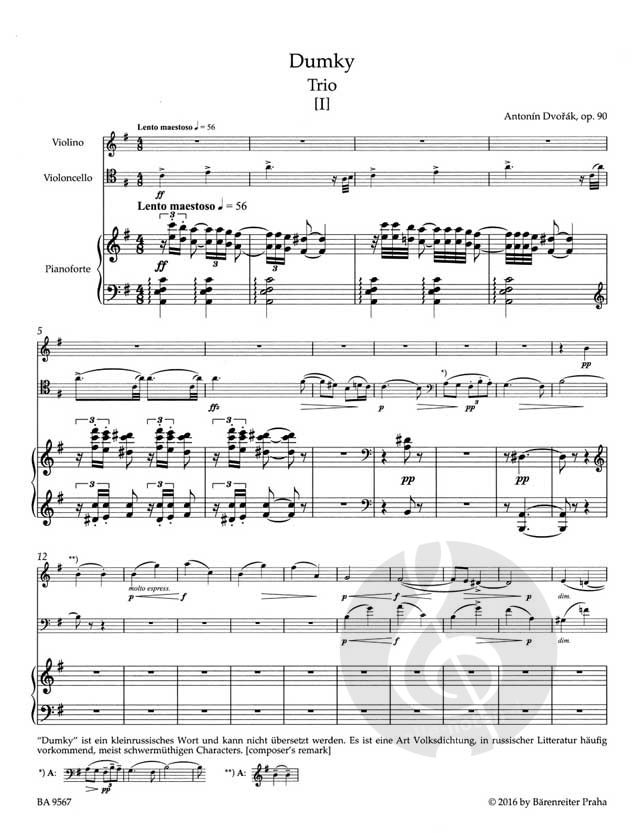
Antonín Dvořák
- Piano, Violin and Cello
- Score and Parts (Urtext)
-
in stock
ships within 1-2 working days - Also available for download!
- Violin, Cello and Piano
- Sheet Music
-
in stock
ships within 1-2 working days - Also available for download!
- String Quartet (2 Violins, Viola and Cello)
- Set of Parts - 2 Violins, Viola and Cello (Urtext)
-
in stock
ships within 1-2 working days
- Violin and Piano
- Piano reduction with part(s) (Urtext)
- Martin Schelhaas
-
in stock
ships within 1-2 working days - Also available for download!
- String Quartet (2 Violins, Viola and Cello)
- Set of Parts (Urtext)
-
in stock
ships within 1-2 working days
- Violin and Harpsichord
- Score and Parts (Urtext)
-
in stock
ships within 1-2 working days - Also available for download!




- Violin and Piano
- Piano reduction with part(s) (Urtext)
- Martin Schelhaas
-
in stock
ships within 1-2 working days - Also available for download!