
Jean-Philippe Rameau
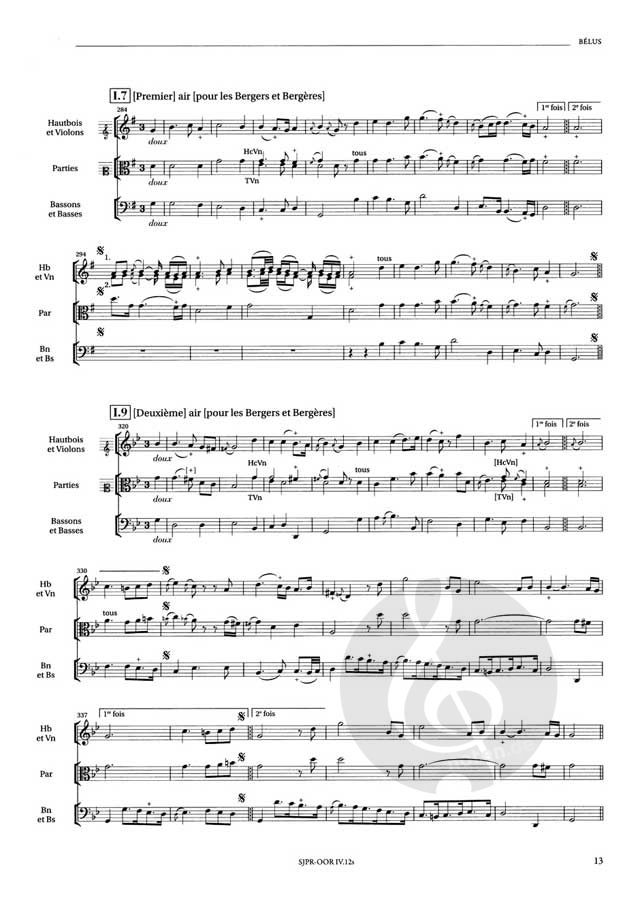
Dardanus RCT 35 A, 35 B
Symphonies

- Instrumentation Orchestra
- Edition Score (Urtext) Download
- Composer Jean-Philippe Rameau
- Publisher Bärenreiter Verlag
- Editor Denis Herlin
- Lyricist Charles-Antoine Le Clerc de la Bruère
- Order no. BA8899-DL
 immediately available
|
Download immediately after ordering
immediately available
|
Download immediately after ordering

Description:
The plot revolves around the love story between the young warrior Dardanus and Iphise, daughter of King Teucer, against whom Dardanus is waging war. The young woman is actually promised to Anténor, one of Teucer's allies, and succumbs to forbidden love. After various adventures and the intervention of the goddess Venus, she joins forces with Dardanus and together they finally break Teucer's intransigence.
The new critical edition by Denis Herlin offers for the first time the possibility of restoring the May 1744 version as well as the 1739 version. At the same time, its appendices give performers the complete material to play the version of April 1744, many parts of which have not been heard since. Last but not least, the changes from the successful 1760 revival are included.
How the download works:
1 Order download article
You order the desired download article in our online shop.
2 Receive order confirmation with download link
Immediately after completing your order, we will send you an order confirmation by email listing all ordered articles. You will find the download link directly next to the article. You can use this to start your download immediately. Please also check your spam folder if necessary.
Heinrich-Schütz-Allee 35-37
34131
Kassel
Deutschland
alle-noten.de: Sheet music shipping since 1969

Since 1969, over 500,000 customers have trusted us. With a huge selection of over 1,000,000 sheet music titles, we are one of the largest providers in Europe. Thanks to our large stock we can often ship sheet music within 24 hours. No matter what sheet music you are looking for: you are in the right place!
Yours, Stefanie Reichert
Head of Customer Service
Other customers also bought:

- Orchestra
- Score (Urtext)
-
in stock
|
ships within 1-2 working days
- Also available for download!

- Soloists (AAB), Mixed Choir (SSATB), 2 Oboes, 2 Trumpets, 2 Violins, Viola and Continuo
- Score
- Paul Horn
-
ships within 2-5 working days
- Also available for download!