
Jean-Philippe Rameau
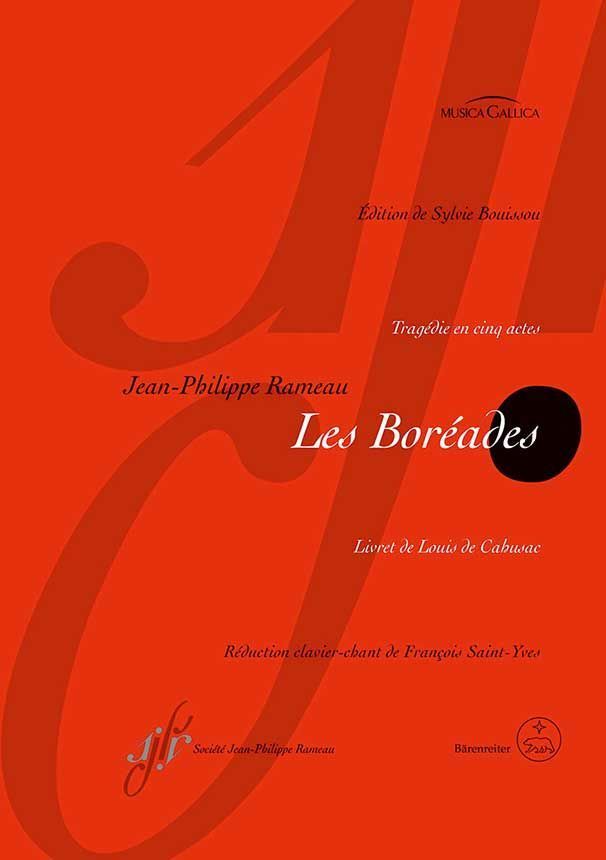
Les Boréades RCT 31
Tragédie in 5 acts
Jean-Philippe Rameau
Les Boréades RCT 31
Tragédie in 5 acts
- Instrumentation Solos, Mixed choir (SATB) and Orchestra
- Composer Jean-Philippe Rameau
- Editor François Saint-Yves
- Editor Sylvie Bouissou
- Lyricist Louis de Cahusac
- Edition Sheet Music
- Publisher Bärenreiter Verlag
- Order no. BA8865-90
 ships within 2-4 working days
incl. tax,
excl. shipping costs
Not available in all countries. Learn more

Description:
Actually, "Les Boréades" was supposed to be performed in 1763 at the Théâtre de Choisy in Paris after the end of the Seven Years' War on the occasion of the celebrations of the peace treaty. But after two rehearsals with the greatest stars of the time in Versailles and Paris, the work was cancelled – possibly due to censorship of the libretto, which questioned the tradition of succession of royal power and made the self-determination of a woman a theme. Poisoned subjects that must have been unreasonable for the court and the king, who had been sensitized after the assassination attempt on Louis XV in 1757.
In the opera, for example, the god of the north wind, Boreas, wants to marry one of his sons, Borilée or Calisis, to Alphise, the queen of Bactria. But she spurns both of them and prefers another, Abaris, much to the annoyance of the wind god. The subversiveness of the libretto and its libertarian morality become abundantly clear in the characterization of the characters: Abaris, who is plagued by self-doubt, is an anti-hero, the gods appear autocratic and stupid, while Alphise denounces the tyrannical princes of the abuse of power and demands the right to decide freely for himself – and is publicly tortured for it.
Censorship, but also intrigues and a fire: "Les Boréades" had to contend with many adversities before the work can finally be performed unhindered with this edition. On the positive side, however, these circumstances meant that we now have a "pure" work, free of subsequent compromises or forced reworkings.
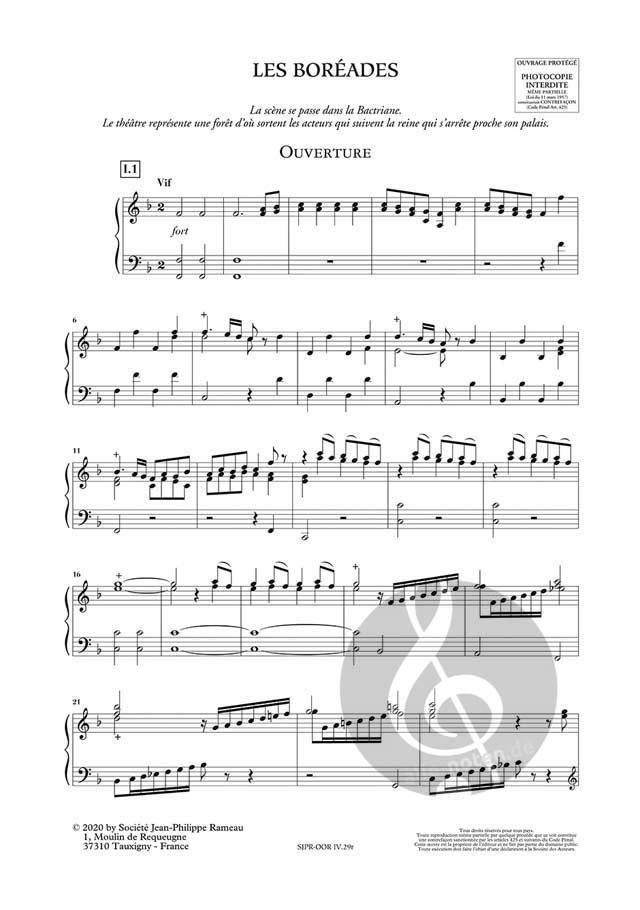
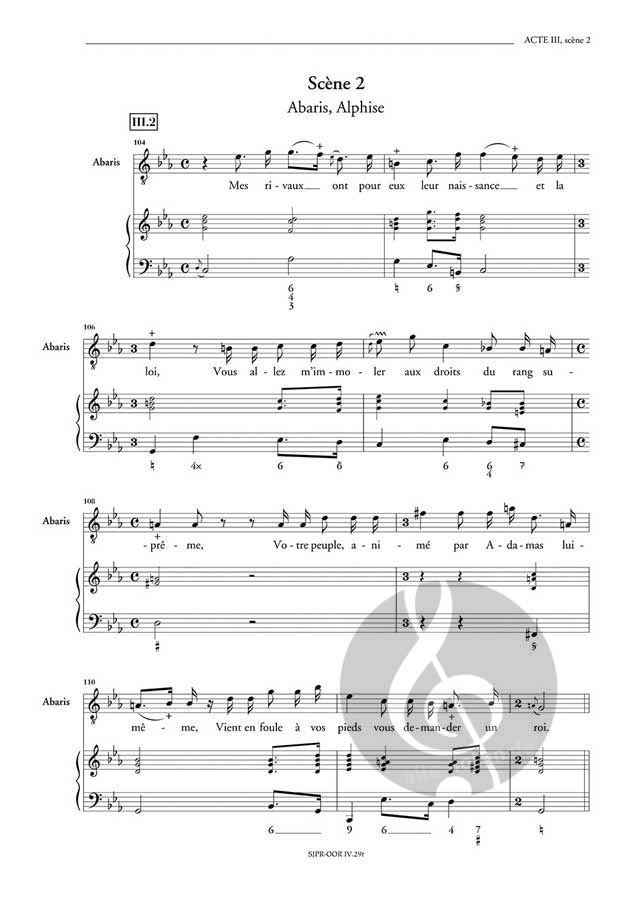
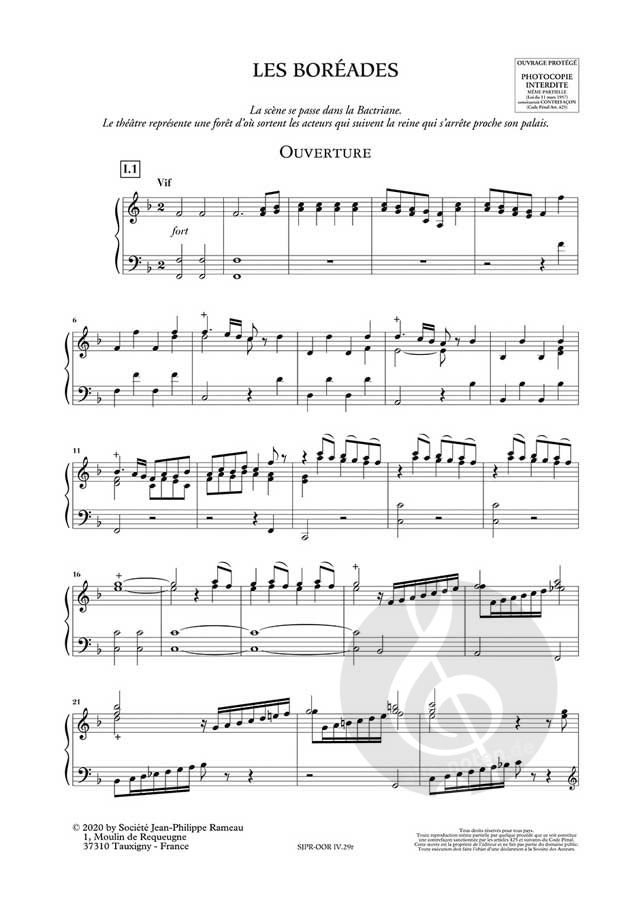
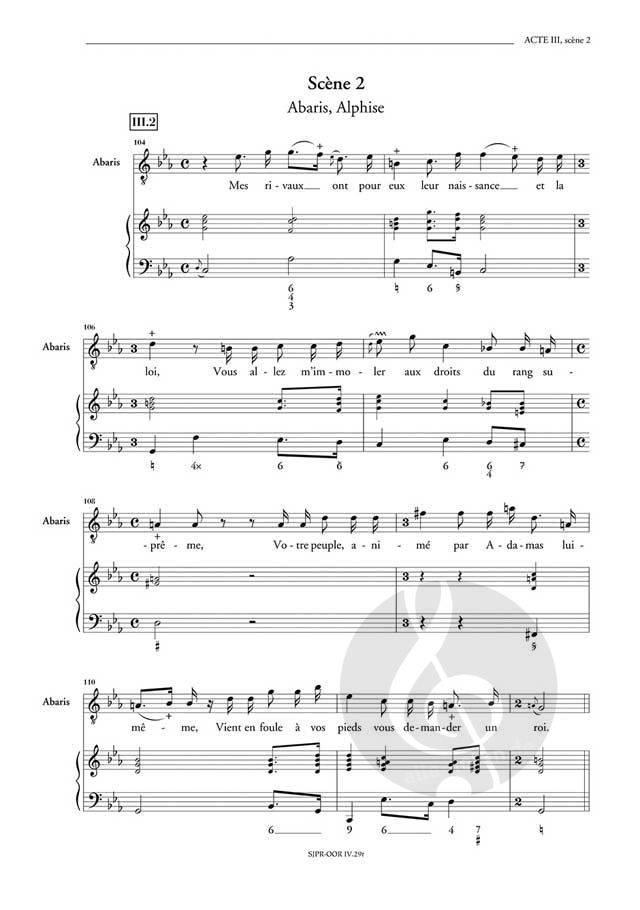
This piano reduction is based on the critical new edition as published in volume IV.29 of the "Opera omnia Rameau". The main source here is the production score, copied in the Académie royale de musique de Paris and provided with corrections and annotations by Rameau, as well as the original parts.
In the opera, for example, the god of the north wind, Boreas, wants to marry one of his sons, Borilée or Calisis, to Alphise, the queen of Bactria. But she spurns both of them and prefers another, Abaris, much to the annoyance of the wind god. The subversiveness of the libretto and its libertarian morality become abundantly clear in the characterization of the characters: Abaris, who is plagued by self-doubt, is an anti-hero, the gods appear autocratic and stupid, while Alphise denounces the tyrannical princes of the abuse of power and demands the right to decide freely for himself – and is publicly tortured for it.
Censorship, but also intrigues and a fire: "Les Boréades" had to contend with many adversities before the work can finally be performed unhindered with this edition. On the positive side, however, these circumstances meant that we now have a "pure" work, free of subsequent compromises or forced reworkings.
This piano reduction is based on the critical new edition as published in volume IV.29 of the "Opera omnia Rameau". The main source here is the production score, copied in the Académie royale de musique de Paris and provided with corrections and annotations by Rameau, as well as the original parts.