
Jean-Philippe Rameau
lo RCT 45
Acte de Ballet
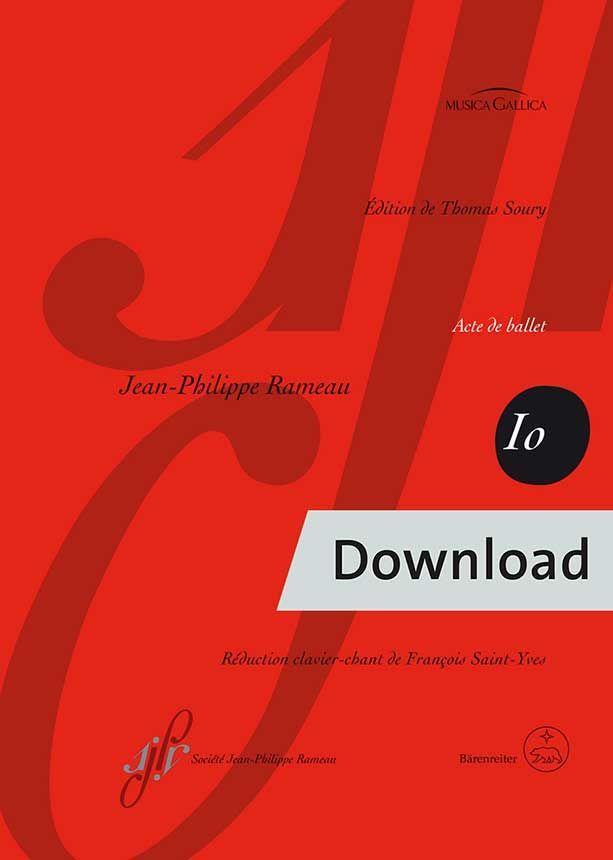
Jean-Philippe Rameau
lo RCT 45
Acte de Ballet
- Instrumentation Voice and Orchestra
- Composer Jean-Philippe Rameau
- Editor François Saint-Yves
- Editor Thomas Soury
- Edition Piano Reduction Download
- Publisher Bärenreiter Verlag
- Order no. BA8869-90-DL
 immediately available
Download immediately after ordering
incl. tax,
excl. shipping costs
Not available in all countries. Learn more

Description:
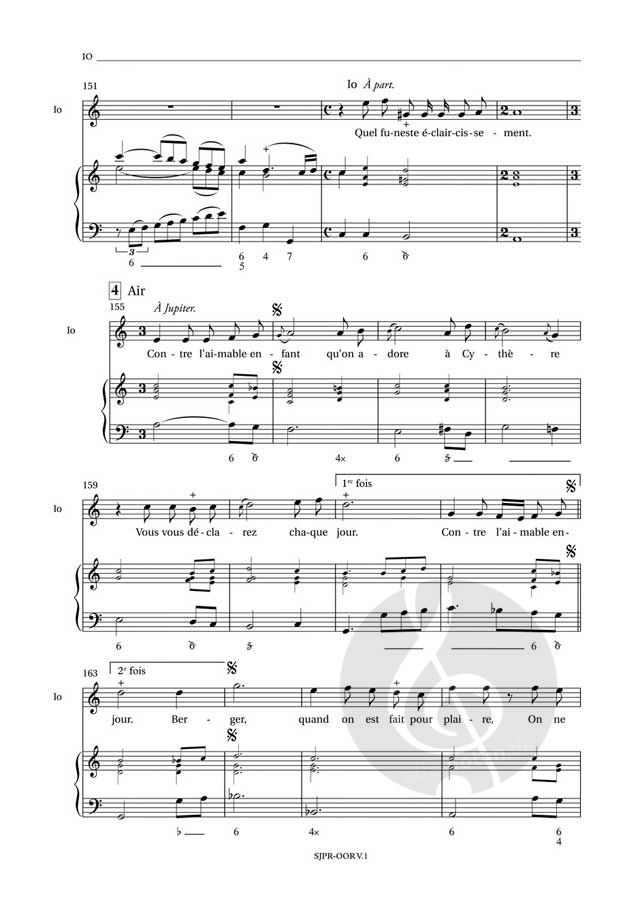
In Rameau's operatic oeuvre, "Io" is certainly the work surrounded by the most mystery: the acte de ballet has only survived in the form of a copy of the score and parts, which a collector from the generation after Rameau had made from the now lost autograph. Although the copy seems to have been used, presumably for a rehearsal run, the work was apparently never performed regularly during Rameau's lifetime. And for good reason: the work breaks off abruptly at the beginning of the divertissement; neither the librettist nor a planned performance venue are known. Due to its incompleteness, "Io" was long regarded as Rameau's last work, but there are many indications that the composition must have been written between 1740 and 1745.
The introduction to this edition explores the evidence for the dating as well as various hypotheses about performance possibilities and librettists.
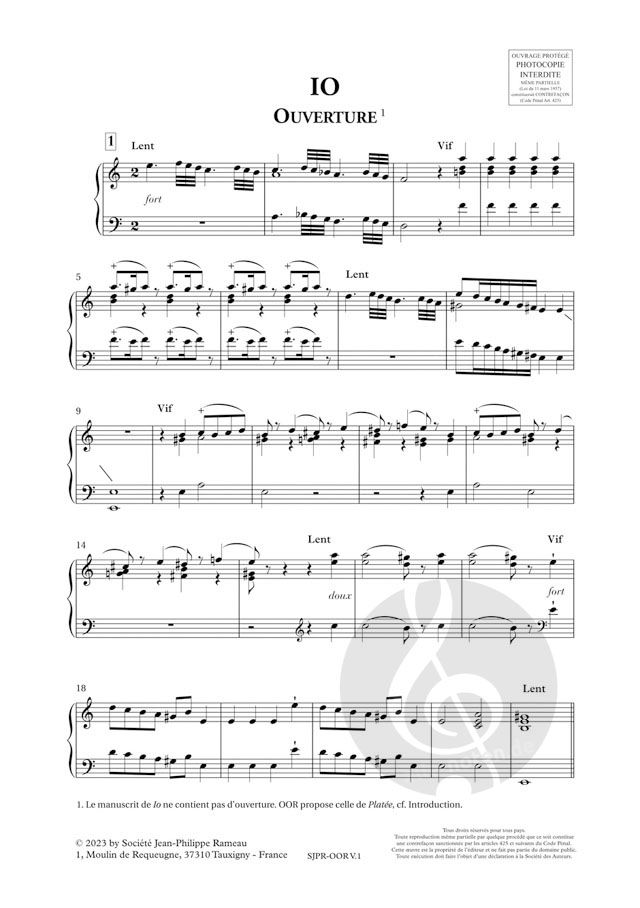
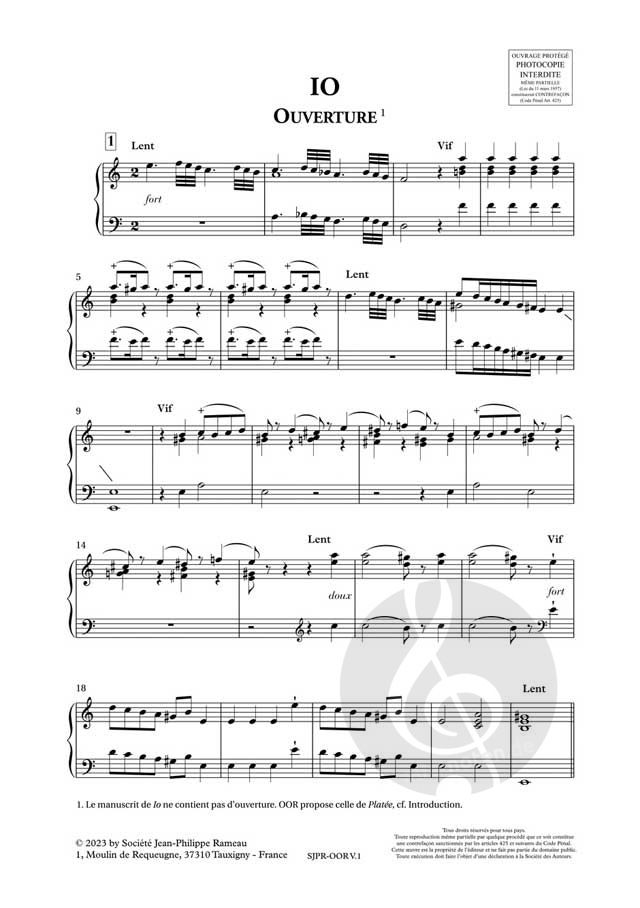
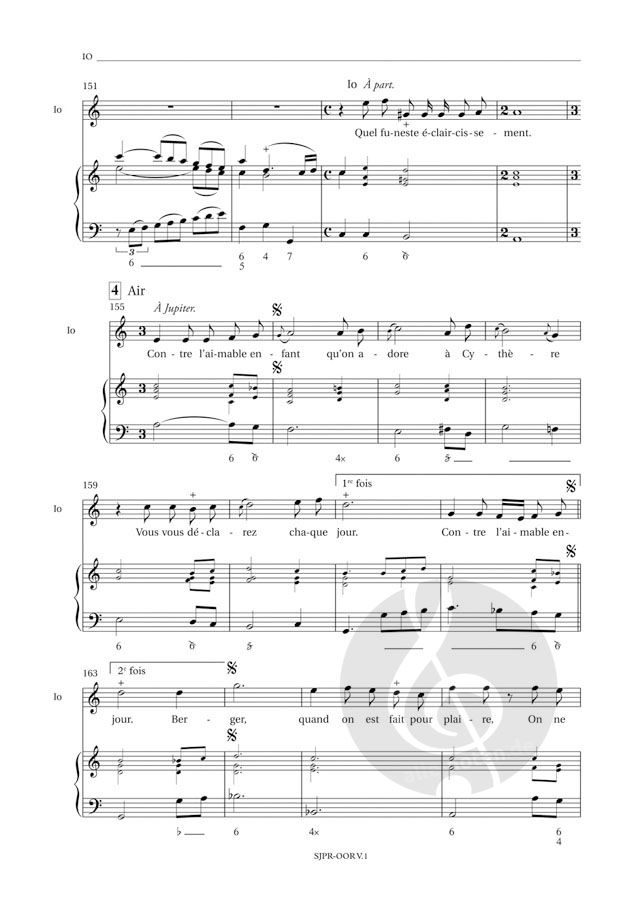
The plot revolves around one of those typical mythological flirtations that are inevitable when Jupiter and a nymph, in this case Io, are involved. With the appearance of madness, La Folia, the work reaches a dramaturgical climax, after which the opera breaks off. In order to make the piece performable, the editors of Opera Omnia Rameau propose an addition to the divertissement and an ending borrowed from the ballet bouffon "Platée" in the 1745 version, which has numerous parallels to "Io". These additions come as close as possible to Rameau's style of the 1740s and at the same time bring the plot to a conclusion.
The introduction to this edition explores the evidence for the dating as well as various hypotheses about performance possibilities and librettists.
The plot revolves around one of those typical mythological flirtations that are inevitable when Jupiter and a nymph, in this case Io, are involved. With the appearance of madness, La Folia, the work reaches a dramaturgical climax, after which the opera breaks off. In order to make the piece performable, the editors of Opera Omnia Rameau propose an addition to the divertissement and an ending borrowed from the ballet bouffon "Platée" in the 1745 version, which has numerous parallels to "Io". These additions come as close as possible to Rameau's style of the 1740s and at the same time bring the plot to a conclusion.